

August 7, 2026
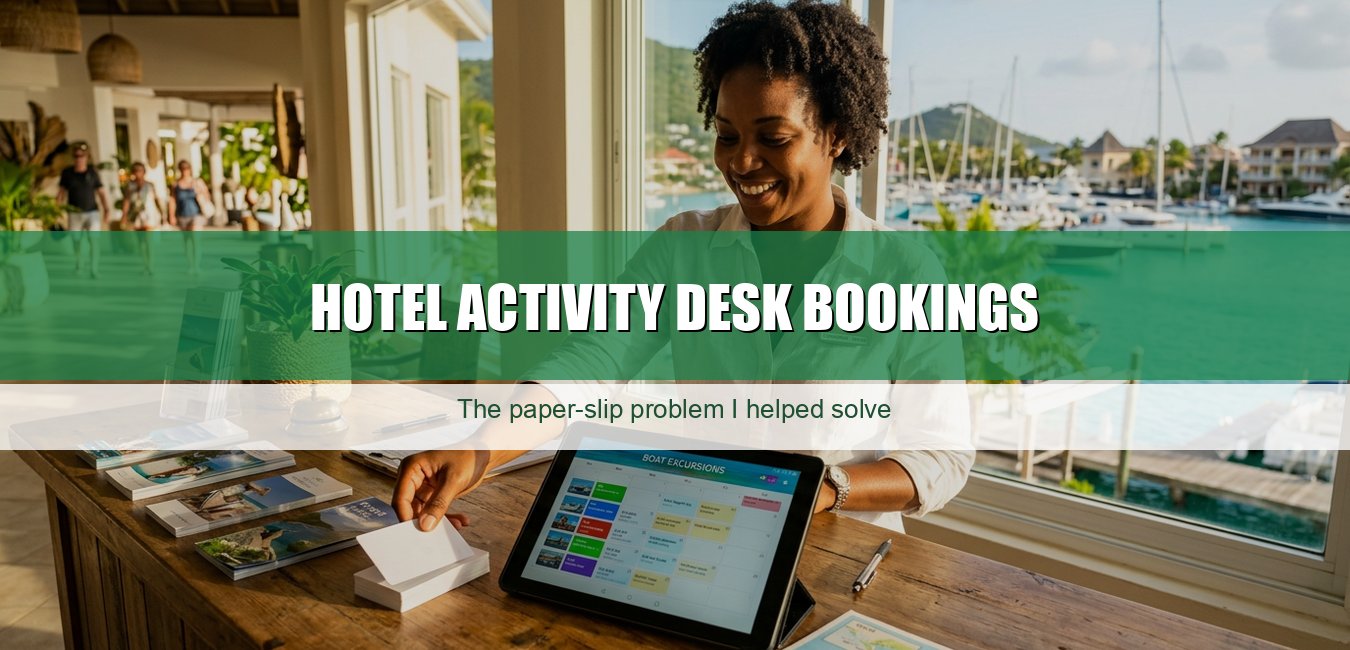
A hotel activity desk is not really a sales channel if the booking still has to travel by phone, paper, and memory.
I learned that while running SXM Deals in St. Martin. A hotel would send a guest our way, sometimes with a little piece of paper showing a tour number and a room number. Then I had to find the operator, ask if there was space, work out where the booking came from, and wait for an answer. The guest was ready. The money was ready. The process was not.
One large booking took about two days to get confirmed. Two days. Not two minutes. I lost it. That was one of the moments that made me decide the booking handoff had to be built differently.
It is easy to look back at those slips of paper and blame the hotel activity desk. I do not. The people at the desk were trying to help a guest choose a boat trip, a snorkel run, or a day on the water. They had their own phones ringing and their own guests standing in front of them.
The problem was that the hotel, the booking agent, and the operator were working from different pieces of information. The hotel knew the guest's name and room number. I knew the request came through SXM Deals. The operator knew whether the boat had space. Nobody had the same live answer.
So the booking became a chain of questions:
That is not a hotel problem. It is a handoff problem.
If you want hotel referrals to turn into real bookings, the desk does not need another long product presentation. The staff needs a short, reliable path from guest question to confirmed trip.
When I talk with operators about this, I tell them to look for five simple things:
None of this is fancy. That is the point. On a busy cruise ship day, boring and correct beats clever and confusing every time.
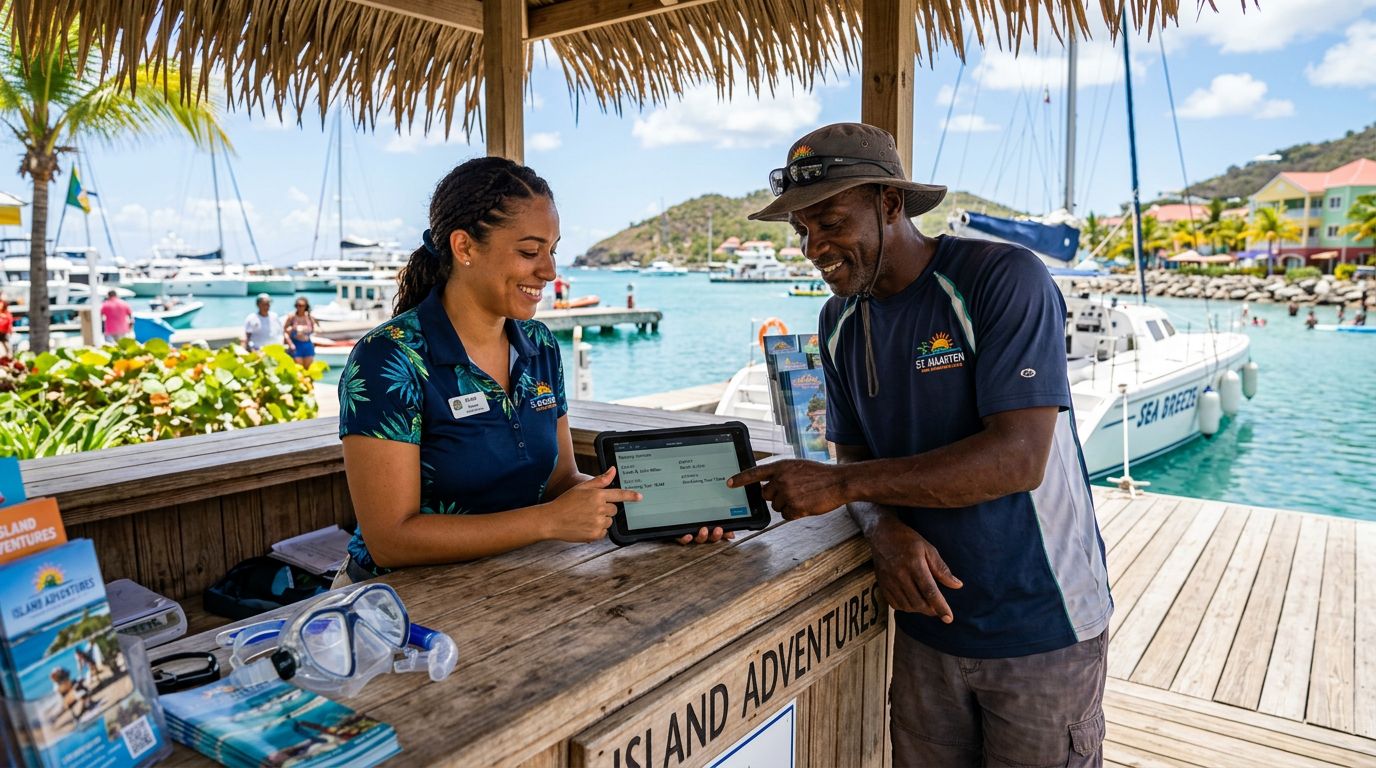
There is a temptation to hand the whole relationship to the hotel because the hotel made the referral. I think that is a mistake. The hotel can introduce the guest, but you are still responsible for the part that happens on the water.
When I was crewing Eagle Tours, I could usually tell which bookings had come through a clean process before the guests even stepped aboard. The names matched. The crew knew the trip. The guest knew where to meet us. On the messy bookings, somebody was standing on the dock asking whether the boat was going to Anguilla or St. Barts, and I was trying to solve it while checking life jackets.
That is where a small detail becomes an operator story. A missing room number is not just an office annoyance. It can mean the driver waits at the wrong hotel. A vague meeting point is not just bad wording. It can put a first-time guest on the wrong side of the marina.
We built Junglebee around this kind of handoff because I had lived the problem from the agent side and the boat side. The useful test is not whether the system looks good in a demo. It is whether the captain, the hotel desk, and the guest all get the same answer when the morning gets busy.
In my experience, the failure usually happens between the booking and the departure. The sale gets celebrated, but the details do not travel with it.
Watch for these warning signs:
When I see that setup, I do not blame the receptionist or the captain. I blame the gap between systems. If a hotel partner is sending you good guests but your team keeps losing time translating the booking, the partnership is costing more than the commission or referral fee.

Give the hotel a way to sell the trip without making your crew become a call center.
That does not mean removing the human part. Guests still want a real answer from somebody who knows the island. It means the human conversation should happen at the right moment, not because your availability is hidden in somebody's phone.
Before you add another hotel partner, run one booking all the way through. Ask the desk to book a real departure. Follow the details from the first guest question to the crew's list. Change the date or ask what happens if the weather turns. Then look at the booking from the guest's side.
If you have to explain the same detail three times, the system is telling you something. Listen to it. A hotel activity desk can be a strong source of bookings, but only when the handoff is as dependable as the trip you are selling.


