Junglebee
What Is a Deckhand? The Job From the Deck to the Wheel
What is a deckhand on a Caribbean tour boat? The daily work, what operators hire for, deckhand salary data, and how the job leads to captain.
 Michael RouveureFounder, Junglebee ·
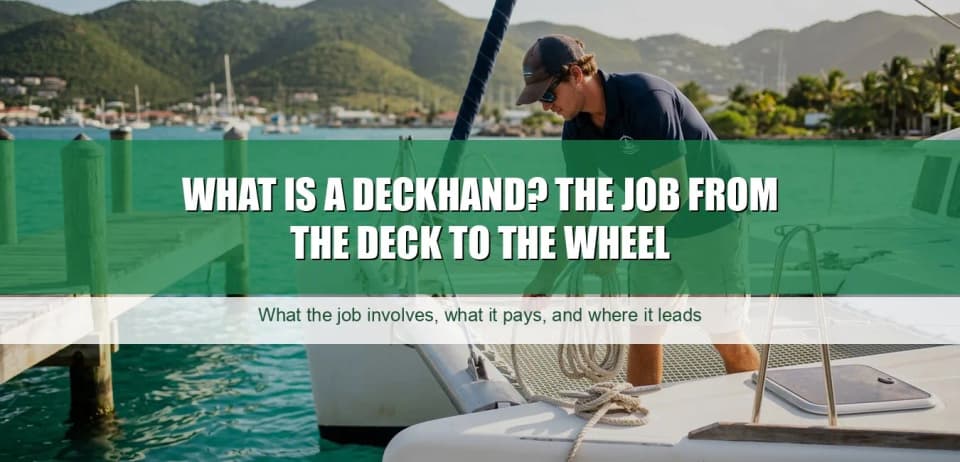
- A deckhand helps the captain with lines, safety briefings, snorkel gear, guests in the water, the bar and cleaning.
- US sailors and marine oilers, including deckhands, earned a median $24.77/hour in May 2025 (BLS, tips included); these are not Caribbean figures.
- Deckhand can be a first rung toward first mate and captain; advancement depends on experience and the qualifications required for the role.
Guests don't remember the captain. So what is a deckhand on a Caribbean tour boat? The person who makes or breaks the day, and the one guests talk about at dinner that night.
I say that as someone who came up through the job. I grew up working in my family's company, Eagle Tours, in St. Maarten. I started as a deckhand, then became first mate, then captain, running tours and charters for cruise ship and hotel guests to the beaches, the reefs and the islands next door. So I know this job from the deck and from the captain's seat.
What is a deckhand on a tour boat
A deckhand is a crew member who helps operate and maintain the boat under the captain's direction. On a big ship that might mean painting and chipping rust. On a day-charter catamaran or a snorkel boat, it means guests. The US Bureau of Labor Statistics describes deckhands as the deck crew who stand watch, load gear, do upkeep and "may interact with or assist passengers." On a tour boat, that last part is most of the job.
You usually don't need a degree. BLS says sailors and deckhands typically learn on the job, with somewhere between a month and a year of training after they're hired. Some operators prefer first aid qualifications. Ask whether yours requires those, a swim test or other training.
What a deckhand does on a normal day
The day starts before the guests show up. You're loading ice, coolers and snorkel gear, checking the life jackets are where they should be, and getting the boat clean enough that the first guest on board thinks it's new.
Then the guests arrive, and you're on:
- Lines and docking. You throw and catch lines, fend off, tie up and pick up the mooring buoy. The captain is watching the wind and the boat. You are the captain's hands at the bow and the stern.
- The safety briefing. Life jackets, where the heads are, how to move around a moving boat. Most guests half listen. A good deckhand gets them to listen anyway.
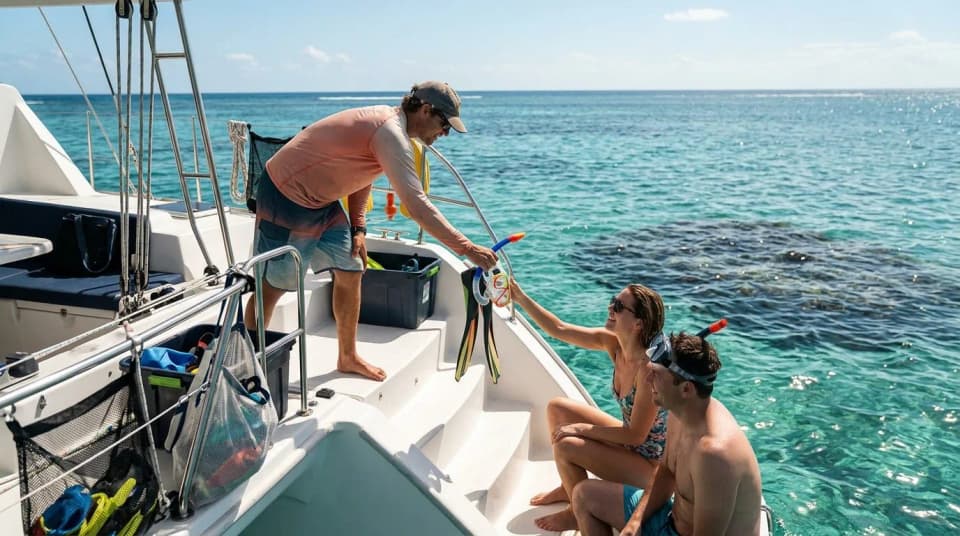
- Snorkel gear and guests in the water. Fitting masks, handing out fins, spotting the nervous swimmer before they panic, and counting heads in and counting heads out. That count matters more than anything else you do all day.
- The bar and lunch. Rum punch, water, plates. And deciding, quietly, when someone has had enough.
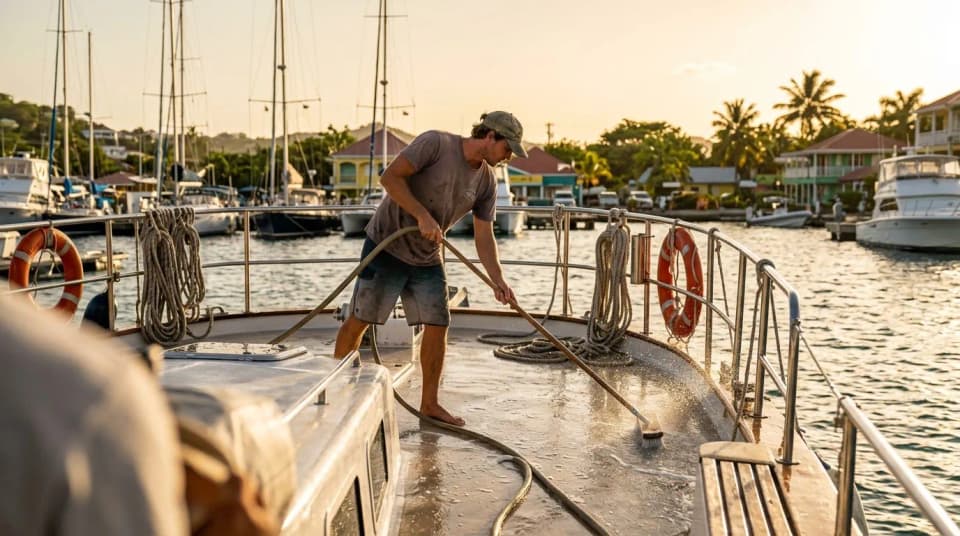
- Cleaning. After the last guest leaves you hose the deck, rinse the gear and get the boat ready for tomorrow.
And through all of it you're helping the captain. Calling out swimmers near the boat, watching the anchor, telling the captain when a guest looks sick before it becomes a problem. On a cruise ship day you might do all of it twice.
What a good deckhand looks like from the captain's seat
Hire for how someone talks to guests. You can teach knots. Learning to enjoy people takes a lot longer.
What a good one looks like from the captain's seat:
- They talk to everyone, not just the fun table. The quiet couple at the back is the one leaving the review.
- They count without being asked. Head counts in and out of the water should be a habit, not a reminder from the captain.
- They see problems early. A mask that won't seal, a kid drifting off the reef, a guest going pale on the crossing to Anguilla.
- A clean head. Guests notice a dirty head faster than a perfect sail. If your deckhand walks past it, nothing else on this list matters.
Operators, don't bury your deckhand in paperwork on the dock. If guest names and numbers come in clean before the boat leaves, the crew can spend boarding time on people. That's part of why we built Junglebee to put bookings from the website, hotel desks and agents into one manifest, so nobody is working off three lists.
Deckhand salary on tour boats
A tour boat deckhand's pay can include a wage plus tips, and tips can be a big part of it. How the wage is set (hourly, daily or per trip) and how tips are split between crew depends completely on the operator, so ask before you start.
For a published benchmark, here is the US government data. These are national US figures for the BLS category "sailors and marine oilers," which includes deckhands, as of May 2025:
- Median: $24.77 an hour, or $51,520 a year.
- Bottom 10 percent: under $16.61 an hour.
- Top 10 percent: over $40.20 an hour.
BLS counts tips in those wages. But that category also covers work on tugboats, ferries and cargo ships, not just tour boats, and annual figures assume full-time hours all year. They are not Caribbean numbers. I'm not going to make up a Caribbean figure, because pay here varies a lot between islands, operators and seasons. Ask the operator directly and ask the crew already on the boat.
How the job leads to the wheel
This is the part people underrate. Deckhand is the bottom rung, but it's the rung every captain I know stood on.
Here's how that path can look on a tour boat. You prove you can handle lines and guests. The captain starts letting you do more, like taking the helm under supervision on a calm crossing or running the anchor. You may become first mate, the captain's second in command, helping supervise the crew. Then, with enough time on the water and the right license, you may qualify to captain your own trips.
That sea time counts. BLS notes that most higher-level water jobs need years of experience on the water, and that's how people move up. It's how I moved up. I didn't learn to run a charter from a book. I learned it on the boats, working up from the deck.
Hire for the talking, teach the knots
If you're thinking of taking the job, know that it's physical and the days are long, but it's mostly about people. If you like that, it's one of the best jobs in the Caribbean, and it can take you all the way to the wheel.
If you're an operator, hire the person guests will remember. The captain gets them there. The deckhand is why they book again.
Booking page, card payments, one calendar for your website, booking page and desk. 4% per card payment, no monthly fee.