Junglebee
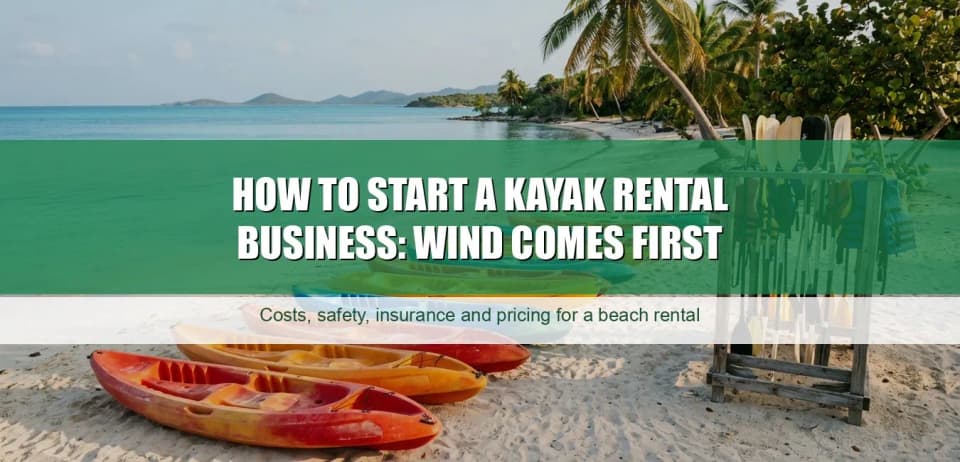
How to Start a Kayak Rental Business: Wind Comes First
How to start a kayak rental business: gear costs, permits, insurance, pricing, wind rules and a lost-paddler plan, from a St. Maarten boat guy.
 Michael RouveureFounder, Junglebee ·
- Price more than the fleet: plan around wind, staff, access and insurance as well as the boats.
- Start with self-guided rentals in a sheltered zone, then add one guided trip once you know your water and your wind.
- Run your own revenue math with weather cancellations and ticket prices, and set a written offshore-wind rule before opening.
So you've got a stretch of beach or a calm lagoon like Simpson Bay, and you're wondering how to start a kayak rental business that pays for itself before the first hull cracks. Fair question. Most people asking it are pricing kayaks. I'd start somewhere else.
I grew up on a boat in St. Martin and worked my way from deckhand to captain on my parents' tours, running guests out to beaches and reefs. Before you worry about bookings, check the wind. Kayaks are the cheap part of this business. Wind is your real boss, and you should plan everything else around that.
How to start a kayak rental business without overbuying
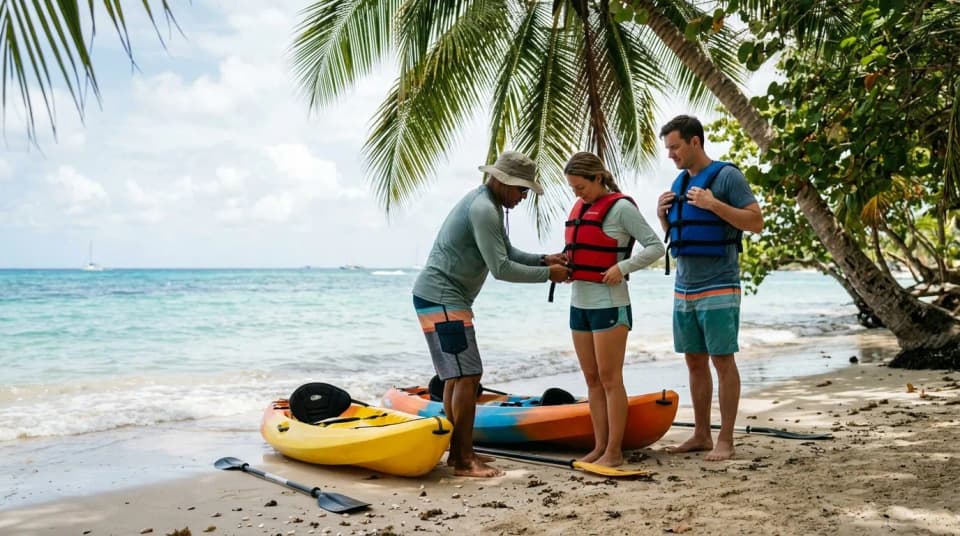
Price the boats, access, staff and insurance separately. For reference, Perception lists its recreational Tribe 11.5 sit-on-top at $849; get supplier quotes for rental-duty models and tandems. For beach and lagoon rentals I'd go sit-on-top every time. There's no enclosed cockpit to exit, but guests still need a re-entry briefing and a properly fitted PFD worn on the water.
Budget for the things around the boats too:
- Paddles and PFDs. One properly fitted life jacket per paddler, plus spares in kid and large adult sizes. Buy to whatever standard your local authority recognizes.
- Racks or a trailer. A trailer can easily cost $1,500 or more. If you launch from one fixed beach, sturdy racks and a lockable spot may do.
- Storage. Somewhere shaded and secure overnight, because sun eats plastic and seats.
- A small reserve. For the months when the water is fine and the guests aren't there.
Start with fewer boats than you think. Ten good kayaks you can watch from the beach beat twenty you can't.
Self-guided rentals or guided tours
Rentals are simple. Guest pays, gets a briefing, paddles inside your zone, comes back. Paid-off boats still leave you with staff, insurance, access, maintenance and payment costs.
Guided tours can support a higher ticket and give you control of the route, but you need to budget for a guide and a manageable group size. My view: start with self-guided rentals in a sheltered spot, then add one guided trip, like a sunset or mangrove run, once you know your water. Rentals look better on margin until you count the rescues. On a windy afternoon, one guest who can't paddle back can take your only staff member off the beach for an hour.
Permits, beach access and kayak rental business insurance
Rules change from island to island and from one US state to the next. You may need a business license, a concession or beach-vendor permit, landowner or hotel permission to use a launch spot, and in some places a separate livery registration. Ask the local authority, the port or marine park office and whoever controls the sand before you buy a single boat. In the Caribbean, I'd explore a hotel partnership as one possible route to an agreed launch spot.
Insurance comes next. You want general liability that names watersports rentals, and you should ask the broker directly whether human-powered craft are covered. I won't quote premiums here because they swing too much by location and claims history. Get two or three quotes before you set your prices, not after.
Then the waiver. Collect the required signature for each paddler before launch, including a parent or guardian's where required for a minor; ask your local lawyer whether online signing at booking is appropriate. Have a local lawyer read yours once. It costs less than one bad afternoon.
Pricing, and how much a kayak rental business makes
Most rate cards use three tiers: hourly, half-day and full day. For one coastal comparison, Kitty Hawk Kites lists single kayaks at $29 for an hour or $60 for a full-day pickup, and tandems at $40 for an hour. Check what's on your own beach before copying anyone.
On what you'll make, I'd rather show the math than promise a number. This is an example, not a forecast:
- 10 single kayaks
- An average of 6 paid rentals per open day, including slow days
- A $45 average ticket
- 300 planned operating days before weather cancellations
That's $270 a day and about $81,000 gross. Now lose one day in four to wind or rain and you're near $60,000, before staff, insurance, card fees, storage and replacing what breaks. Run it with your own numbers. Test both weather cancellations and changes in your average ticket.
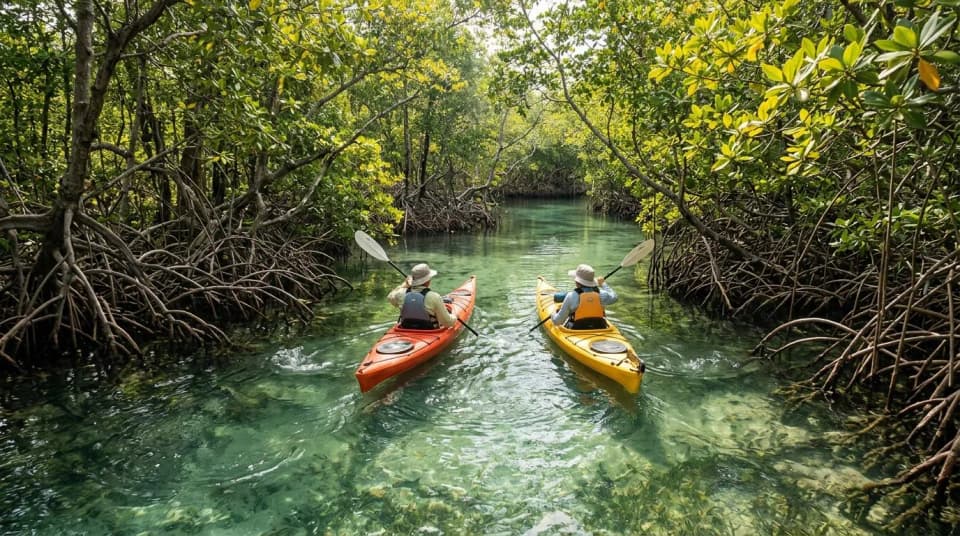
Wind is your real boss
Set your wind rule before opening day and write it down. If the breeze is blowing off the beach toward open water, a tired paddler drifts away from you, not toward you. For beginner self-guided rentals, that's the day you close, not a reason to rely on a quick rescue. Winter trade winds can disrupt Caribbean rentals; whether they blow offshore depends on your beach, so check the local marine forecast.
Three habits I'd put in place:
- A check-out and check-in log. Name, boat number, time out, time due back, phone number. Somebody looks at it every 15 minutes.
- A lost-paddler plan. Who goes, in what (a rescue kayak or a small powered boat), and who calls for help after how long. Practice it once before you need it.
- A clear zone. Buoys or landmarks, explained in the briefing with a finger pointed at them.
Daily maintenance is boring, and skipping it is how a cracked hull ends up on the water. Rinse with fresh water, check drain plugs and seats, look for cracks, count the paddles. Retire anything that leaks.
Take the booking before they reach the beach
Walk-ups will always be part of a kayak business. But your best days are the ones already booked. Put live availability on your website, take the payment or a deposit up front, collect the waiver at the same time and send the guest a reminder with the meeting point the day before. When wind cancels the morning, you move people with a message instead of a phone tree.
If your kayak shop is seasonal, I wouldn't sign up for software with a fixed monthly bill that keeps running through your quiet months. When we launched Junglebee I wanted a monthly fee, because it made my revenue easier to forecast. Operators pushed back, so we charge per card payment instead, and a dead month costs you close to nothing.
Buy the boats last. Check the wind first, every morning, and let it decide when you open.
Booking page, card payments, one calendar for your website, booking page and desk. 4% per card payment, no monthly fee.