

September 15, 2026
How much does it really cost to put a booking website online for a tour business? Not the price of the website builder. I mean the real cost when a guest books, the money needs to land somewhere, and you are standing on the dock with a boat full of people waiting for an answer.
I learned this the hard way running SXM Deals. One day I had a large booking come in, and I did not want to take the guest's payment before the operator confirmed the trip. So I sent the request over and waited. The operator took something like two days to get back to me. Two days. I should have had an answer in two minutes.
That is why I do not think of a booking website as a pretty page with a button on it. It is the bit of your operation that has to keep moving when you are driving the boat, cleaning it, eating dinner, or trying to sleep before the next run.
If you are trying to build a free online booking website, start with the part that makes or breaks the sale. A guest does not care how clever your homepage looks if they cannot see a trip, choose a time, and know what happens next.
I would set up the booking path before I spent an afternoon choosing fonts. Put one real trip on it. Use the same details you give guests on the dock:
That is already more useful than a homepage full of island photos with a phone number buried at the bottom.
A free website can get you online. It cannot rescue a broken handoff between the guest, the office, and the crew. That part still needs a process.
When I was running SXM Deals, a booking would come through my website and I would forward it to the tour operator asking for confirmation. Some operators answered quickly. Others were running a one-man show. They took the boat out, came back, cleaned it, dealt with their guests, and went to bed. The booking was sitting in somebody's inbox the whole time.
So when you test your new site, do not just ask whether the form works. Ask what happens at 6:30 in the morning when you are already on the water. Who sees the booking? Who knows the availability? Who sends the confirmation? If the answer is "I will check my email later," the site is not finished.
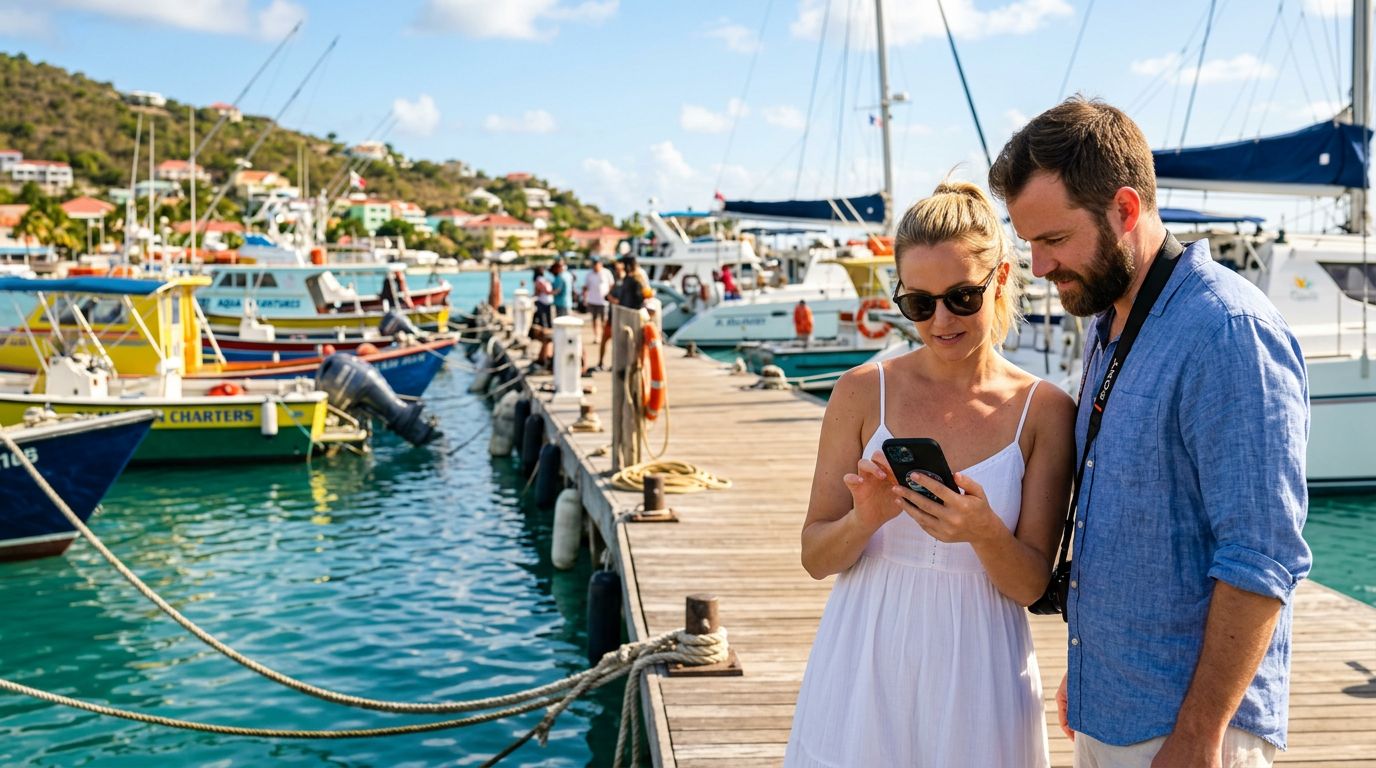
Most guests are not looking for a long story about your company. They want to know if this trip fits their day and whether they can trust the booking.
I would put these details next to the booking button, not hide them in a separate page:
This is not about writing more. It is about removing the questions that otherwise come through your phone while you are trying to get lines ashore.
The payment button is where many otherwise good websites become wishful thinking. Before you promise online booking, check that the money can move from your guest to the account you actually use for the business.
Think through the full path. What currency will the guest see? Where does the payout land? When do you receive it? What happens when a guest needs to move to another weather day? You do not need a complicated spreadsheet for this. You need to run one test payment and one test cancellation before you send the site to a hotel concierge.
We built Junglebee because a booking flow for a Caribbean operator has to deal with more than a card form. The booking, availability, payment, and change to the trip all need to stay connected. If your current setup handles those pieces cleanly, keep it. If not, fix that before spending money on another design.
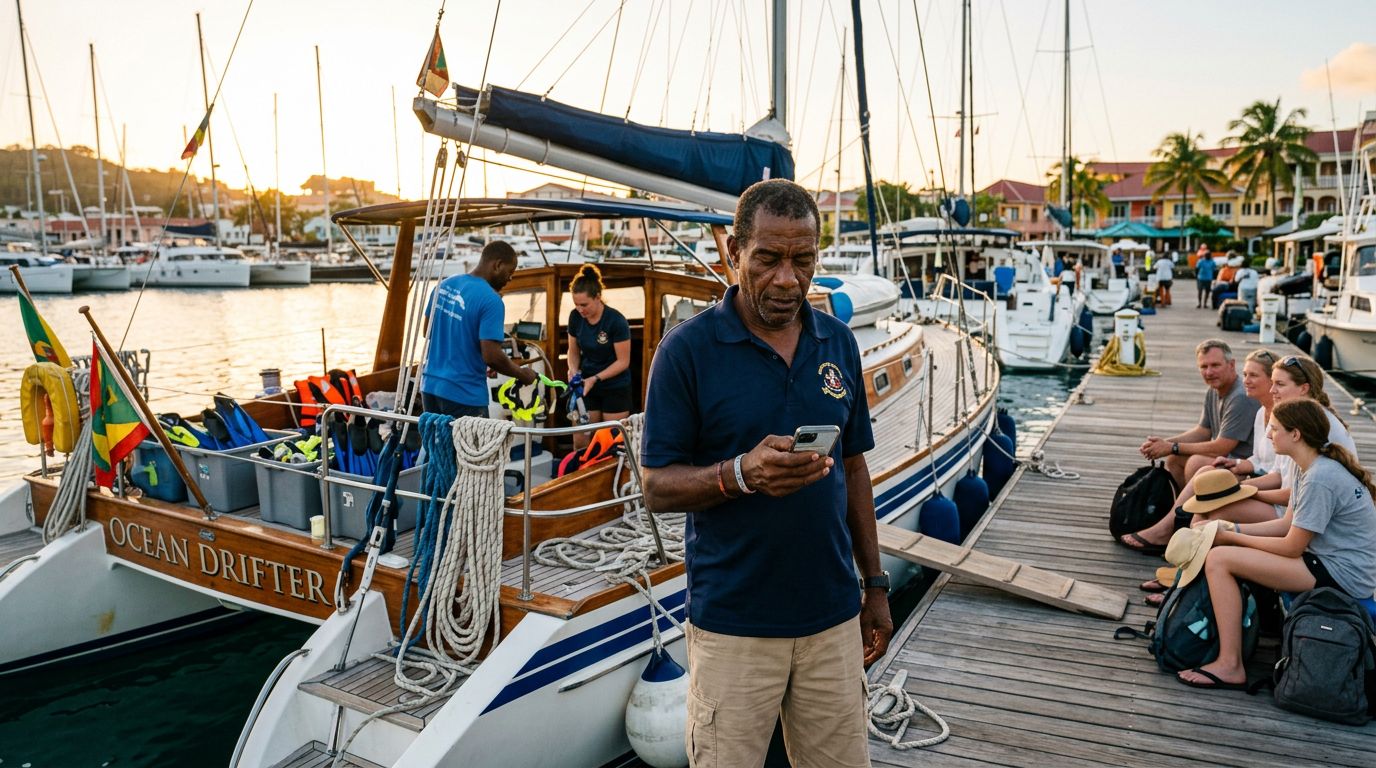
Once the page is live, ask somebody who has never taken your tour to book it on their phone. Do not stand over their shoulder. Watch where they hesitate.
Then do the same test yourself from the dock. Use a real date, a real trip, and a small test payment if your payment provider allows it. Check the guest email. Check the operator notification. Check the calendar. Check what your crew sees.
If any part requires you to copy information from one inbox to another, write that down. That is the work your free website is quietly handing back to you.
I would start with one trip, one clear booking path, and one honest weather policy. Then I would run the test until a guest can complete it without calling me.
The first version does not need to win a design award. It needs to answer the guest, confirm the run, and leave you free to do the job you actually opened the business to do. A free online booking website is useful when it removes a handoff. If it creates another inbox for you to monitor, it is just a cheaper way to make the same old problem look nicer.


