Junglebee
Tour Operator Capacity Planning: Why a Full Calendar Can Still Lose Money
A founder's take on why a full calendar can still lose money - and how to plan around the trips your crew can actually deliver.
 Michael RouveureFounder, Junglebee ·
How can a boat be fully booked and still have a bad day? I have watched it happen more times than I can count. The calendar looks healthy, the payment notifications are coming in, and then somebody on the dock discovers that the crew is stretched, the second boat is late, or a guest has been promised a time nobody actually confirmed.
I learned this before I built Junglebee. I was running SXM Deals and had a large booking come in. I did not want to take the guest's money until the tour operator confirmed the trip. So I sent the message and waited. The operator was out working, as operators are. The answer came back something like two days later.
Two days. Not two minutes. By then the booking was gone. That was not a demand problem. It was a capacity problem - the business had no spare capacity for a quick answer.
Booked is not the same as ready
A booking calendar usually shows seats, boats, and departure times. It does not always show the things that make a trip possible: who is captaining, who is cleaning, whether the first mate can stay late, or whether the boat needs to be fueled and turned around before the next run.
That gap gets bigger on cruise ship days. You might have a group that can only leave at 9:00, another that arrives at 9:30, and a charter asking for the whole afternoon. On paper, there is room. On the dock, the timing may be impossible.
I would rather see an operator leave a little space than sell a trip that depends on everybody moving perfectly. Boats do not move perfectly. Guests arrive late. Weather changes. A crew member calls in sick. That is the work.
Your real capacity lives on the dock
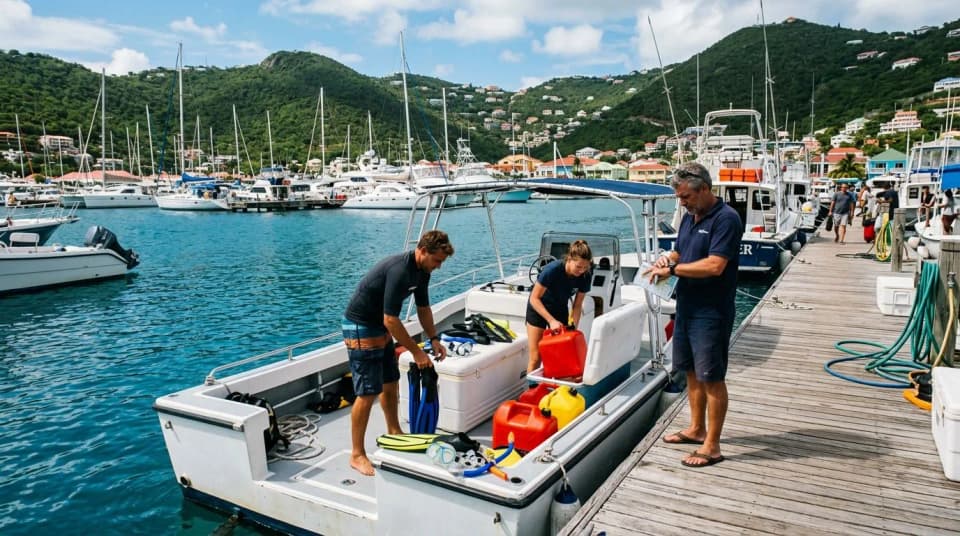
When I think about capacity planning, I start with the physical operation, not the software. How many boats are actually available today? How many seats can you run safely with the crew you have? How long does the boat need between trips?
Then I add the less obvious limits:
- People. A boat may have room, but a captain or first mate may already be committed to another run.
- Turnaround. Cleaning, fueling, loading ice, and checking equipment all take real time.
- Guest mix. A private charter and a shared snorkel trip do not use the same kind of capacity.
- Pickup promises. Hotel transfers can make a short trip take most of a morning.
This is why I do not trust a single number called "available." Available for what? At which marina? With which crew? Until you ask those questions, the number is just decoration on a screen.
Do the ugly math before you add another trip
Here is a simple example. Say you have three boats, eight seats on each, and two departures planned. That looks like 48 seats for the day. But if one boat needs a long fuel stop, one captain cannot work the late run, and a hotel pickup adds an hour to the morning trip, your real number is lower.
The arithmetic is easy. The assumptions are where operators get hurt.
I would write down the capacity in three layers:
- Physical capacity: seats, boats, departure times.
- Operating capacity: crew, turnaround time, fuel, equipment, and pickup routes.
- Sellable capacity: what you can promise a guest and deliver without making the whole day miserable.
The third number is the one that matters. If you sell the physical number while ignoring the operating number, you are borrowing from the sellable number. Eventually the guest pays the interest.
Where the calendar lies to you
A calendar can make a busy business feel calm because every booking has a neat little box. The trouble starts when the boxes come from different places - your website, a hotel activity desk, a travel agent, a message from a repeat guest, and maybe a phone call written on paper.
That was the bottleneck I kept running into with SXM Deals. I could bring demand to the operators, but I could not see a dependable answer from every operator quickly. A full-looking calendar did not help if nobody knew which slot was genuinely confirmed.
For a small operation, one unconfirmed booking can create a chain reaction. The office waits to answer the guest. The guest waits to book flights or a hotel pickup. The captain plans around a trip that may not happen. And then somebody sends three messages trying to untangle it.
We built Junglebee around that kind of handoff. The point is not to make a calendar look impressive. The point is to give the guest and the operator the same answer at the same time. If you are comparing systems, you can see how we approach that on our charter booking system page.

The rule I keep coming back to
Do not ask, "How many seats can I sell?" Ask, "How many trips can my crew deliver cleanly on this particular day?" Those are different questions.
Leave room for the weather day. Leave room for the boat that comes back late. Leave room for the guest who cannot find the marina and the first mate who has been on deck since sunrise. That space is not wasted capacity. It is what keeps one difficult morning from turning into a bad review, a refund, and a crew that never wants to see the next departure.
When I was waiting those two days for an operator to confirm that big booking, I thought the problem was slow communication. I understand it differently now. The real problem was that the business had no clear line between what looked available and what was ready to promise.
Build your calendar around the second number. The first one is how you fill a spreadsheet. The second one is how you run a tour company.
Booking page, card payments, one calendar for your website, booking page and desk. 4% per card payment, no monthly fee.