Junglebee
Tour newsletter examples: what I would send before and after a trip
Three practical newsletter formats I would send before and after a tour, with the one test I use to help guests choose and book.
 Michael RouveureFounder, Junglebee ·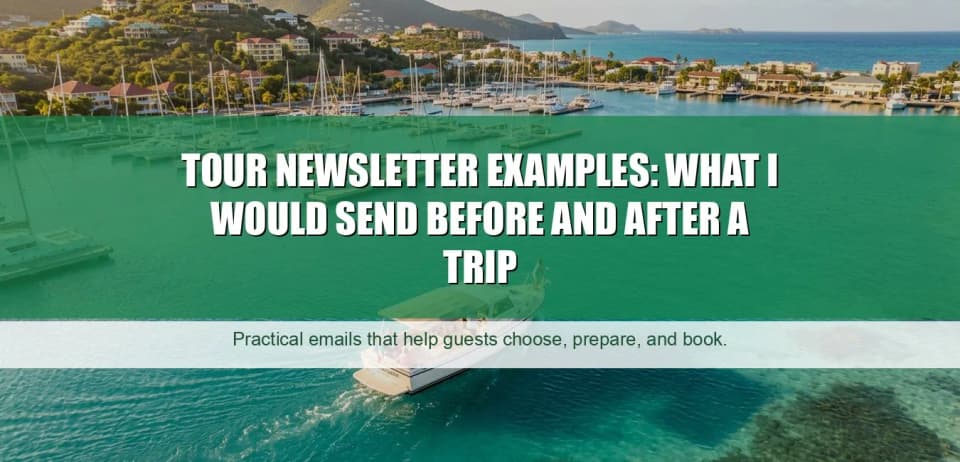
When I was running SXM Deals, I had a guest ready to make a big booking. I did not want to take the payment until the tour operator confirmed the space. So I sent the request and waited.
Two days. Not two minutes. Two days.
By the time the operator got back to me, the moment had gone. I lost the booking, and I remember thinking the whole process was backwards. The guest was ready. The boat was probably available. The problem was the handoff.
I think about that whenever somebody asks me for travel newsletter examples. A newsletter is not just a pretty email you send when you have time. It is another handoff between you and a guest. If it makes the next decision easier, it is doing its job. If it only talks about your brand, it is probably taking up space.
The newsletter is not your brochure
A brochure talks about what you offer. A good newsletter helps somebody decide what to do next.
That difference matters for a small tour company. Your guest may be sitting in a hotel room deciding between a snorkel run and a sunset cruise. They may be packing for a boat day, looking at the weather, or trying to work out whether the trip is suitable for their children. They do not need another paragraph about how passionate you are about unforgettable experiences.
They need something useful. What should they bring? Which trip fits a short port day? What does the water usually feel like this time of year? What is the best way to get from the hotel to the marina?
I would rather send one plain, helpful email than five polished ones that never answer a real question.
Start with the question guests ask after booking
The easiest newsletter to write is hiding in your inbox, WhatsApp messages, or the questions your crew hears at check-in.
Keep a running list. When a guest asks the same thing more than once, you have a newsletter topic. Not because it is a clever content idea. Because somebody is already telling you what they need.
- Before the trip: Send a short packing note. Tell guests about reef-safe sunscreen, towels, footwear, motion sickness, and where to meet. Only include what actually applies to your trip.
- On the day: Explain the handoff. Say where the driver or captain will be, what happens if the weather changes, and who they should call if they are running late.
- After the trip: Give them a reason to remember you. Share one local detail from the route, a simple photo prompt, or an invitation to come back in a different season.
Those are not three campaigns. They are three moments in the guest journey. And they are far more useful than sending the same discount to everybody on your list.
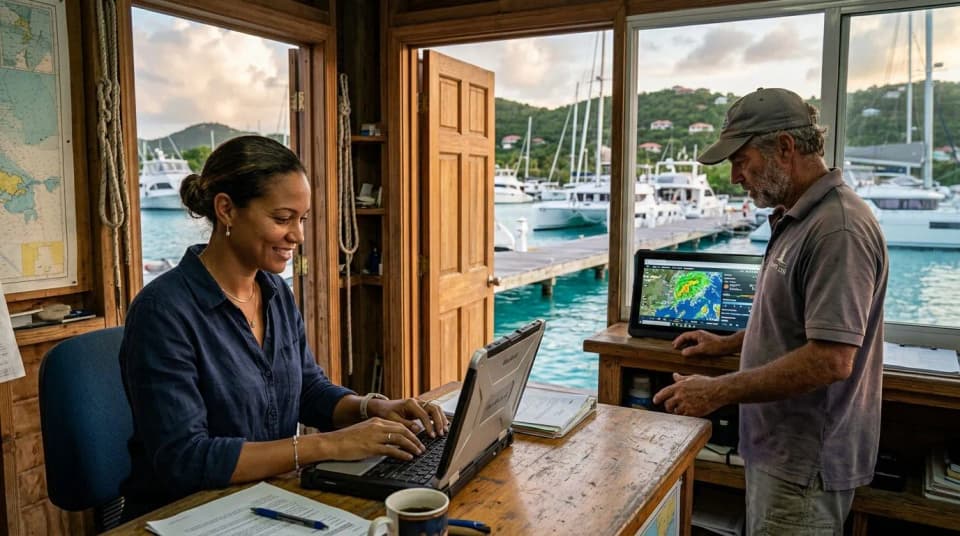
Three newsletter formats I would actually send
I would keep the formats simple enough that an operator can write one after coming back from the dock.
The local note. Pick one place you visit and tell the story behind it. Not a Wikipedia paragraph. Tell guests what you notice from the boat, when the light changes, or why your crew chooses that anchorage. Pinel Island, Tintamarre, a quiet corner near Anguilla - the detail is what makes it yours.
The practical captain's note. This is the email I would send before a busy week. Explain what the sea has been doing, what to bring, and how you want guests to arrive. You are not promising perfect conditions. You are showing that somebody who understands the water is paying attention.
The trip idea. Put two experiences beside each other and explain who each one suits. A family with small children may want a shorter run. A couple celebrating an anniversary may prefer a later departure. The point is not to push the more expensive option. It is to help people choose without guessing.
That last part is important. Guests do not want to feel sold to before they have even met you.
Write like the person on the dock
Most newsletters lose their voice before the second sentence. The wording becomes formal, the paragraphs get longer, and suddenly nobody sounds like the captain guests met that morning.
Write the first draft as if you are sending a message to one person who has already been on your boat. Use the words your crew actually uses. Say boat, not vessel. Say guest, not consumer. Say the trip was blown out if the weather stopped it. Say the water was calm enough to make the run comfortable.
Then cut anything that sounds like it came from a hotel chain's press office. You do not need to announce that your team is passionate. The fact that you remembered to tell guests where to park is more convincing.
And do not be afraid of a short email. Three useful paragraphs can beat a long monthly newsletter that took somebody half a day to assemble.
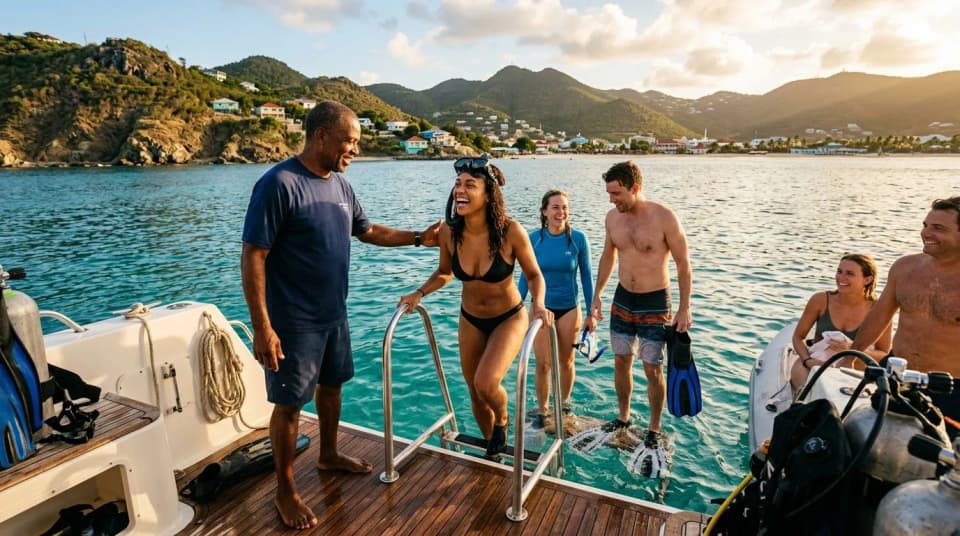
Keep the handoff and timing practical
A newsletter can create interest, but it should not leave the guest hunting for the next step. Put the booking link near the relevant trip, make the details clear, and do not send people to a page that forces them to start the search all over again.
I learned this the hard way with SXM Deals. A guest could be ready to book and still get stuck waiting for an answer from the operator. Today, I care much more about the handoff than the cleverness of the email. The booking system, the inbox, and the crew need to agree on what is available. That is one reason we built Junglebee for charter and tour operators - so the booking does not disappear between the website and the boat.
Send the email when it helps, not when the calendar says so. That might be the start of the Christmas Winds, a change to your meeting point, or the first calm week after a rough spell. You can keep a rhythm, but let the operation lead it. If nothing has changed and you have nothing useful to say, skip a send.
Still, software cannot rescue a vague email. If the guest has to ask what the trip includes, where to meet, or whether they can book, the message is not finished.
Use one honest test before you press send
Read the newsletter once as an operator and once as a guest.
As the operator, ask: did I explain something clearly? Did I make a promise I cannot control? Did I give the crew a message they can actually support on the dock?
As the guest, ask: do I know what to do next? Do I feel more comfortable choosing this trip? Would I forward this to the person travelling with me?
If the answer is no, do not add more adjectives. Remove the sales language and add one useful detail.
That is the newsletter I would want to receive from a tour company in St. Maarten or anywhere else: a note from somebody who knows the water, respects my time, and has thought about the next question before I have to ask it.
Booking page, card payments, one calendar for your website, booking page and desk. 4% per card payment, no monthly fee.