Junglebee
SEO for Tour Operators: Why Your Booking Page Should Sound Like a Boat Schedule
A founder's practical take on writing tour pages guests can find, understand, and book - without turning your schedule into marketing jargon.
 Michael RouveureFounder, Junglebee ·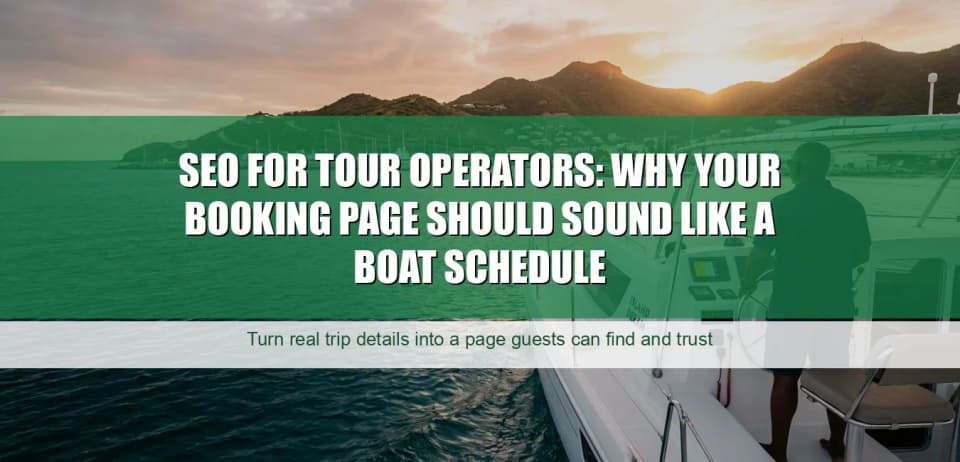
How do you get found when a guest searches for a boat trip in your island? Not a vague search for "things to do." I mean the real one: snorkeling from Simpson Bay on Saturday or a private sunset charter in St. Maarten. Your booking page has to answer that question before the guest gives up and calls the hotel desk.
I learned this the hard way with SXM Deals. We were sending bookings to operators and waiting for a confirmation. Some operators answered quickly. Others were out running the boat, cleaning it, or already asleep by the time I followed up. A guest could find the tour online, pay, and still be stuck waiting for an answer. Two days. Not two minutes. Two days.
That is why I think search traffic for tour operators is less about writing more words and more about making your page sound like the operation you actually run. Guests are not looking for a clever article. They are looking for the right trip, the right day, and a clear answer about what happens next.
Start with the trip you actually sell
The first mistake I see is a booking page trying to speak to everybody. It says "island adventures" or "unforgettable experiences" and never tells me where the boat goes. That might sound nice in a brochure. It is not useful when someone is ready to book.
Write the page around one real trip. Name the departure point, the places you visit, the usual duration, and who the trip suits. If you leave from Bobby's Marina in St. Maarten and run to Tintamarre and Pinel Island, say that. If the trip is for hotel guests who have one free afternoon, say that too.
I would rather see a plain title such as "St. Maarten Snorkeling Tour to Tintamarre" than a fancy one that could describe a boat trip anywhere in the Caribbean. The plain title tells a guest and a search engine what the page is about. That is useful work, not decoration.
Your schedule is part of the content
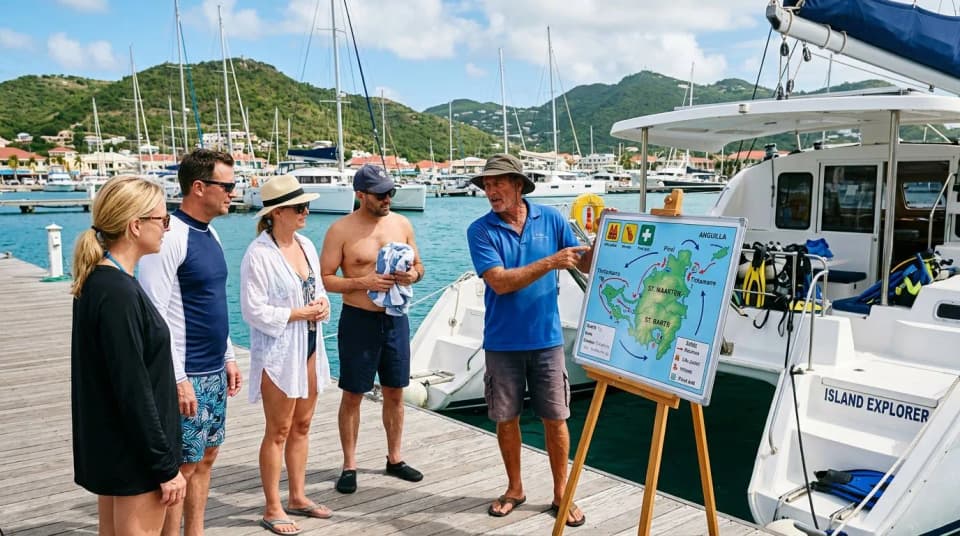
A tour page should read like a good dock briefing. When does the boat leave? Where do guests meet you? How long are they on the water? Is lunch included? What happens if the wind is up? Can a family with young children come? These are not details to hide in a separate FAQ. They are the reasons people decide whether to book.
Put the answers near the top of the page, in language a guest can scan. Then add the details that prevent a bad surprise:
- Meeting point: Give the marina, nearby landmark, and how early guests should arrive.
- What to bring: Keep it practical - sun protection, a towel, a little cash, and anything your crew genuinely asks for.
- Weather plan: Explain who contacts the guest and whether you reschedule, refund, or move the booking.
- Boat fit: Be honest about shade, steps, toilets, and whether the trip is comfortable for the guest you are describing.
This is where the page starts to earn trust. It also gives search engines the specific language they need to understand the trip, without you repeating the same phrase twenty times.
Write for the person holding a phone in the hotel room
Guests often read your page on a phone, trying to decide what to do tomorrow. The first screen should help them make that decision.
Keep the opening short. Show the next available times. Make the price and what is included easy to find. Use real photographs of your boat and the places your guests will actually see. A stock image of a beach in another country might look beautiful, but it creates the wrong expectation.
And do not make the guest hunt for the booking button. If the page answers every question but the next step is buried at the bottom, you have built a brochure, not a booking page.
You do not need a dozen landing pages. Each important trip deserves one page clear enough to book without your office manager answering, "What exactly does this include?" At Junglebee, we see the same thing in the booking flow: clarity before the calendar usually means fewer questions after the reservation.
Do not publish promises your crew cannot keep
This is the part many search articles skip. They talk about getting traffic as if traffic is the goal. It is not. The goal is a guest who arrives at the marina expecting the trip you sold them.
If your sunset cruise moves with the season, do not write a fixed promise that becomes wrong in December. If snorkeling depends on sea conditions, say it. If your fastest boat is not suitable for somebody with a bad back, make that clear. Honest pages might lose a booking now and then. They also prevent the argument at check-in.
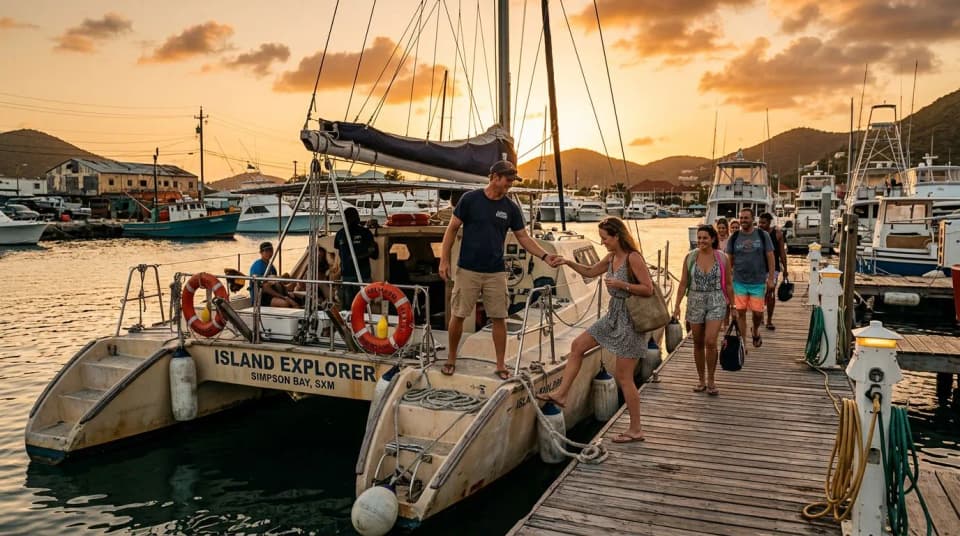
We had plenty of conversations in St. Maarten where the real problem was not getting a booking. It was getting the booking details from one person to the next - the hotel desk, the guest, the captain, and the office. A page that collects the right information up front is doing part of that job before anybody picks up the phone.
Use the words your guests and crew already use
I would not start with a list of phrases from an SEO tool. I would start by listening to your booking desk and your crew. What do guests ask every day? Where do they get confused? What does the captain call the trip? What does the hotel concierge call it?
Those words belong on the page. A guest may search for a private boat to Anguilla, while your crew calls it the Anguilla charter. Both phrases can live there naturally. You do not need to force them into every heading.
Read the page out loud. If it sounds like a robot wrote it, fix it. If it promises a "seamless, unforgettable, world-class experience," replace that with the actual run: "We leave Simpson Bay at 9:00, stop at two snorkel spots, and get back before the afternoon rain usually builds." That sentence does more selling because I can picture the day.
The page should hand the guest to the boat
Good search work for a tour operator is not a separate marketing project sitting above the operation. It is the operation explained clearly enough that the right guest can find it and book it.
Start with one trip. Describe the real route. Put the schedule and weather plan where people can see them. Make the next step obvious. Then ask your crew what the page got wrong.
That last part matters. When I built the first version of Junglebee, the problem was not that operators lacked enthusiasm for their tours. It was that the information got lost between the person selling the booking and the person running the boat. Your booking page is the first handoff. Make it a good one.
Booking page, card payments, one calendar for your website, booking page and desk. 4% per card payment, no monthly fee.