Junglebee
OTA Advertising for Tour Operators: What I Would Actually Pay For
A practical way to buy reach without buying more booking chaos, from a founder who has watched tour bookings break at the handoff.
 Michael RouveureFounder, Junglebee ·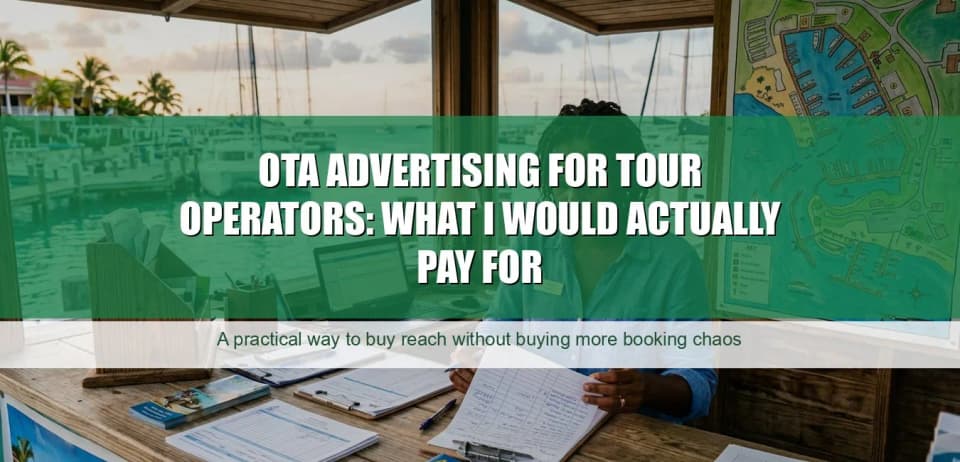
One of the strangest booking handoffs I saw in St. Martin started with a small piece of paper.
An activity desk at a hotel would call about a guest, write a number on the paper, and send the guest toward the boat. The operator had to work out where the booking came from, which hotel it was, and sometimes the room number. Then someone had to check availability. It was not a marketing problem. It was a handoff problem wearing a marketing hat.
I think about that whenever an operator tells me they want to spend more on OTA advertising. More people seeing your tour can help. But if the booking arrives in a system your crew cannot trust, you are buying more confusion at the exact moment you are trying to fill seats.
OTA advertising is rented attention
When I say OTA advertising, I mean paying to get your tours in front of people on an online travel agency or its distribution network. That can put you in front of guests who would never find your website on their own.
But the attention is rented. You do not own the guest's search, the page placement, or the relationship. The OTA can change how it displays your tour, what it charges, and where your listing appears. I would not build my entire business around a channel I cannot control.
That does not mean I would never use one. A new operator needs bookings and reviews. An established operator may have empty seats on a slow weekday. The question is not whether OTA advertising is good or bad. The question is what job you are asking it to do.
Decide what gap you are paying to fill
Before spending anything, I would write down the gap. Not a vague goal like "get more exposure." A real gap.
- Empty seats: You have a boat leaving tomorrow with space that will not be useful once the departure time passes.
- New demand: You are entering a destination or tour type where your own website has not built an audience yet.
- Seasonality: You need a little more reach during the shoulder season, not a permanent replacement for direct bookings.
- Distribution: You want hotel desks, agents, or travel sellers to find live availability without calling the captain.
Those are different problems. If your issue is empty seats, a targeted offer may make sense. If your issue is distribution, buying another advertisement will not repair a broken confirmation process.
Run the math on the whole booking
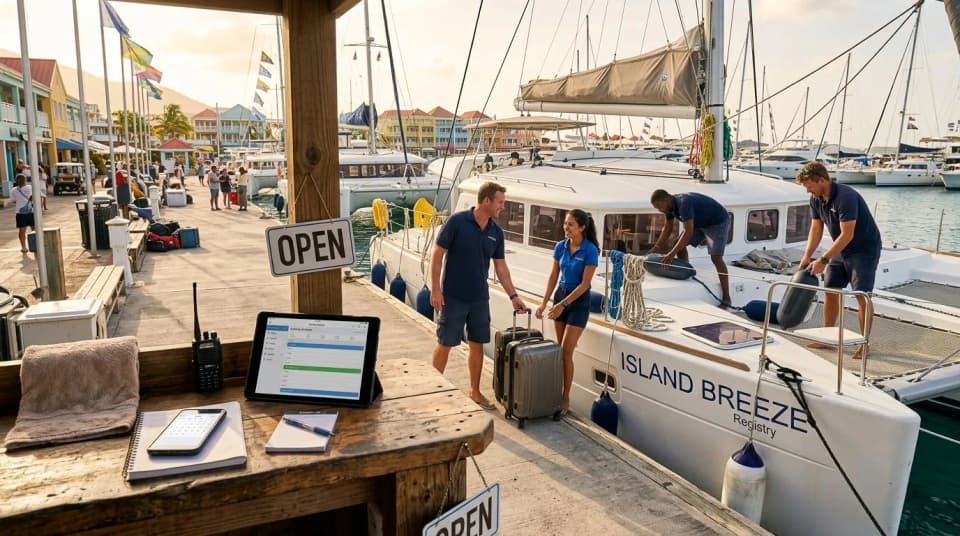
OTA advertising can look cheap when you only look at the advertising line. I would run the complete booking math instead.
Take an illustrative example. Pretend a guest pays $120 for a seat. You pay a $12 advertising cost, another $6 in channel or transaction costs, and your office spends ten minutes sorting out a booking that should have arrived cleanly. The booking did not cost $12 to acquire. It cost $18 plus the time and the risk around it.
Then ask what happens if the guest changes the date, asks for a pickup detail, or does not show. On a boat, those details are not small. They affect the manifest, the crew, the fuel plan, and whether somebody is standing at the dock waiting for a guest who went to the wrong marina.
I would track each channel separately:
- Net booking value: What is left after the channel and payment costs?
- Operational time: How long does your office spend fixing or re-entering the booking?
- Repeat value: Can you build a relationship with this guest, or does the channel keep the relationship?
- Cancellation and no-show pain: What does a bad booking cost you on the day of the run?
Do not advertise a tour your operation cannot confirm
This is the part I would put ahead of the advertising budget. Make sure your availability is real before you pay to send more people to it.
I watched small operators struggle because one person was on the boat, another was cleaning it, and nobody was watching the inbox. That is normal in this business. A one-man operation does not have a person sitting behind a desk waiting for a message from an OTA.
So the booking has to arrive where the operator can act on it. Availability should mean something. The guest should get a clear confirmation. If a weather day forces a change, the next step should be obvious to the office and the guest.
That is the standard we use when we build booking tools at Junglebee. The advertisement is not the hard part. Making sure the booking becomes a real trip is the hard part.
Use OTAs for reach, then build your own channel
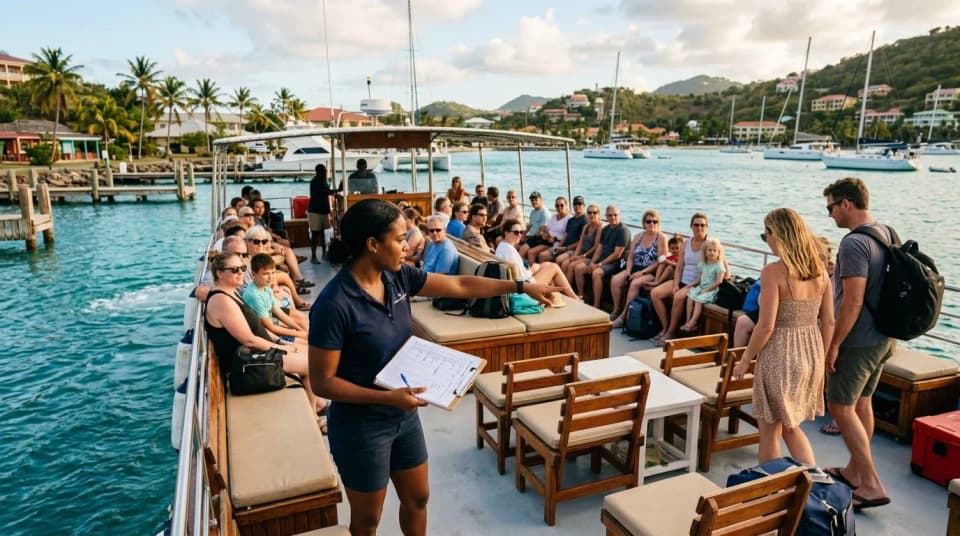
My opinion is simple: use an OTA as a door, not as the whole house.
When an OTA brings you a guest, give that guest a good experience. Run the trip properly. Make the instructions clear. Be the operator they remember, not just the listing they clicked. Then make it easy for that guest to find you again without relying on the same paid placement.
At the same time, put work into the channel you own. Keep your tour pages accurate. Show the departure point clearly. Put the real cancellation and weather policy where a guest can read it. Make direct booking easy on a phone. Ask happy guests to remember your company by name.
I would rather have a smaller direct channel that gets stronger every month than chase a bigger number of OTA bookings that leaves me with no idea who my guests are or what the booking really cost.
The test I would run before increasing spend
Pick one tour and one defined period. Compare the OTA bookings with direct bookings over the same kind of days. Do not compare a quiet Tuesday with a holiday weekend and call it a result.
Look at net revenue, staff time, cancellations, no-shows, and whether the booking arrived confirmed. If the channel fills seats without creating dockside work, keep using it. If it fills the calendar but creates a daily mess, fix the handoff before buying more reach.
The hotel paper slip I remember was never really about the paper. It was about a guest moving through a chain of people and nobody having the same answer about availability. Advertising can start that chain. Your operation still has to finish it.
Booking page, card payments, one calendar for your website, booking page and desk. 4% per card payment, no monthly fee.