Junglebee
How to Start a Tour Guide Business: What I Would Get Right First
My operator's take on what to get right before launching a tour guide business: the trip, real costs and booking handoff.
 Michael RouveureFounder, Junglebee ·
If you are starting a tour guide business, what has to be ready before the first guest pays you? Not the logo. Not the clever name. The trip itself, and the way you will make sure the guest actually gets the day you promised.
I learned that the hard way before Junglebee existed. I was running SXM Deals and had a large booking I did not want to take without the tour operator confirming. I asked for an answer. It took something like two days. I lost the booking. A guest was ready, the trip might have worked, but the handoff was not there. That is a rough way to learn what needs to be built before you start selling.
Get specific about the day you are selling
"A tour around the island" is not yet a trip. What does the guest do, how long are they with you, where do they meet you, and what will they remember on the way back? If you cannot answer those questions, you are asking a guest to fill in the blanks for you.
I would start with one clear trip, not a page full of ideas. Maybe it is a guided walk through a neighborhood, a snorkel run, a food tour, or a boat trip to a place you know well. The format matters less than the promise. Tell people who it suits and how long it runs. Be clear about what is included; say what they should bring before they leave home.
Then try to explain it out loud to someone who has never been there. If you catch yourself saying "it depends" every other sentence, write down what it depends on. The guest should not have to call you to find out whether the trip works for them.
Build around the run, not the picture of the business
A boat can be part of the plan. It can also become the most expensive part of the plan before you know whether the trip works. I grew up working on boats, from deckhand to first mate to captain, so I know the pull of looking at the vessel first. But the boat is not the experience by itself. The guest is buying the whole day around it.
Write out how a normal trip would go, from the first message to the goodbye. How many people can you comfortably guide? What happens if someone is late? What do you do if the conditions change? Who is helping you, and what does that person need to know before guests arrive?
If you need equipment, transport, or a particular location, make a list of what is essential and what can wait. I would rather see an operator start with a trip they can explain and deliver than buy every piece of gear first and then try to invent a reason to use it.

Know what one trip costs to deliver
Before you set a price, list the costs that show up every time you run. Depending on the trip, start with fuel and supplies. Add the less predictable parts too: repairs, dock or site costs, payment fees, and the time you spend answering questions and preparing. Some costs arrive every trip. Others show up as a repair bill when you least want one.
I would not pretend the first version of your numbers is perfect. It is a starting point. Write down your delivery cost and price, then see what happens when a seat goes unsold or a guest cancels. Check which local permits and insurance apply before you take money. The rules are not the same everywhere, and guessing is a bad launch plan.
There is a difference between a price that gets a booking and a price that lets you keep doing the work. Do not set it just by looking at what somebody else charges. Their trip and costs may be nothing like yours.
Set up the booking handoff before you advertise
The SXM Deals booking I lost stayed with me because I had put myself in the middle of a question I could not answer. I had the guest's interest, but I was still waiting on an operator to tell me whether the trip was available. Two days. Not two minutes. I did not want that to be the normal way a booking worked.
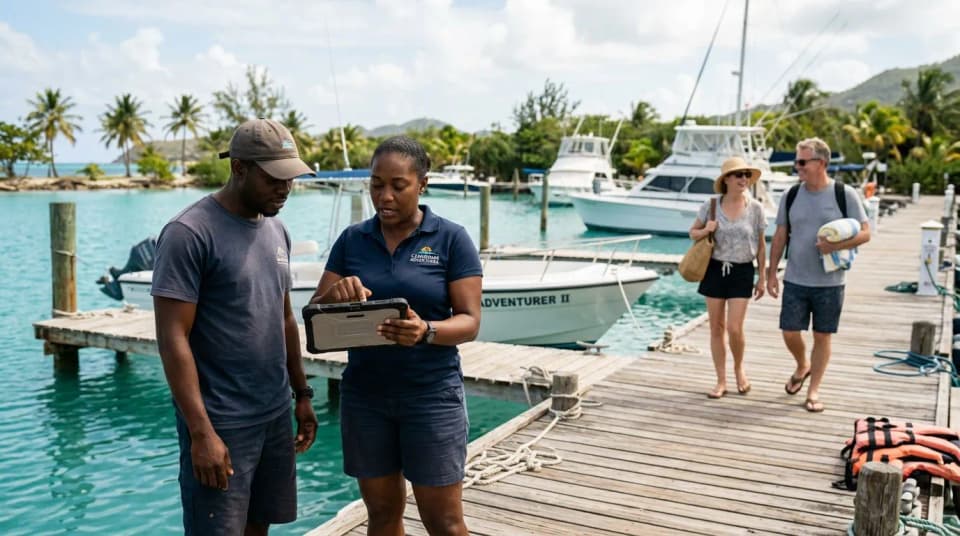
Before you promote anything, decide what happens when someone asks to book. How do you check availability? Who confirms it? What details do you need from the guest? When do you collect a deposit or payment, and how will you tell them the booking is set? Make that path simple enough that you can follow it on a busy day, not only when you are sitting at a desk.
We built Junglebee because I had lived that confirmation problem myself. Whatever system you use, do not leave the guest wondering if the trip is actually happening. A nice website cannot make up for a booking that is still floating around in someone's inbox.
Find a few guests before you add more moving parts
When the trip is clear and the booking path works, start talking to the people who might actually take it. That could mean direct bookings, a relationship with a hotel or activity desk, a local referral, or another channel that fits the kind of guest you want. I would choose one or two ways to reach people and learn from them before trying to be everywhere at once.
Pay attention to the questions guests ask. If a guest asks whether the walk is steep, say that on the trip page. If guests are unsure where to meet, fix the instructions. If people keep asking what is included, make that clearer before they reach checkout. Those questions are useful. They show you where your description is making the guest do extra work.
And keep an eye on the day itself. A good review is nice, but I would also ask whether the trip started on time, whether the group was comfortable, and whether you had the information you needed before everyone arrived. You are not just selling seats. You are learning how to run the experience without making it harder than it needs to be.
Make the first version easy to change
Your first trip will teach you things you could not learn from a planning document. You may find that the meeting point needs better directions, the timing is off, or you are trying to pack too much into one outing. That is not failure. It is information from people who actually showed up.
So before the first run, make sure you can answer five simple questions: What exactly is the guest buying? What does it cost you to deliver? Who confirms the booking? What happens when plans change? What will you adjust after the trip?
I would start with one trip you can explain, a booking you can confirm, and a day you can deliver. Then listen. Change what was confusing. Run it again. The business gets stronger when the promise and the real day match.
Booking page, card payments, one calendar for your website, booking page and desk. 4% per card payment, no monthly fee.