Junglebee
How to Start a Sunset Cruise Business: What I Would Set Up Before the First Guest
A practical founder-operator guide to building a sunset cruise product, route, weather plan, and booking handoff before the first guest.
 Michael RouveureFounder, Junglebee ·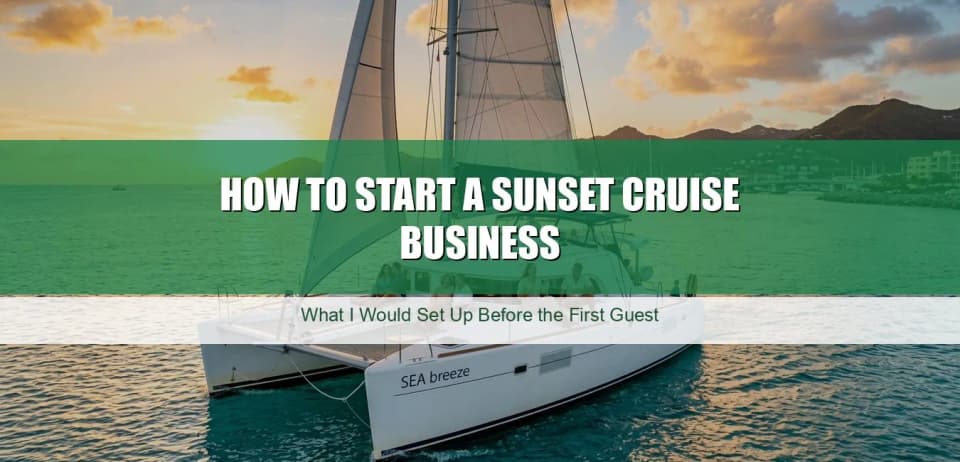
How do you start a sunset cruise business when the whole product lasts only a few hours each evening? Before the boat, you need a trip you can describe clearly, schedule honestly, and confirm without chasing people on the dock.
I learned that lesson the hard way while I was running SXM Deals. I had a large booking waiting for confirmation from an operator. I did not want to take the guest's payment without knowing the boat was actually available, so I waited. The operator got back to me something like two days later. Two days. For a booking that should have had an answer in two minutes.
A sunset cruise is even less forgiving. The inventory disappears every evening when the sun goes down. If you cannot give a guest a clear answer, you do not get that evening back. This is how I would set up the business before worrying about a fancy logo or buying more seats.
Start with one very clear sunset trip
Do not begin with "sunset cruises" as a vague category. Decide what the guest is actually buying.
Is it a quiet sail for couples? A small-group catamaran with swimming before sunset? A family-friendly boat ride with drinks and music? A private charter for a birthday? Those are different trips, with different boats, crew, prices, and expectations.
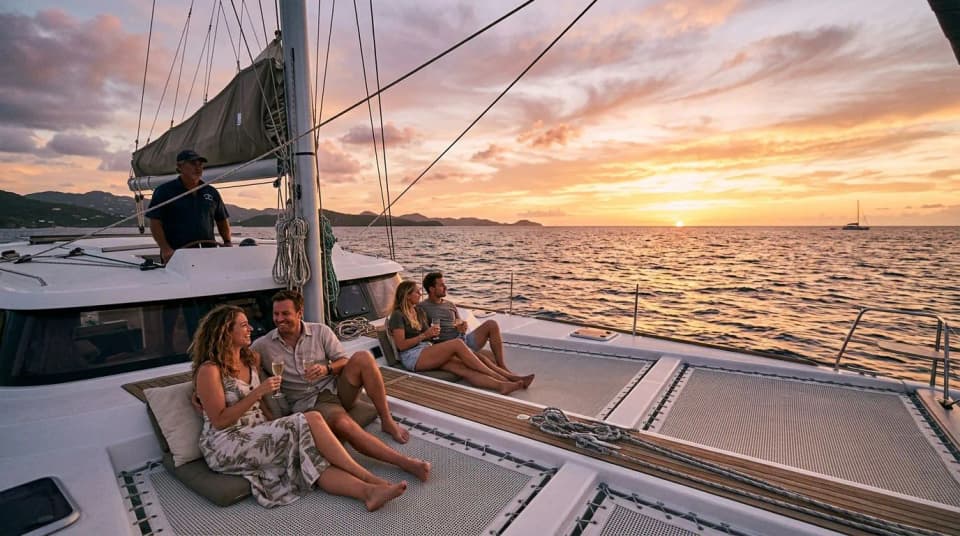
Write the promise in one sentence. For example: "A relaxed two-hour sail from Simpson Bay with a swim stop, a drink, and a front-row view of the sun going down." That sentence is doing real work. It tells your crew what the trip is, tells the guest what to bring, and gives you something to build your schedule around.
Pick one primary guest first. Couples, cruise visitors, hotel guests, and local families do not all want the same departure time or the same kind of boat. You can add other trips later. At the beginning, confusion costs more than variety helps.
Choose the route around the clock, not just the scenery
A good sunset route is not simply the prettiest place on the chart. It is a route your crew can run safely, on time, and with enough margin to deal with a late guest or a rough patch of water.
Run the route at the actual time you plan to sell it. Look at the departure point, the boarding process, the return, and the time your crew needs to clean and reset the boat. In St. Maarten, that might mean choosing between Simpson Bay, Philipsburg, or the French side. The right answer depends on your guest and the traffic between the dock and the hotel.
I would write down five things before publishing a time:
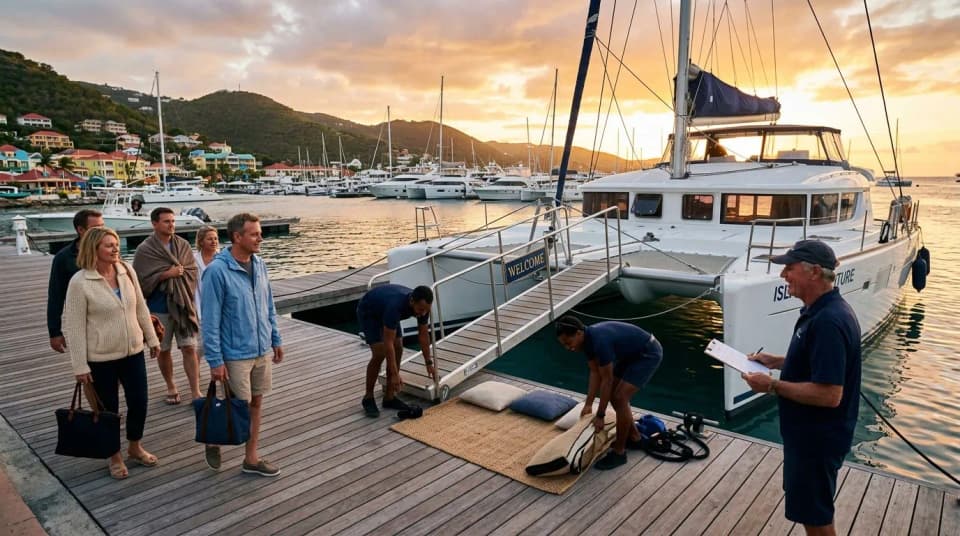
- Boarding time: when guests must arrive, not when the boat is supposed to leave.
- Actual departure: the time your crew can leave even if check-in takes longer than expected.
- Weather decision: who makes the call and how early you will tell guests.
- Return window: when the boat should be back, including a little breathing room.
- Reset time: how long the boat and crew need before the next run.
Sunset is a fixed deadline. The route has to respect that.
Sell the experience without hiding the practical details
Guests want golden light, a cold drink, and a good place to take a photo. They also need the details that stop a good evening from turning into a bad one.
Say where to meet. Say how long the trip lasts. Say whether swimming is part of the plan or only possible when conditions allow it. Explain what happens if the weather turns. Tell people whether they should bring a jacket, reef-safe sunscreen, or motion-sickness medication. None of that makes the trip less exciting. It makes the promise believable.
I am suspicious of listings that sound perfect but make the guest hunt for basic information. If a guest has to send three messages to learn where to park, they may send those messages to another operator instead.
Keep the booking page focused on this one experience. Add the photos, the meeting instructions, the cancellation terms, and the questions you hear every week. Then ask someone who has never been on the boat to read it. If they still ask what time to arrive, the page is not finished.
Protect the weather day before it protects you
A sunset cruise lives close to the weather. Wind, swell, rain, and visibility can change the trip quickly. You need a decision process before you have a disappointed guest asking what happens next.
Set a practical weather cutoff and make one person responsible for the call. That may be you, the captain, or an operations manager. I would not leave it to whichever crew member happens to see the forecast first.
Give guests a clear choice when you cancel: move the booking, receive a refund according to your policy, or choose another available trip. Do not make them start the conversation from scratch. If the boat is already in the water, communication is not the time to discover that your office, captain, and booking inbox all follow different rules.
And be honest about what is guaranteed. You can promise a well-run trip. You cannot promise that clouds will move out at 6:17 p.m.
Make confirmation boring and dependable
This is the part new operators often underestimate. A beautiful product still fails if the booking process is held together by messages, screenshots, and someone's memory.
Before you spend heavily on advertising, test the full path yourself. Book from a phone. Check what the guest receives. Confirm that the crew sees the guest list, payment status, meeting point, special requests, and weather plan. Then change the date and see whether the right people are notified.
When I was running SXM Deals, the painful part was not finding guests. It was waiting for an operator to confirm whether the trip could actually happen. That is why I care more about dependable confirmation than a long list of features. We built Junglebee's charter booking system around that kind of handoff, but the rule applies whatever tools you use: the guest should not be the messenger between your office and your boat.
Keep a simple pre-launch test list:
- Availability: can the guest only select times you can really run?
- Confirmation: does the guest get a clear answer immediately?
- Handoff: does the captain have the information needed for the trip?
- Weather: can you reschedule without rebuilding the booking by hand?
If one of those fails, fix it before buying another ad.
The first evening should feel repeatable
Starting a sunset cruise business is not about making one magical evening happen. You need to make it work on a high-season Tuesday, a quiet Thursday, and the day a guest arrives late from the airport.
Start with one route, one audience, one clear promise, and one confirmation process. Run it enough times to learn where the friction really is. Then add the private charter, the second departure, or the extra drink package.
That is the order I would follow. The sunset is the part guests remember. The boring details are what let you run it again tomorrow.
Booking page, card payments, one calendar for your website, booking page and desk. 4% per card payment, no monthly fee.