Junglebee
Charter boat booking software: an operators guide
The things I would check before I picked charter boat booking software again - deposits, captain changes, guest comms, payments, and the ones vendors never bring up.
 Michael RouveureFounder, Junglebee ·
The software category you are shopping for does not really exist.
Search for charter boat booking software and you get lists. Many I have seen read like generic tour-software lists with the word boat dropped in. They do not read like they were written by someone who took a call from a captain in a hospital parking lot at 5:30am, forty minutes before a full-day charter to Anguilla, guests already awake.
That call is the real test. Not the checkout flow. Not the color of the calendar.
In my experience, many booking systems are shaped around fixed-schedule tours, where the boat is basically a bus that floats. Charter work has a different shape, and a poor fit can cost an operator money quietly for years.
A charter is not a departure with a nicer boat
On a scheduled run your unit of inventory is a seat. Sell 24, close the trip, go. Clean.
On charter work the unit is the boat itself, plus a chunk of a day, plus the people standing on it. Availability is not a seat count, it is a shape. A morning half-day ending at 1pm. An afternoon that cannot start until the boat is back, fueled, and rinsed. A sunset run that only exists if the afternoon ran short.
Overnights are worse. Multi-day work means berths, not seats, and a system built around seat inventory may model a crewed weekend as a six-seat departure, then stall when the party turns out to be two couples who both want an aft cabin.
So do not build a snorkel tour in the trial. Build your ugliest charter. Six hours to St. Barts, price tiered by group size, fuel surcharge, marine park fee, hard turnaround before the sunset run. If the demo person suggests a note field, you have your answer.
Deposits are where lazy software gets expensive
A seat sale may be paid once. A charter booking can involve a deposit and a later balance, sometimes months apart and, for international guests, potentially across currencies and a cancellation policy.
Weather is the part outsiders never price in. In the Caribbean, Christmas Winds can force a week of charters to move. On a blown-out morning you may not be processing one refund; you may be making twelve decisions about money you already hold.
What I would look at, in this order:
- Does a deposit survive a reschedule. Moving a paid charter to Thursday should carry the money with it. Not cancel, refund, rebuild, re-charge. Every extra step is a chance for the guest to reconsider.
- Can you issue credit instead of cash. Where your policy and local rules allow it, and the guest agrees, credit can preserve the booking instead of forcing a cash refund.
- Does the balance chase itself. The system should send a reminder or collect the balance automatically where the guest has authorized it and your payment setup allows it.
- Can you see what you did. After a bad week you should know what was refunded, credited, and still owed, without rebuilding it from your inbox.
In my experience, systems often handle some of these better than others. The fourth is the one you will care about in April, working out where the season went.
A booking is a boat and a captain and a crew
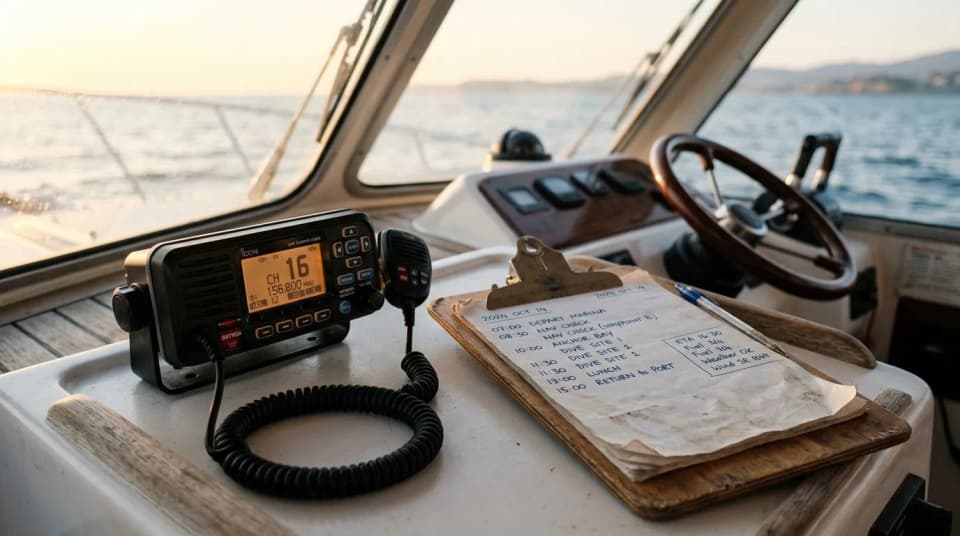
A lot of software I have used gets this part structurally wrong. It treats the boat as the resource and the captain as a name typed into a comment box. But a captain is a constraint: one body, finite hours and, in the Caribbean operations I ran, credentials that could limit which vessels or trips that person could take. The mate who is the only one on your payroll who can run a galley on a full-day is a constraint too.
I did years on the other side of this. Deckhand, then first mate, then captain, out of St. Martin over to Anguilla and St. Barts. The swaps were constant. Somebody's kid gets sick, an outboard eats itself overnight, somebody is just not coming. More than once I took a boat I was not scheduled on, and it only worked because it all lived in the head of one guy at the dock who knew who could run what.
That guy is a single point of failure. Fine while the operation fits in one memory. As the fleet grows, it can stop working badly.
So, my contrarian position on this category: the crew roster matters more than the booking calendar, and in my experience it rarely gets demoed. If a system cannot show you that moving a captain onto the 9am to Tintamarre leaves the 2pm uncrewed, it is a cash register with a nautical theme. Ask whether crew are schedulable resources or decoration on a boat record.
Payments down here, honestly
Keeping this hedged, because it varies by island, by bank, and by how you are registered. Many booking systems rely on a separate payment provider. In the Caribbean, I have found that the default option can be built around mainland entities and banks. So payments are not a feature-grid checkbox for us. They are the question of whether the thing can pay you at all.
What I have watched instead is operators bending the business around the software. An account in another country because that was the one the rail would accept, money leaving the region and getting wired home later. I am not naming providers here. But if your deposit visits a continent you do not live on before it reaches your bank, someone made a software decision and you inherited an accounting problem.
So get it in writing first: which legal entity, which bank, which currency, which payout route, for your island. It is one reason we built the Junglebee charter side around charter-specific payments and invoicing. The point holds whoever you pick. Confirm the payout route before the demo, not after the contract.

The checklist I would use, and what I would not overweight
Buying again tomorrow, I would test five things and ignore most of the grid.
- Build your worst charter in the trial. Tiered pricing, surcharge, turnaround, half-day overlap. If it cannot hold the shape, nothing else matters.
- Move a paid charter three days and watch the deposit. Count the clicks, and the emails you had to send by hand.
- Swap a captain across two boats on one day. See whether the system objects when it should.
- Confirm the payout route in writing. Entity, bank, currency, timing.
- Ask support one island question. A weather cancellation involving 30-knot winds under your own policy, or agent net rates for a hotel activity desk. You are testing whether anyone there has stood on a dock.
What I would not overweight: mobile app screenshots, dynamic pricing, the marketing module, the count of resale channels a vendor claims. One day you may use them. But no operator I know lost a season over a mediocre abandoned-cart email. They lose it on a Tuesday in February, three charters deep, wind up, captain out, software with no opinion about either.
Buy for that Tuesday. The rest is easier to fix later.
Booking page, card payments, one calendar for your website, booking page and desk. 4% per card payment, no monthly fee.