

August 26, 2026
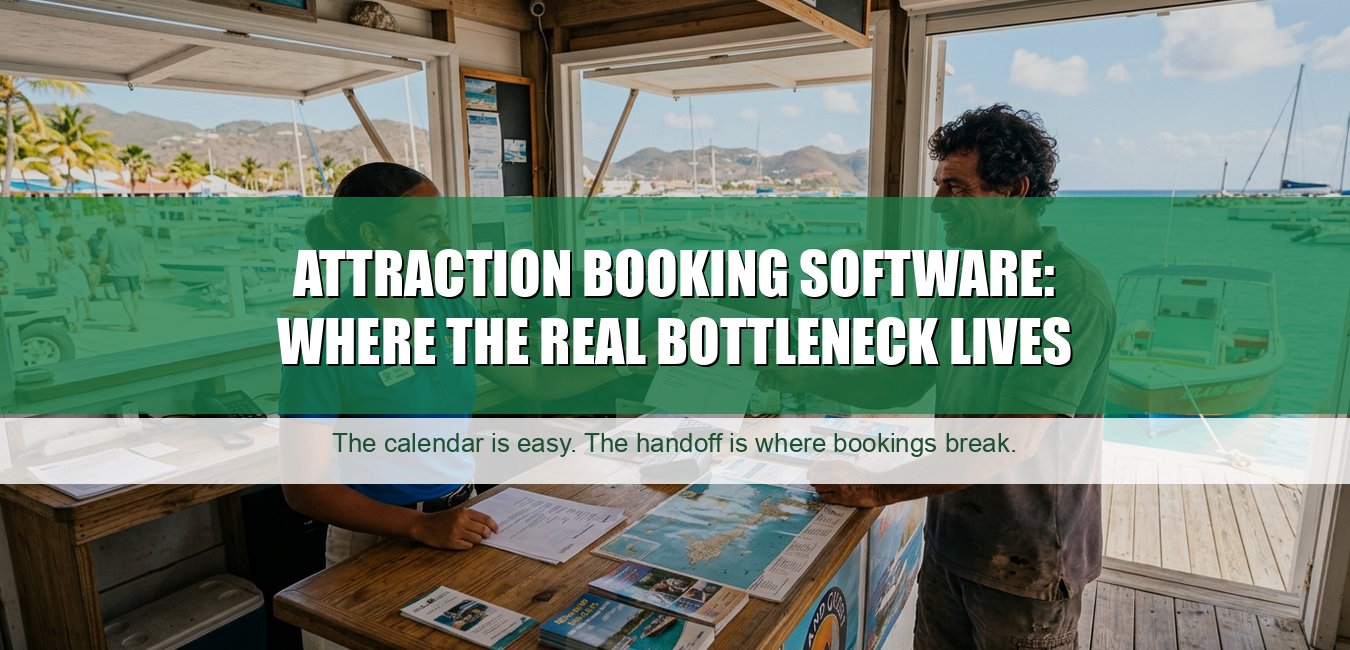
When I was running SXM Deals, a hotel activity desk would sometimes send a guest over with a little piece of paper and a phone number. That was the booking. No live availability. No payment record. No clear answer about which boat the guest was meant to be on.
Then I had to call the operator while they were out on the water or cleaning up after a run. Sometimes they answered. Sometimes they got back to me two days later. Two days. Not two minutes. By then the guest had made other plans.
That is why I do not judge attraction booking software by the prettiness of its calendar. The calendar is the easy part. The hard part is the handoff between the guest, the hotel or agent, and the person actually running the attraction.
A calendar can show an open seat. That does not mean the booking is safe yet.
For a small attraction, the real chain looks more like this: somebody hears about the experience, asks if there is room, tries to pay, waits for confirmation, finds the meeting point, and arrives on time. If any part of that chain depends on somebody remembering to send an email, you do not have a booking system. You have a collection of small promises.
I saw this constantly around St. Maarten. A hotel desk would call about a snorkel trip while the operator was out on the boat. The guest would turn up at the marina with a paper that did not say whether the deposit had been collected. It was a mess, and nobody was trying to make it a mess.
When an operator asks me what to look for in attraction booking software, I tell them to map the handoff before they look at features. Ask what happens from the first inquiry to the guest stepping onto the boat, bus, trail, or site.

Attractions often sell through more than one door: the website, phone calls, hotel concierges, destination management companies, and walk-up guests. If each door has a separate process, your team spends the day translating information instead of hosting guests.
I learned this the hard way with SXM Deals. I would receive a paid booking through the website and then forward it to the tour operator asking for confirmation. The operator had to find the message, check the boat, and reply. The guest was waiting while two businesses tried to agree on what was available.
That is not a guest problem. It is a systems problem.
A good setup gives every sales channel the same availability and booking record. The hotel should not have to guess. The office should not retype the guest's name. The captain should not be surprised by a group that somebody accepted in a different inbox.
And for island operators, the booking needs to work around the way business is actually done. People move between English, French, Spanish, Dutch, and Papiamento. Guests pay in different currencies. A cruise ship day can fill every seat, while a quiet weekday leaves you wondering whether the trip is worth running. The software should remove confusion, not make you behave like a mainland office.
I am suspicious of any attraction booking software conversation that treats payment as something to bolt on later. Payment changes how you manage capacity, deposits, no-shows, refunds, and the balance due.
Take a simple example. You have twelve seats on a morning trip: six guests book directly, three come through a hotel, and three call the office. If payment status is recorded in three places, your crew will be sorting it out at check-in. That is a bad time to discover two guests thought they had paid in full and one booking was never confirmed.
We built Junglebee after living inside that confirmation problem. For Caribbean operators, the payment path also has to end at the local business rather than creating an awkward trail through an overseas account. If you want to see how we handle the booking and payment side, the details are on our pricing page.
My opinion is simple: if a vendor wants to show you payment processing at the end of the demo, move it to the beginning. Ask what happens when a guest pays a deposit, cancels because of weather, reschedules, or still owes a balance on the morning of the trip.
Every software demo is built around the happy path. One guest. One booking. One payment. Everyone is at a desk.
That is not your business. Test the day that makes your stomach tight.
Watch what the person running the demo does. Do they solve it in the system, or do they open a spreadsheet and say, "We usually handle that manually"?
That sentence has cost operators more time than any missing feature. Manual work is not free just because it is familiar.
I am not looking for attraction booking software that makes an operator feel like an accountant. I want the office to have control and the crew to have clarity. The system has to serve both.
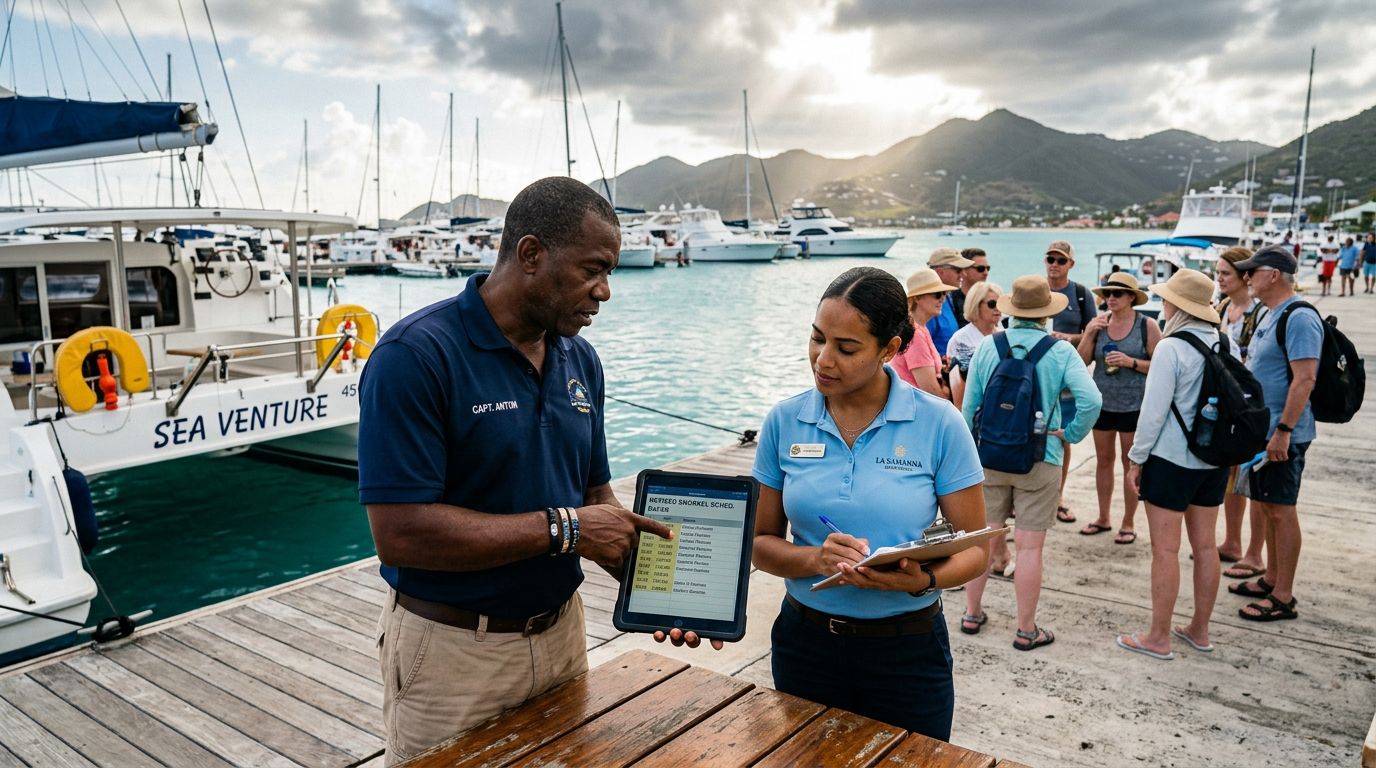
The best test is not whether the sales team can explain every feature. It is whether your deckhand can understand tomorrow's passenger list after a long day on the water. It is whether a hotel desk can make a booking without calling you three times. It is whether you can see what is paid, what is due, and what changed because the weather turned.
When I think back to those paper slips in St. Maarten, I do not think the operators needed more software. They needed one shared answer. Is there room? Is the guest confirmed? Has the money been handled? What does the crew need to know?
That is where I would start. Find the bottleneck between the sale and the experience, then make the software prove it can remove that bottleneck on your ugliest day. The calendar can come after that.


