Junglebee
Tour Guide Training: How to Get New Crew Ready
Tour guide training for operators: what to teach new guides and deckhands, in what order, and how to sign them off before they run a trip alone.
 Michael RouveureFounder, Junglebee ·
- Train new crew in the order the job can hurt you: safety drills and headcounts first, then running the trip, then the guest show.
- Every new hire shadows real trips, varied by type, and passes a written sign-off checklist before leading a trip alone.
- Make the day's manifest, waivers and booking changes part of training, so crew always know who is actually coming.
I started as a deckhand in my parents' company. Good tour guide training for new crew follows the same path I took at Eagle Tours in St. Martin: deckhand first, then first mate, then captain, running tours and charters for cruise ship and hotel guests out to the beaches, the reefs and the neighboring islands.
I grew up on a boat, and that ladder is still the best training model I know. Each step adds responsibility on top of the one below it. Nobody goes from the dock line straight to the microphone.
Don't hand a friendly new hire the trip script and hope the safety stuff rubs off along the way. I think you should train the job in the order it can hurt you: safety first, then the trip itself, then the show.
Tour guide training starts with what can hurt you
A great storyteller who can't run a headcount isn't ready, however good the jokes are.
Before a new guide or deckhand says a word to guests, they should be able to do these without thinking:
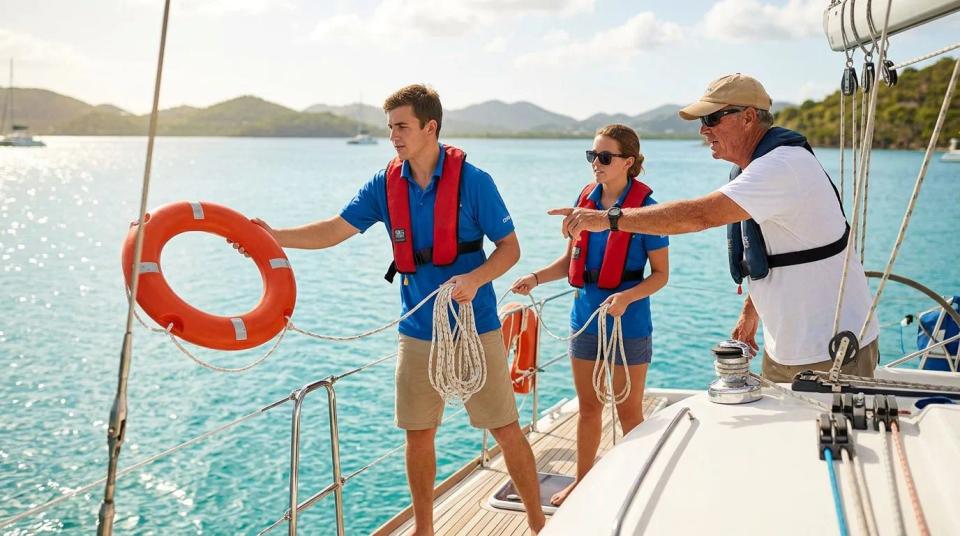
- Man-overboard and emergency drills. Not watched once. Practiced, on your boat, with your gear, until the new hire knows their job in the drill without being told.
- The headcount. Count at boarding and again before you leave each stop, then once more at the dock. And the number has to match the manifest every time.
- Where the safety gear lives. Life jackets, ring buoys, first aid kit, fire extinguishers. Your crew should find each one fast.
- Weather calls. A new hire doesn't make the call, but they need to know what conditions make you turn around, and they need to feel fine telling the captain when something looks off.
If you run US-flagged passenger vessels, the US Coast Guard already sets some of this for you. On the small passenger vessels it covers, the master has to make sure passengers get safety information before getting underway, or as soon as practicable afterward. That means things like emergency exits and life jackets. Give it before the lines come off, every time. Crew with emergency duties for passengers are also in the random drug-testing rules, and pre-employment testing applies too, though a documented exemption can waive a new test.
I'm not a lawyer, and every flag state and island has its own rules. So check with your own maritime authority what applies to your boats, then build your plan on top of that.
I'd also make first aid and CPR a requirement, not a nice-to-have. The American Red Cross runs First Aid/CPR/AED courses, and its certificates are valid for two years, so put the expiry dates on your calendar.
Shadowing before anyone runs a trip alone
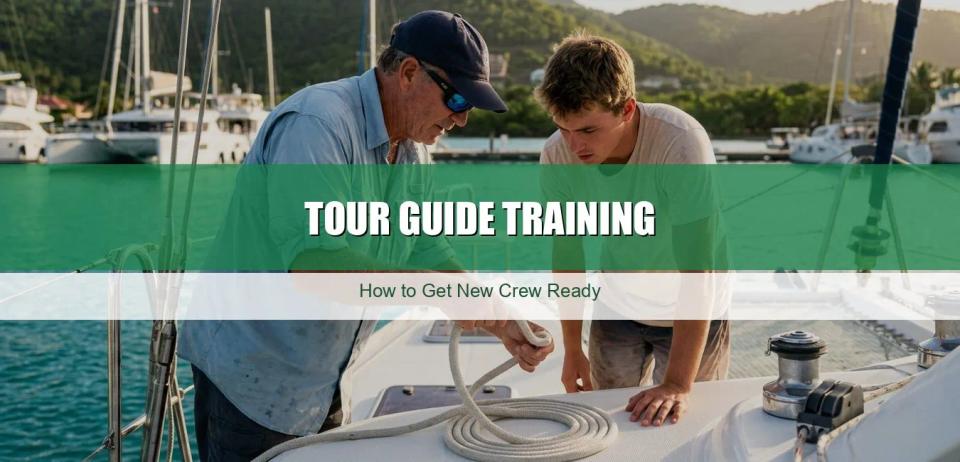
So every new hire rides along. First they watch. Then they do pieces of the job with an experienced crew member right next to them: lines, boarding, the safety briefing, the snorkel stop. Then they run most of the trip while the experienced person mostly stays quiet.
How many trips that takes depends on the person and the boat. I'd rather go by the checklist than by a fixed number. Someone who has crewed boats before may be ready fast. Someone new to boats needs more time on deck, and that's fine.
Mix up the trips they shadow. A calm morning snorkel run with a small group teaches different things than a full cruise ship day or a private charter to Anguilla or St. Barts. If they've only seen easy days, they haven't seen the job.
The guest side comes third
Once safety and the trip itself are second nature, then work on the show. This is where good guides stand apart, but it's the last layer.
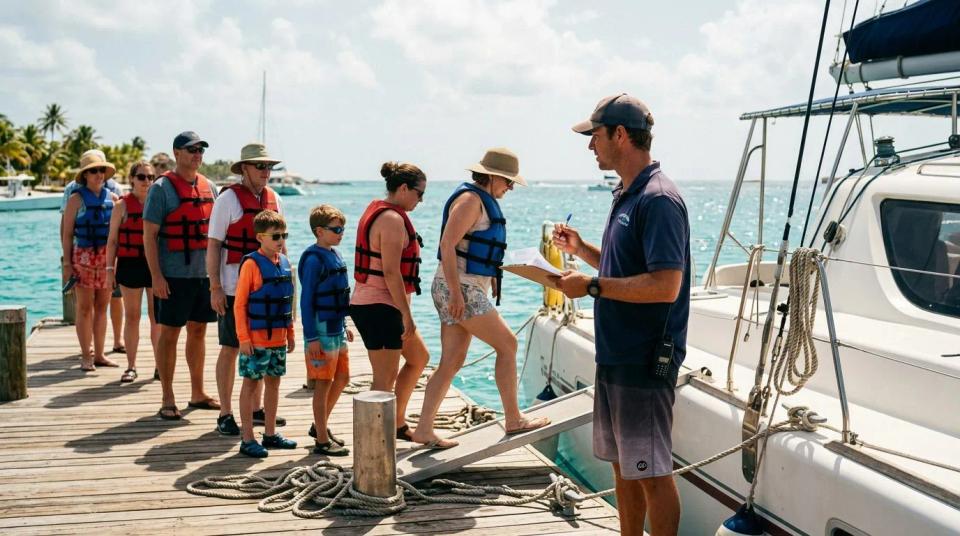
- Check-in. Greeting guests, finding their name on the list, sorting out who paid what, keeping the line moving.
- The talk. Let them build their own version of the stories about your island and your reefs. Scripts sound like scripts.
- Reading the group. Who's nervous in the water, who wants to party, who just wants quiet. Good crew adjust the trip without being asked.
- Handling questions. It's fine to say "I don't know, let me ask the captain." It's not fine to make something up about a reef or a wreck.
- Handing it up. Know which problems go to the captain, and say so early instead of sitting on them.
Conflict with guests is its own skill, and I wrote about difficult customers separately. For new crew, the hand-off in that last bullet is the whole job.
Make sure the crew can see the day
Don't skip the simplest part: your crew needs to know who is actually coming.
That means the day's manifest: names, head counts, kids, pickups, special requests, anyone who rebooked from a weather day. It means knowing which guests still owe a waiver. And it means knowing how a change at 7am reaches the person standing on the dock at 8am.
If the answer is "someone in the office texts the captain," train for that, including what to do when the message gets missed. That kind of mess is what we built Junglebee to clear up. Hotel desks and agents book into one system, and your team can pull up the passenger list for each boat and check guests in from a phone at the dock. Whatever system you use, teach every new hire where the manifest lives and make checking it part of the routine before boarding.
The sign-off before a solo trip
Before anyone leads a trip without a senior crew member watching, go through a written checklist with them. Mine would look something like this:
- Ran a man-overboard drill and an emergency drill on this boat without prompting.
- Gave the passenger safety briefing on several real trips, with the captain listening.
- Did the headcount at every stop and matched it to the manifest.
- Knows where every piece of safety gear is stowed.
- Has current first aid and CPR certification, if you require it.
- Can pull up the day's manifest and spot what changed since last night.
- Handled check-in and guest questions on their own for a full trip.
You both sign and date it, and you keep the copy. If something goes wrong later, you'll want proof you trained them. And if a new hire can't tick a box yet, they're not failing. They're just not done.
Deckhand, then first mate, then captain. That's the shape of it. Make each step a sign-off, and write it down.
Booking page, card payments, one calendar for your website, booking page and desk. 4% per card payment, no monthly fee.