Junglebee
Things to do in St Lucia
A Caribbean operators list of what to actually do in St Lucia - Pitons hikes, sulphur springs, snorkel and sail runs, and the small things guests keep asking me about.
 Michael RouveureFounder, Junglebee ·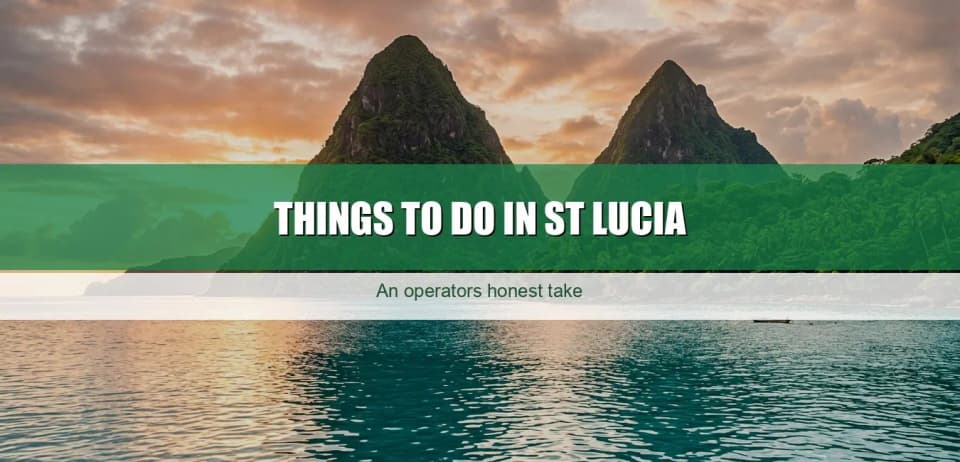
The first time I saw the Pitons they came out of a squall at me, and I did not believe them.
I was on a delivery, coming down from Martinique in the kind of grey afternoon where the rain sits on the water and the horizon stops existing. Wet shirt, no view, one eye on the instruments. Then the squall walked off west and there they were off the port bow, two green teeth standing out of the sea with cloud caught halfway up. I grew up on boats in St. Martin. I still stood there holding the wheel like a passenger.
So when a guest asks me what to do in St Lucia, I do not start with a list. I start with the shape of the island, because St Lucia is steep, and steep changes everything about how you spend a day there.
The Pitons, Soufriere, and the hike nobody wants to talk honestly about
The Pitons are the sight plenty of people come to see. Gros Piton is the bigger one and the standard guided hike, usually about four hours return. Petit Piton is the sharper, more technical climb, not a casual walk up, and it should only be attempted with an experienced local guide.
Now my opinion, and it is not the popular one. The Gros Piton hike gets sold to a lot of guests who have no business doing it. Not technical, but a steep, humid, uneven grind, and I have watched people book it on a whim at a hotel desk and spend the back half of their trip wrecked. If you hike regularly at home, go, go early, take more water than you think you need. If your knees complain on stairs, skip it without guilt. The best view of the Pitons is from the water, looking up.
Soufriere is the town beside the Pitons, and around it sits the cluster people book in one go: sulphur springs and the drive-in volcano, mud baths, botanical gardens, a waterfall. Worth a morning. Just be honest about the volcano stop. You park, you walk a short way, you look at steam coming out of the ground and it smells like eggs. Genuinely interesting for about twenty minutes.
So I would not build a day around it. In my experience it is worst when a couple of ships are in and the vans stack up in the lot, and best early, before the buses. If you get one Soufriere morning, put the water first and the steam second.
What a decent day on the water actually looks like
This part is my home turf, so I will be specific.
In my experience, the west coast is usually the calmer side, so the sail down from the north toward Soufriere is often comfortable in settled weather. Wind off the beam, the island rolling past on your left, the Pitons growing for an hour before you get there. Then a mooring in the reserve water underneath them, a snorkel over reef that drops off fast because the island stays steep after it goes underwater, and lunch aboard.
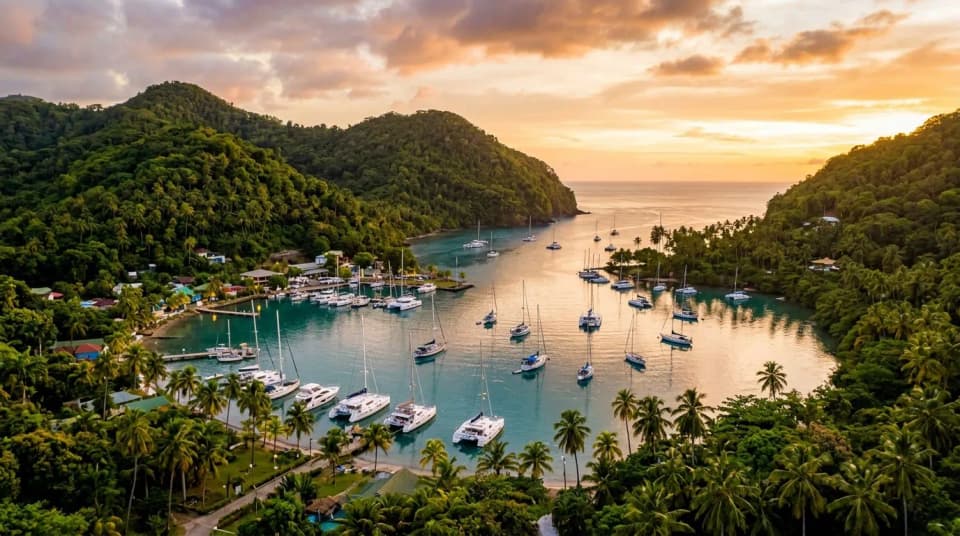
Marigot Bay is the other stop worth arranging a day around. A narrow hurricane hole behind a spit of palms, and coming in from outside it hides until you are almost in it. Small, deep, quiet, boats stern-to along the edge.
Some operator advice, because this is what guests get wrong most:
- Go small if you can. A boat with eight people can move when a spot is stirred up. A boat with sixty goes where the schedule says.
- Book direct with whoever owns the boat. Ask the weather policy before you pay. A real operator answers that in one sentence.
- Take the sail one way if it is offered. Sail down, drive back. It halves the dead time.
- Morning over afternoon. Usually flatter water, better light before the cloud builds.
Rodney Bay, Gros Islet, and the Friday jump-up
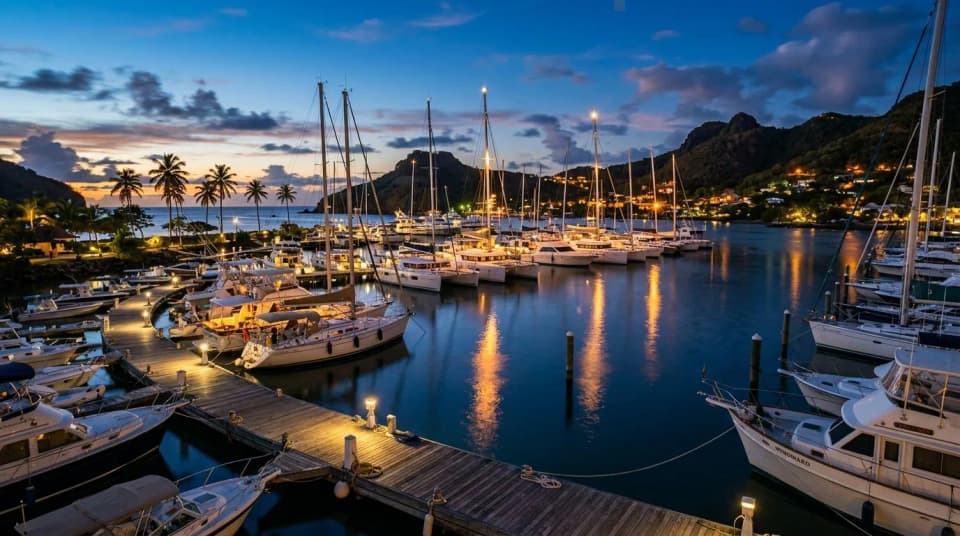
The north end is where the boats live and where the island is most social. Rodney Bay has the marina, the anchorage, and enough restaurants around the water that you can eat well without a car. If you sail in, this is usually where you clear in and decompress.
Next door is Gros Islet, and on Friday nights the street becomes the party. Speakers in doorways, grills going, chicken and fish and cold beer, everybody in the road. It is not a curated cultural experience, it is a street party. Go early-ish, eat off the grills, keep your phone in your pocket, and leave when it stops being fun for you.
Plenty of guests treat the jump-up as the box they tick for local flavor. It is better than that, and it is also just a Friday night.
The small things guests keep asking me
- Do I need a car? Mostly no. The roads are steep, narrow and switchbacked, and driving is on the left. Doing the north end plus a day trip or two, use drivers and boats. Rent only if you like mountain driving.
- Is Castries worth a day? A morning, not a day. The market is the reason to go, and it is best when it is busy.
- UVF or SLU? Most long-haul arrivals land at Hewanorra (UVF) in the south, while the small airport at Vigie (SLU) sits by Castries in the north. Staying north and flying into UVF means a real transfer, not fifteen minutes. Getting that wrong ruins arrival day more than anything else here.
- When is the wet stretch? In my experience, June into November is the wetter, less settled stretch, and it often means passing squalls rather than washed-out weeks. That also overlaps the Atlantic hurricane season, officially June through November, so build in more schedule flexibility and watch the forecast.
- The food? Eat local. Green fig and saltfish, grilled fish off a roadside pit, the market. Resort menus are fine and not why you came.
Who St Lucia is for, and who it is not
St Lucia is for people who want the island to be dramatic. If your ideal Caribbean day involves scenery you keep looking back at, water underneath something enormous, and a bit of effort to get places, it is hard to beat.
It is not the flat, everything-in-twenty-minutes island. If you want to walk out of your room onto a mile of pale sand and never get in a vehicle, other islands are built better for that and St Lucia will feel like work. The terrain that makes it beautiful is the terrain that makes it slow.
The operators I know down there deal with that constantly, and some of them run their trips on Junglebee, so I read their booking notes. The ones who are straight about a transfer that can take around ninety minutes, and longer in traffic, get better reviews than the ones who are not.
That delivery day from Martinique, the squall ended up being the best part. The island made me wait, then showed me the thing. It does that to guests too, if you let it and do not fill the week with vans.
Booking page, card payments, one calendar for your website, booking page and desk. 4% per card payment, no monthly fee.