Junglebee
Sargassum Season: What It Means for Caribbean Tour Operators
Sargassum season runs spring to early fall. What 2025 and 2026 records mean for Caribbean tour operators, and why guest messaging matters most.
 Michael RouveureFounder, Junglebee ·
- Sargassum season usually runs from spring into early fall and peaks in early summer; 2025 was the record year and USF expects 2026 to finish second.
- Windward, east-facing beaches on many Caribbean islands are more exposed, so identify leeward alternatives before the season and check conditions before using them.
- Tell guests about route changes before they arrive, never promise "seaweed-free" in listings, and write a clear reschedule policy for seaweed days.
It's tempting to treat sargassum season as a beach problem. I think sargassum season is a communication problem first, and a beach problem second.
You can't stop weed from landing on a beach. You can decide whether guests hear about it from you a week ahead, or from the smell when they step off the boat.
I grew up working on my parents' boats at Eagle Tours in St. Martin. We ran tours and charters around the island and over to Anguilla and St. Barts, and I took cruise ship and hotel guests out to the beaches, reefs and neighboring islands. When you sell a beach day, the beach is the product. If it changes, the guest has to know before the boat leaves the dock.
When sargassum season runs
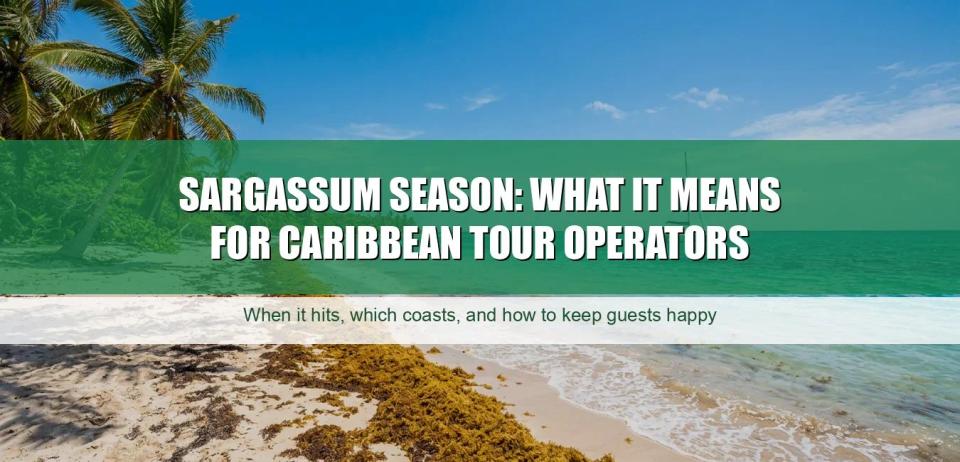
Sargassum is a floating brown seaweed. It drifts in a huge band across the Atlantic, and USF's Optical Oceanography Lab describes it as a "belt" stretching from the coast of West Africa to the Gulf. The trouble starts when it piles up on the sand and rots.
The season roughly runs from spring into early fall. Amounts generally build toward summer and decline in fall, but timing varies by island and year. NOAA's disaster guide addendum for the Southeast and Caribbean puts the peak at May to July. Winter can be quieter, but it is not a seaweed-free window.
But the calendar is getting less reliable. 2025 was the record year: USF measured 37.5 million metric tons across the Atlantic, Caribbean and Gulf in May 2025, then about 38 million in July. 2026 started early. In January most regions were already at record highs for the month, and by June the Caribbean Sea hit a record for June while the overall total sat only about 10% below 2025. USF now expects 2026 to finish as the second largest sargassum year on record, behind 2025.
USF's October 2026 bulletin says the amount is still falling, and will likely keep falling until the end of November or into December. Some Caribbean beaching will probably continue, but much less severe than the summer months. That is encouraging for the next few weeks, not an all-clear for the coming high season. Keep checking through winter and plan ahead for spring.
Which coasts get hit, and what the smell means
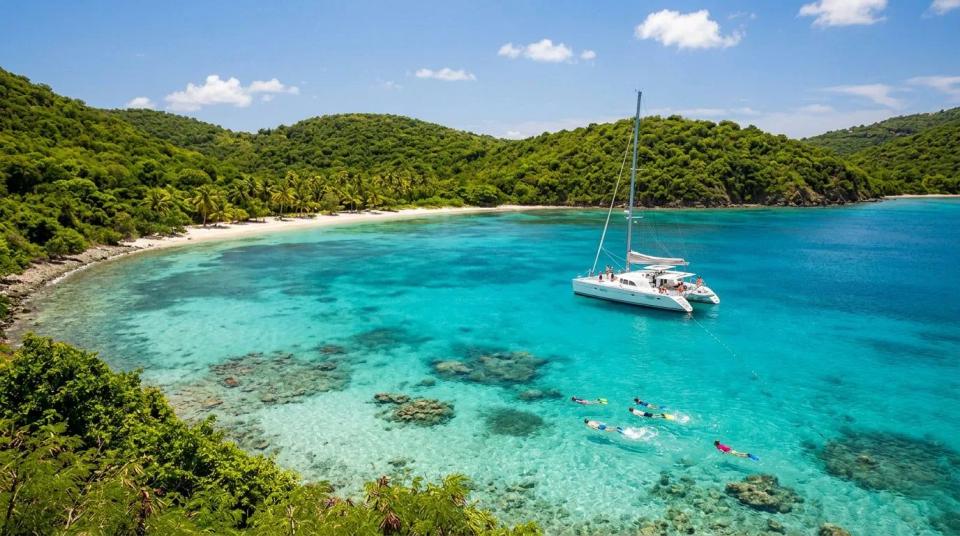
Sargassum rides winds and currents. On many Caribbean islands, windward, east-facing beaches are more exposed. USF's bulletins call out the windward side of the Lesser Antilles specifically. Around St. Martin, recent local forecasts have described strandings on eastern and southern coasts. Check each proposed stop rather than assuming another coast is clear.
The smell is hydrogen sulfide, released as the weed rots on the beach. It smells like rotten eggs. Florida's Department of Health says it can irritate the eyes, nose and throat, and people with asthma or other breathing problems are more sensitive to it. Their guidance also says that in open air on a beach, levels aren't expected to harm the general public. The weed itself isn't a toxin producer, though tiny creatures living in it can irritate skin, so they advise not touching it or swimming near it.
So don't scare guests with it, and don't brush it off either. If someone on your manifest has asthma, a heavy landing is a good reason to move the stop.
Where to check the forecast
- USF Sargassum Watch. The lab puts out a monthly outlook bulletin at the end of each month. It's the best big-picture read on whether the next few months will be heavy or light.
- NOAA's inundation risk maps. NOAA publishes experimental Sargassum Inundation Risk maps for the Caribbean and Gulf. They show regional risk, not a forecast for a specific beach.
- Your own network. USF says its bulletin shouldn't be used to predict a specific beach. The captain who passed it this morning knows more.
Sargassum is a communication problem first
A bad stretch hits a tour business in a few places at once. The beach stop on your catamaran run is covered in brown mats. The water at the snorkel site goes murky. Guests who booked from a photo of turquoise water feel misled, even though nobody lied to them. That shows up in reviews, and then in cancellations.
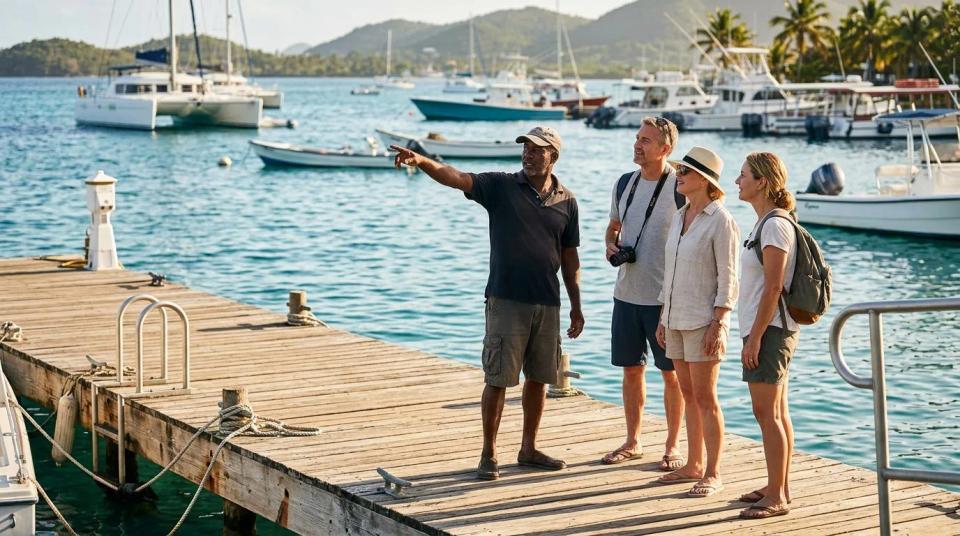
What hurts most is the timing. A guest who finds out on the dock feels ambushed. The same guest, told three days earlier that you're switching to the leeward side because of seaweed on the east coast, usually thinks you know what you're doing.
I know how that message can get missed. A lot of these businesses are a one-man show. You run the boat, you come back, you clean it, you eat, and by then it's time for bed. Writing to forty guests about a route change is not happening at 9pm.
That's why it has to be set up before the season, not on the bad day. Write the message templates now. Know which bookings you'd move first. We built Junglebee's charter booking system with rescheduling in the booking flow for this reason, so moving guests to another day doesn't mean a night of emails.
Have a leeward plan, and stop promising "seaweed-free"
Your leeward plan is worth more than any discount. A partial refund doesn't fix a ruined beach day. A different beach does.
- Pick your alternates now. For every windward stop, know your leeward swap, and a reef that holds up when the east coast gets hit. If you run interisland trips, another island can be the backup.
- Clean up your listings. Don't write "seaweed-free" or "crystal clear guaranteed" anywhere. Nobody can promise that in any month. Say the route may change based on conditions and that you'll pick the best spot on the day.
- Decide your policy before anyone asks. Is sargassum a weather day? My view: if you can still run a good trip somewhere else, it's a route change, not a cancellation. If you can't, offer a reschedule first and a refund second. Write it down and put it on the booking page.
A guest who read the rule when they booked has a lot less to argue about on the dock.
The one rule for next spring
The seaweed will come back. 2025 and 2026 made that pretty clear. What you control is whether your guests hear it from you first, with a plan already attached. Tell them early, and never sell a beach you can't promise.
Booking page, card payments, one calendar for your website, booking page and desk. 4% per card payment, no monthly fee.