

September 10, 2026
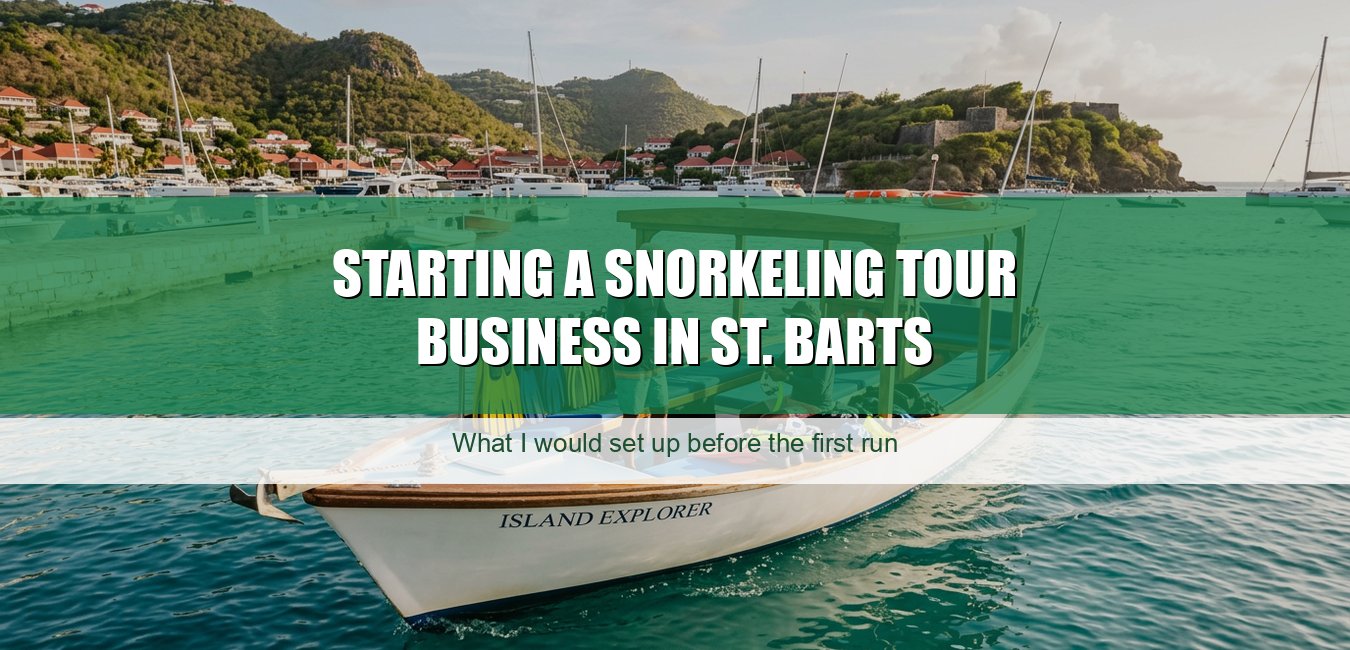
When I was running SXM Deals, I had a guest ready to make a significant booking and one simple problem: I could not confirm whether the operator had space. I sent the message and waited. Then I waited again. It took the operator something like two days to get back to me. The guest did not wait that long.
That is a painful way to learn how important the back office is. It is also the first thing I would fix if I were starting a snorkeling tour business in St. Barts today. The boat and the reef matter, obviously. But a beautiful trip that is difficult to book, confirm, pay for, or reschedule is still a difficult business to run.
I would not begin with a huge menu of trips. I would begin with one snorkeling run that the crew can deliver properly, then add a second departure only when the first one is working.
When I was a captain at Eagle Tours, the trip on paper was never the whole trip. There was the run, and then there was everything around the run. A first-time operator usually prices the two hours in the water and forgets the rest of the day.
Write down the real schedule. If you cannot explain it to a guest in a few sentences and to a deckhand in one quick briefing, it is not ready to sell.
Is this a relaxed half-day on a small boat? A fast trip for guests who want more time in the water? A private outing for a family staying on the island? A shared trip built around two good snorkeling stops and a simple lunch afterward?
I would choose one clear promise. Not ten features. Something a guest can repeat to the person in the hotel lobby: "It is a small boat, we get in the water twice, and the crew takes care of everything." That is much easier to book than a paragraph full of adjectives.
Then I would test the experience with people who are not friends or family. Watch where they hesitate. If everyone asks the same question about meeting points, fins, towels, weather, or what happens if they are late, those questions belong on the booking page.
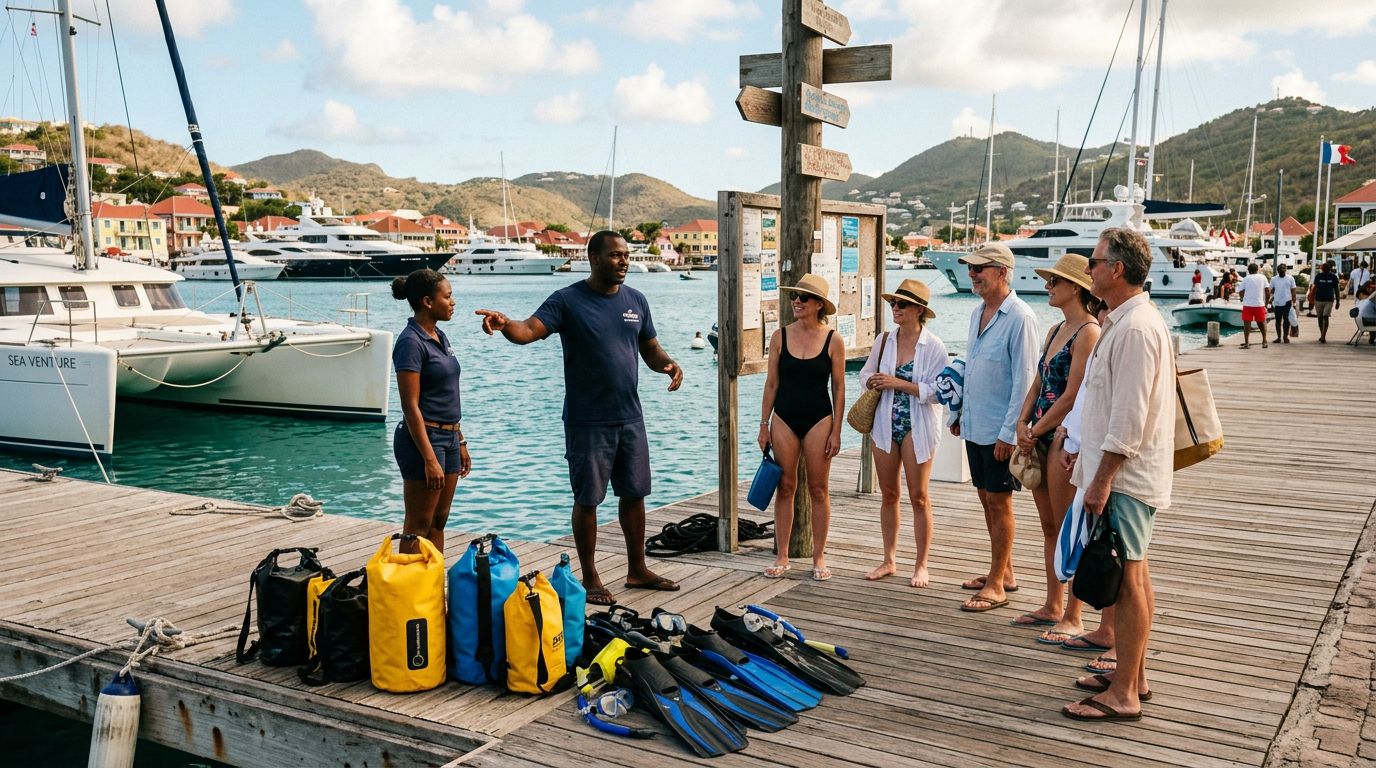
A lot of operators treat arrival instructions as an afterthought. They are not. The guest's experience starts before the boat leaves.
Give people a meeting point they can find without calling you from a taxi. Tell them how early to arrive, what to bring, where the boat will be, and what happens if the weather changes. If the dock is busy, say that. If the boat is not easy to see from the road, say that too.
I have watched operators lose time because the crew was ready and the guests were standing at the wrong part of the marina. That is not a crew problem. It is an information problem, and the booking flow should solve it before the morning of the trip.
For every booking, I would want the office and the boat crew to see the same details:
This is where many new operators try to be clever. I would do the opposite. Guests should be able to choose a date, pay a deposit or the full amount, and receive a confirmation without the owner manually forwarding messages between the boat and the office.
We built Junglebee for this kind of operator reality - the reality where the person answering a booking may also be cleaning the boat or driving back from a trip. The system needs to show live availability, keep the booking details in one place, and make changes visible to the people who actually have to deliver the trip.
My opinion is pretty firm here: if your booking process depends on a guest waiting for someone to answer a WhatsApp message, you do not have a booking process yet. You have a queue. That may work for a few friends in a quiet month. It does not work when three guests arrive from different hotels and a weather change forces you to move tomorrow's run.
Keep the payment terms plain. Say what is due at booking, when the balance is due, and what happens when the sea is not cooperating. A clear policy is kinder than a vague promise that creates an argument at the dock.

Snorkeling is a weather business. At some point, the wind or the sea state will make the trip a bad idea. You do not want to invent your response while guests are standing in front of you.
Decide who makes the call and when. Decide how you contact the guests. Decide whether you offer a new date, a credit, or a refund under each situation. Most importantly, make sure the office, captain, and guest all receive the same answer.
I would also leave some room in the schedule. A boat returning late from a previous run is not a small delay if the next group is already at the meeting point. Two trips with no breathing space between them can look efficient on paper and feel miserable by lunchtime.
If I were starting a tour business in St. Barts, I would judge the first season by more than revenue. I would look for the repeated friction: the question guests ask every day, the handoff the crew keeps missing, the payment that takes too long to settle, the trip that is always rushed.
Fix one of those weak spots every week. Do not add another tour just because the first one looks busy. A full calendar can still hide a bad operation if the crew is exhausted and the owner is answering every message personally.
That booking I lost through SXM Deals stayed with me because the answer should have taken two minutes, not two days. When you start your St. Barts snorkeling business, build around that rule. Guests should get a clear answer while they are still excited enough to book, and your crew should have the information before they step on the boat.


