Junglebee
Montego Bay Hip Strip: How I Would Plan a Tour Around It
A practical operator guide to timing, pickups, and building a better Montego Bay Hip Strip tour.
 Michael RouveureFounder, Junglebee ·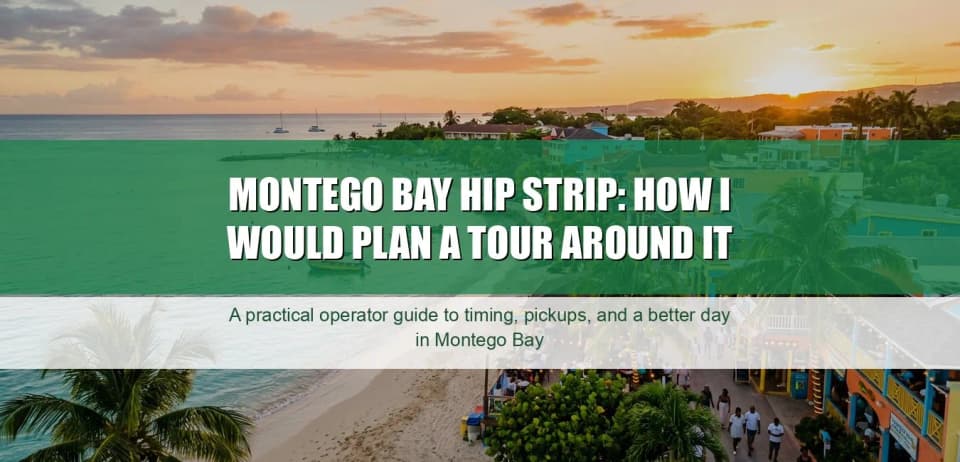
If you are planning a tour around the Montego Bay Hip Strip, what are you actually selling? The beach, the restaurants, the music, the shopping? Or are you selling a clean half-day that starts when the guest leaves the ship or hotel and ends before everybody gets tired and annoyed?
I ask it that way because I grew up around tour timing. In St. Maarten, I worked from deckhand to first mate to captain on runs for cruise ship guests and hotel guests. The water was the easy part. The hard part was making the whole day fit together when one late taxi, one slow check-in, or one guest who wanted "just five more minutes" could push everything behind schedule.
Montego Bay has the same kind of operating pressure, just with a different view. The famous strip is Gloucester Avenue, also called Jimmy Cliff Boulevard, with beaches, restaurants, shops, and nightlife close together. That sounds simple on a brochure. It is not always simple from the driver's seat.
The Hip Strip is a useful starting point, not the whole itinerary
The mistake I see in destination content is treating a recognizable street as if it were the complete product. A guest may search for the Montego Bay Hip Strip, but they are usually trying to answer a more practical question: what can we do nearby without wasting the day in a vehicle?
That makes the area a strong anchor for several kinds of tours:
- A beach and swim stop. Doctor's Cave Beach is right in the area and gives a guest an easy way to put the sea into the day.
- A food and music afternoon. The strip has enough restaurants and entertainment to make a short walking or tasting route feel complete.
- A shore-excursion add-on. If the guest is visiting on a cruise ship, the strip can work as one part of a wider Montego Bay day, provided the return window is real.
- A soft landing on arrival day. Guests arriving at a hotel may not want a six-hour adventure with a hard start. A local loop can be the better first booking.
These are not four products to throw on a page because a keyword tool suggested them. They are four different promises. Each one needs its own meeting point, duration, pace, and cancellation language.
Build the timing from the handoff backwards
When I was running boats, I never started with the pretty part of the trip. I started with the handoff. Where is the guest coming from? Who is responsible for finding them? What happens if they are ten minutes late? What time must they be back?
For a Montego Bay tour, write down the answers before you choose the stops. A simple operating sheet should include:
- Pickup point: hotel lobby, cruise terminal, or a named public meeting point. "Montego Bay" is not a meeting point.
- Buffer: extra time for traffic, security, a guest who has the wrong lobby, and the one phone call that always happens while the vehicle is waiting.
- Last return time: especially for cruise guests. Never make the advertised end time the same as the time the guest must be back on board.
- Fallback stop: a nearby beach, cafe, or indoor stop if weather or congestion changes the plan.
This is where destination articles often lose the plot. They list places. Operators have to move people between them. Those are different jobs.
Do not promise a walk when the guest needs a plan
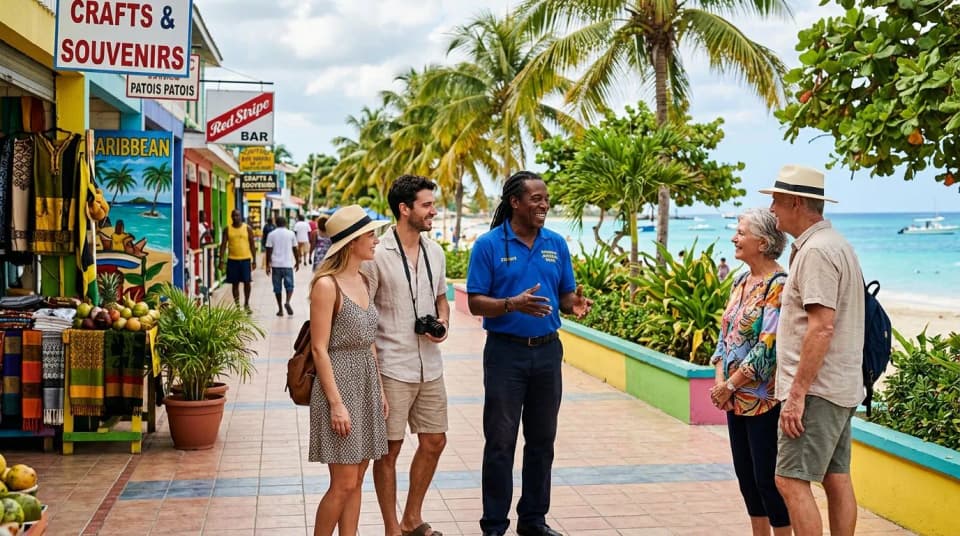
It is tempting to describe the Hip Strip as an easy walk: beach here, restaurant there, shopping down the road. Sometimes that is exactly what the guest wants. But you still need to tell them what kind of walk it is, where the tour begins, how long the group stays together, and what happens when somebody wants to split off.
I would keep the guest-facing description plain:
We meet at the agreed pickup point, walk a short section of the strip with a local guide, stop for the experience you booked, and leave enough time for the return transfer.
That sentence is less exciting than "discover the heartbeat of Jamaica." It is also more useful. A family with tired children, a cruise guest watching the clock, and a couple who wants to linger at lunch all need different expectations.
And do not hide the parts you cannot control. A restaurant may be busy. A beach may be crowded. A road may be slow. The operator who says this upfront usually has a better day than the operator who promises a frictionless island fantasy.
Make the booking carry the details
A Hip Strip booking should do more than reserve a seat. It should remove the questions that otherwise land on your phone while you are trying to run the next trip.
Put these details in the confirmation:
- Exact pickup instructions and a contact number
- What the guest should bring for the beach or walking portion
- Whether food, entry, beach access, or drinks are included
- The latest safe return time for cruise guests
- What happens if the guest is late or the weather changes
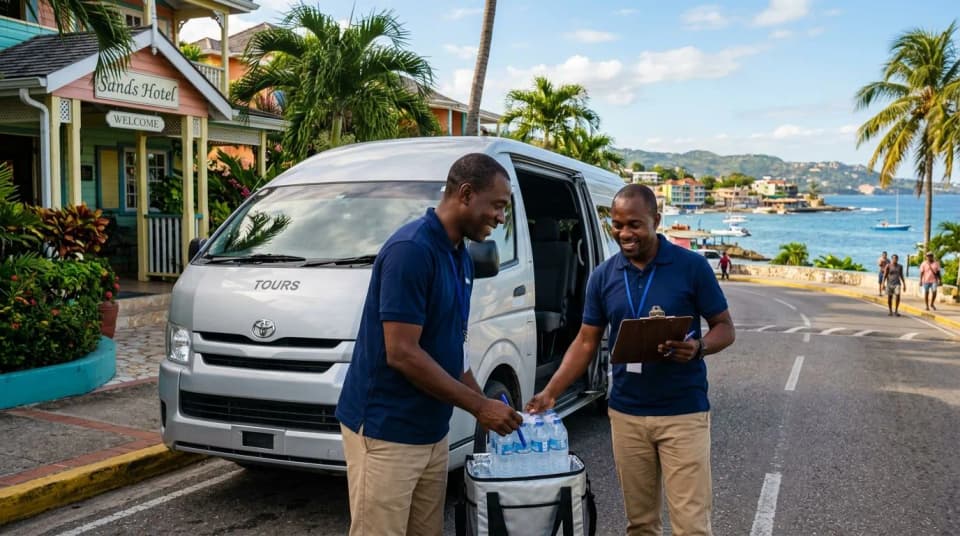
We built Junglebee around that kind of handoff because I had lived through the alternative: a booking arrives, somebody has to forward it, and the operator answers when they finally come off the boat. The guest does not care whose inbox is responsible. They care whether the day is confirmed.
The best Montego Bay Hip Strip tour is honest about its edges
I would rather sell a shorter tour that runs cleanly than a grand itinerary that depends on every person being on time. That is the operator opinion I would put at the center of this destination.
Use the Hip Strip as the anchor, then build around the guest in front of you. Cruise guests need a hard return margin. Hotel guests may want flexibility. Families need a slower pace. Couples may care more about lunch and sunset than checking off five stops.
If you make those differences clear before the booking, the strip becomes more than a search term. It becomes a dependable starting point for a day that your crew can actually deliver.
Booking page, card payments, one calendar for your website, booking page and desk. 4% per card payment, no monthly fee.