Junglebee
How to Start a Jet Ski Rental Business
How to start a jet ski rental business: permits, insurance, buying skis, safety briefings, pricing, deposits, weather rules and online booking.
 Michael RouveureFounder, Junglebee ·

- Start with local permits, driver eligibility checks and insurance that explicitly covers your PWC rental or tour operation; confirm requirements with the authorities and insurer in writing.
- I'd start with guided jet ski tours so a guide can set the route and pace, not because fewer accidents, fewer claims or higher prices are guaranteed.
- Take deposits at booking and put damage, weather and cancellation policies in writing. Test online booking, payments and your chosen waiver tool before opening.
Back when I was running SXM Deals, some guests wanted to make a huge booking. Significant money. I didn't want to take their payment before the operator confirmed, so I asked for confirmation and waited.
It took the operator about two days to get back to me. Two days. I should have had an answer in two minutes, and I lost a lot of money.
I'd apply that lesson to a jet ski rental business. Picture a guest deciding on the beach, in a swimsuit, phone in hand. I'd want them to have an answer in two minutes, not go looking for another operator.
Permits and local rules come before the first ski
Personal watercraft rules vary by island, state and local operating area. Some places want a marine or water sports permit on top of a business license. Others cap skis per beach, or set minimum renter ages and boater education rules for drivers.
Rules change, so check locally. What I'd do:
- Go to the maritime or harbor authority in person. Ask what a PWC rental or tour operation needs, in writing: vessel registration and inspections, staff qualifications, who may rent and drive, emergency procedures and whether you need a rescue craft.
- Ask the tourism office and local government about business licensing and beach vending rules.
- Read the marine park rules if your route goes near a protected area, especially speed limits and no-PWC spots.
And ask an existing operator which offices handle each approval and what paperwork they expect.
Then insurance. Get commercial liability that specifically covers rented and guided skis, plus hull cover. Don't assume a personal watercraft policy covers rentals or paid tours. Have the insurer confirm in writing your activities, operating area, renter liability cover and any locally required limits. Location is one factor in the premium, so shop around.
Guided tours or free rentals? I'd start with tours
My opinion, and plenty of operators will disagree: if you're new, start with guided tours, not free-ride rentals.
With a free rental, my worry is a novice on your ski with no guide nearby. On a tour, the lead guide sets the pace and the route, and keeps the group clear of swimmers and moored boats. Nobody can promise fewer accidents or claims that way. I'd just rather have someone who knows the water out there.
I'd test whether guests will pay more for a guided route than for time alone on a machine. A local showing you the island from the water, with a stop in a cove for photos. That's what I'd sell, wherever the route is permitted.
So run tours for your first season. Short supervised rentals can come later, but only where authorities permit them and approve any required zone.

Buying the fleet without buying someone else's problem
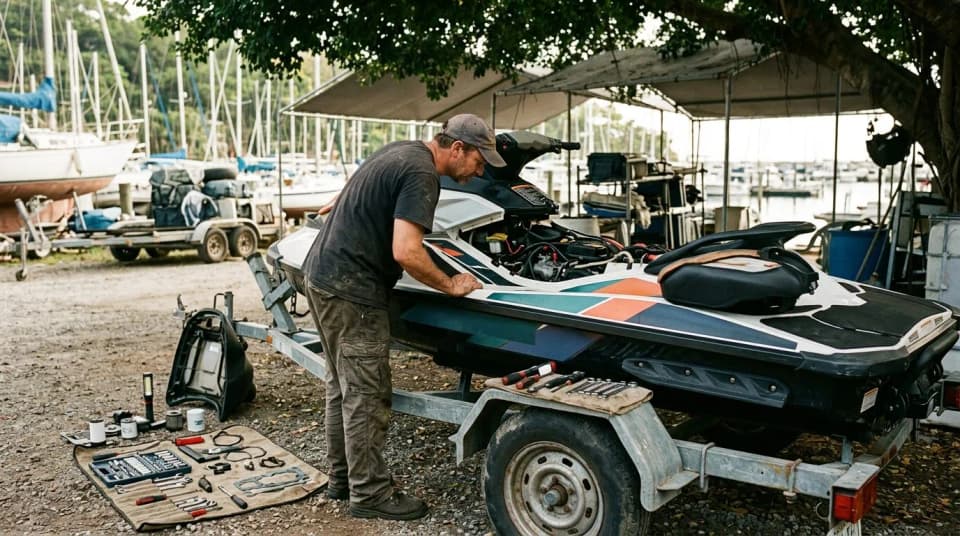
If I bought new, I'd confirm the warranty covers rental use and ask about local service support. Used skis can save you real money or cost you a season, depending on what you check first.
- Hours and records. Get the engine hours and maintenance records. Before any money moves, pay a PWC mechanic for a compression test and to check the hours and records against the ski's condition.
- Hull and pump. Look for cracks, soft spots and impeller damage from sand and rocks.
I'd standardize on one make, model and model year where possible. Have the dealer confirm which parts are shared.
And plan for salt. Flush with fresh water after use the way each model's manual says, engine-and-water sequence included, and keep to both hour-based and calendar-based service intervals. Same for pre-launch checks. Keep a spare ski so one breakdown doesn't cancel a whole group. Check local parts stock and delivery times before opening, and shelve the common service items.
Staff, the briefing and where you launch from
Hire guides who know the water and can handle people. Reading a nervous guest, or one about to show off, matters more than riding fast.
Build the safety briefing around local requirements and each model's manual. Gear first: a correctly fitted, approved PWC life jacket on every rider, kill-switch lanyard attached.
Then the riding. Steering and stopping on that model, safe reboarding and capsize recovery, hand signals, speed and spacing. Point out swim zones and local hazards. Cover weather and emergencies, and make it plain nobody rides impaired. Explain the intake and jet-nozzle hazards too.
Use qualified instructors and keep signed instruction records where required. Before heading out, have every driver show you, in a safe permitted area, they can start, stop and turn.
Launch access is its own headache. Weigh a marina against a beach on cost and shelter, and on guest access. On a beach, check vendor and launch permissions, surf, swimmer separation and each model's minimum operating depth. Either way, get the access agreement and permissions in writing.
Pricing, deposits and the damage conversation
Price rentals by the half hour or hour, tours by the trip. See what nearby operators charge, then price for what you deliver. I'd consider a "double up" price for two riders on one ski, after checking each model's rider and weight limits.
Take a deposit when the guest books, not when they show up. Settle your damage policy before you need it. I'd take a card hold or security deposit at check-in and photograph every ski before and after each ride.
Have a local lawyer and your insurer look over the damage terms. Then explain the deposit and damage charges in plain words, and how a dispute works, before anyone touches a throttle.
Weather and cancellation rules go in writing too. Blown-out sea? You cancel and offer a reschedule or refund. No-shows are trickier. Local consumer and refund rules may limit what you can keep, so check them first, then apply your terms the same way to everyone.
Answer in two minutes, not two days
Back to those two days. The fix was never a better excuse. It was a system that answers for you.
For a jet ski shop, I'd want online booking with real-time availability and a deposit on the spot. Add digital waiver signing and a simple way to message guests when weather forces a reschedule. Test what's built in and what needs a separate service.
Junglebee supports online availability, deposits and payments for Caribbean operators. Whatever you use, test it from a guest's phone before opening. If a stranger on the sand can't book and sign in a couple of minutes, fix that before you buy another ski.
Booking page, card payments, one calendar for your website, booking page and desk. 4% per card payment, no monthly fee.