Junglebee
Aruba Snorkeling Tours: What I Would Build Around as an Operator
An operator's guide to building an Aruba snorkeling tour around clear promises, clean handoffs, weather plans, and a day the crew can deliver.
 Michael RouveureFounder, Junglebee ·
What does a guest actually need to know before booking an Aruba snorkeling tour? Not just whether the water is blue. They need to know where to meet, when to arrive, what happens if the wind changes, and whether the boat will still feel good once the first excitement wears off.
I learned to think about this running trips around St. Maarten with my family's Eagle Tours. A guest sees a reef and a boat. The operator sees the tide, fuel, crew, weather, pickup, gear, and the time it takes to get everybody safely back to the dock.
That difference matters in Aruba. The snorkeling itself is only one part of the product. The rest is the trip you promise around it.
Start with the kind of day you can run well
Aruba snorkeling can mean several different things to a guest. It might be a short swim from the beach, a half-day boat trip, a catamaran outing, or a private charter built around a family or a group of friends. Those are not the same product with different pictures.
If I were setting up a tour in Aruba, I would choose the operating shape before I worried about the name or logo. How many guests can the boat carry comfortably? How much time do you really have on the water? Does the trip leave from one dock or do you collect people from hotels?
Start narrow. One clear trip is easier to explain, staff, price, and deliver than six versions that all sound alike online.
- Short water time: Sell it to guests who want a simple introduction and do not want to spend a whole day on a boat.
- Half-day outing: Build the schedule around the time needed for boarding, safety instructions, swimming, and the ride back.
- Private charter: Leave room for the group to choose its pace, while being clear about what the price includes.
The promise should match the boat. If the boat is comfortable for ten people, do not sell it like it is comfortable for twenty because the calendar has empty spaces.
Sell the places guests can picture
Guests looking for Aruba snorkeling are comparing a few images in their heads: clear water, an easy swim, a safe boat, and a day that does not become complicated. Your listing has to turn that picture into a real plan.
Be specific about the meeting point. Say what guests should look for when they arrive. Tell them how early to come, whether parking is simple, and what happens if they are staying at a hotel away from the departure point. A beautiful photo cannot rescue a guest who is standing at the wrong marina five minutes before departure.
A good listing answers questions before they become messages:
- What equipment is provided, and what should guests bring?
- Is the snorkel stop suitable for children or less confident swimmers?
- How long is spent moving between stops and how long is spent in the water?
- What happens if conditions are not suitable for the planned route?
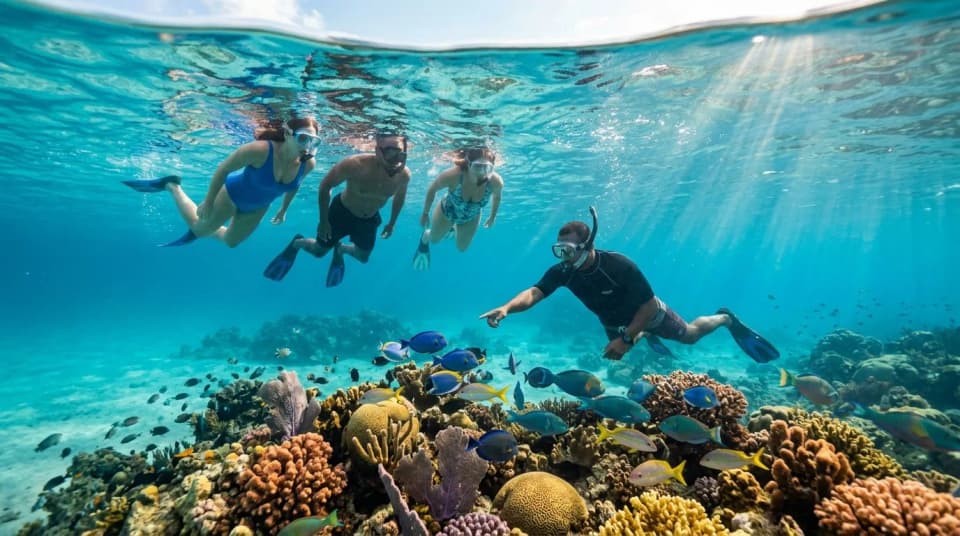
The reef photo is not the whole product
I have seen operators spend a lot of time choosing the perfect hero image and almost no time explaining the hour before the boat leaves. That is backwards. The guest remembers the whole day, including the part where they were looking for the dock and wondering whether anybody knew they had booked.
When I was working on Eagle Tours, a cruise ship day could bring a rush of guests all at once. The boat still had to be checked, gear counted, and the crew told who was coming. A booking with missing details creates work at the worst possible moment.
For an Aruba operator, I would write the pre-trip handoff down. The office, the captain, and the person meeting guests should be looking at the same information.
- Guest details: Names, group size, phone number, and any information the crew needs to know.
- Departure details: Meeting point, arrival time, pickup instructions, and the exact trip booked.
- Water-day details: Equipment, food or drinks, planned stops, and the weather decision process.
This is not glamorous work. It is the work that stops a good tour from feeling disorganized.
Build a weather plan guests can understand
The sea gets a vote. I do not care how good the forecast looked when the guest booked. If conditions are not right for the route, the captain has to change the plan without an argument about what the website promised.
That does not mean hiding behind a vague weather policy. Tell guests what may happen. The trip might be moved to another time, adjusted to a more sheltered route, or cancelled and rescheduled when the conditions are not safe. The exact call belongs to the operator and captain, but the guest should not be hearing the policy for the first time at the dock.
I would keep the wording plain. Avoid promising a particular animal, perfect visibility, or a guaranteed calm sea. Promise the experience you can control: a professional crew, clear instructions, good equipment, and an honest decision when the conditions change.
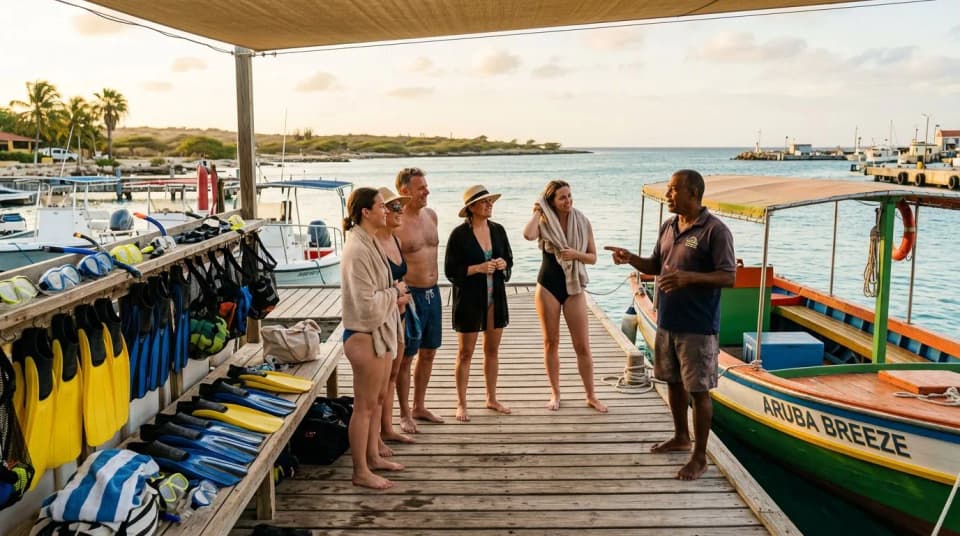
Make booking easy before the guest gets excited
A guest who has searched for Aruba snorkeling is already comparing. Every extra message or unclear step gives them a reason to try the next operator.
The booking flow should show the live departure, the number of spaces, the price, what is included, and the meeting information in one clean path. It should also send a confirmation that the guest can find again on a phone. Nobody wants to search through an old conversation while standing in the sun near the dock.
For a Caribbean operator, I would pay attention to the payment and payout side too. A system that looks fine in a demo but makes local payments awkward is not fine for your business. We built Junglebee for tour and charter operators because the booking has to work for the person on the boat, not just the person looking at a software screen.
Test the booking as if you were a guest. Use a phone. Ask somebody outside the business to find the meeting point. Try to change the date. If the answer requires three calls, the flow is not ready.
Give the guest one good reason to remember the day
There are plenty of companies that can show somebody blue water. The operators I remember make the day feel considered. The crew notices who is nervous, gives clear instructions, and lets people look instead of rushing them from one photo stop to the next.
That is where an Aruba snorkeling tour becomes more than a listing. Maybe it is the relaxed pace. Maybe it is a small group, a local story, or the way the crew handles a child who needs help getting comfortable in the water. Pick the thing you can actually deliver, then make it part of the product instead of a vague promise in the description.
If I were building the trip, I would start with one boat, one clear departure, and one honest promise. Get the handoff right. Get the weather decision right. Then let the reef do its part.
Booking page, card payments, one calendar for your website, booking page and desk. 4% per card payment, no monthly fee.