Junglebee
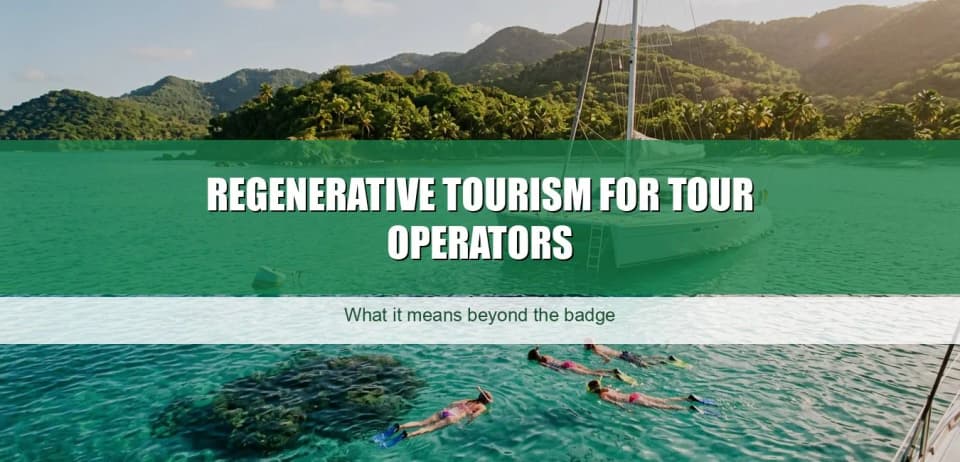
Regenerative Tourism: What It Means for Tour Operators
Regenerative tourism for Caribbean tour and charter operators: what it means, why guests ask, and what to do that's real rather than greenwashing.
 Michael RouveureFounder, Junglebee ·
- Sustainable tourism considers environmental, social and economic impacts; regenerative tourism builds on it, aiming to strengthen the island's ecosystems and communities.
- Start with group limits, permitted moorings suited to your boat and activity, guest briefings, local hiring and purchasing, and conservation contributions.
- My view: put those commitments in your operations and price, and describe what you do rather than relying on a badge.
What does regenerative tourism mean for a charter operator with two boats, a cruise ship day on Thursday and a guest asking whether your trip is "eco"? Not the conference version. The version you can explain to that guest on the dock in the time it takes to hand out snorkel gear.
If you already do decent things on the water, the word can feel like it arrived with a slide deck attached. So let me bring it back to the boat.
Sustainable versus regenerative, in plain dock language
Sustainable tourism means caring for the environment, local people and the long-term local economy. Burn less fuel. Don't break the coral. Buy locally and treat your crew fairly.
Regenerative tourism asks for more than that. The idea is that your trips should leave the place, and the people who live there, a bit better off than before you showed up. Not neutral. Better.
For a small operator, one practical question is: when a guest spends money with you, how much stays on the island and supports the things that make it worth visiting? That's one place I'd start. Regenerative thinking also asks what the community wants restored or strengthened.
Why guests and islands keep bringing it up
Be ready for a guest to ask: Is the sunscreen okay? Do you anchor on the reef?
And the islands have rules too. Some marine parks charge user fees. Ask the park what limits apply to your boat and activity.
So the question isn't whether this is coming. It's whether your answer holds up when someone looks closely.
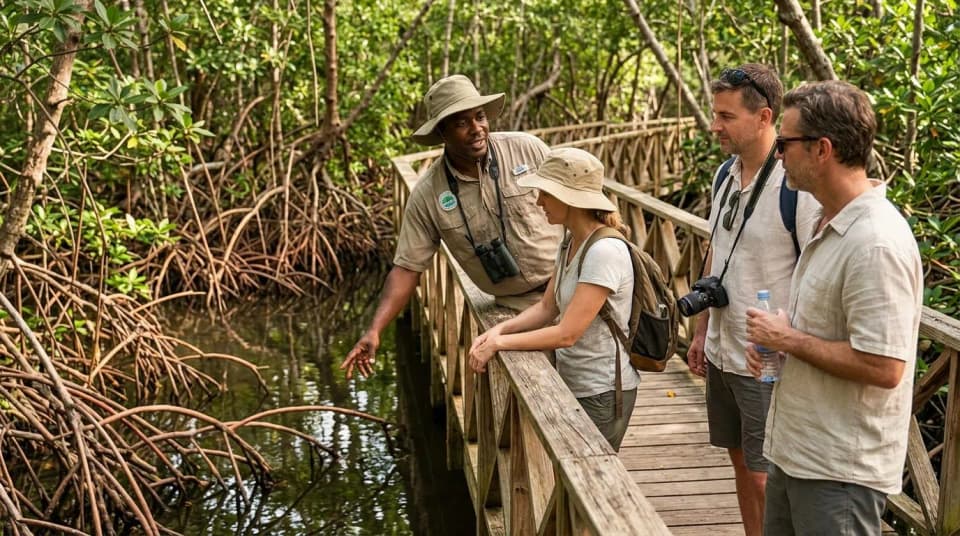
What it looks like on an actual boat
Most of what counts is boring. That's a good sign. Where I'd start:
- Cap your group size and stick to it. Even on the day a big group wants to add a few friends. A smaller group can be easier on the site and on your crew. It's usually a better trip too.
- Use mooring buoys instead of dropping anchor where permitted and suitable for your boat and activity. Ask the park before using a mooring.
- Give a real briefing before anyone gets wet. Don't stand on the coral and don't chase the turtles. Recommend UV-protective swimwear; don't trust a "reef-safe" label alone. Thirty seconds, said like you mean it.
- Hire and buy on the island. Local crew, captains you train up yourself, lunch from the bakery down the road.
- Pay into local conservation on purpose, whether that's the marine park or a local group you trust. Decide the amount in advance, not when someone asks.
None of that needs a consultant. Some of it costs you money. Which brings me to the part most people skip.
If it's not in your operations and your price, it doesn't count
Regenerative tourism only counts if it shows up in how you run the boat and how you price the trip. A badge on your website doesn't count.
Think about what a group size limit really means. It means you sell fewer seats on your busiest days. If you hold that cap and keep the same price, you're quietly paying for it out of your margin. A slow month can put that cap under pressure. So build it into the price. Charge what a smaller, better trip is worth and say so plainly.
Same with conservation money. If you're going to give a set amount per guest to a local group, put it in your cost sheet like fuel. If it only happens when you're having a good season, it's a donation, not a practice.
And be honest in your marketing. Say exactly what you do. "We tie up to mooring buoys and part of every ticket goes to the marine park." Guests can check that. They can't check "eco-friendly" with nothing behind it. Greenwashing is easy to write and hard to walk back once a guest posts about the trash on your boat.
You don't need software to do any of this. But if your booking system lets you set a hard capacity per trip and add a line item to the price, use it. Our booking system tracks boat capacity, so ask us whether your group cap and conservation charge fit your setup.
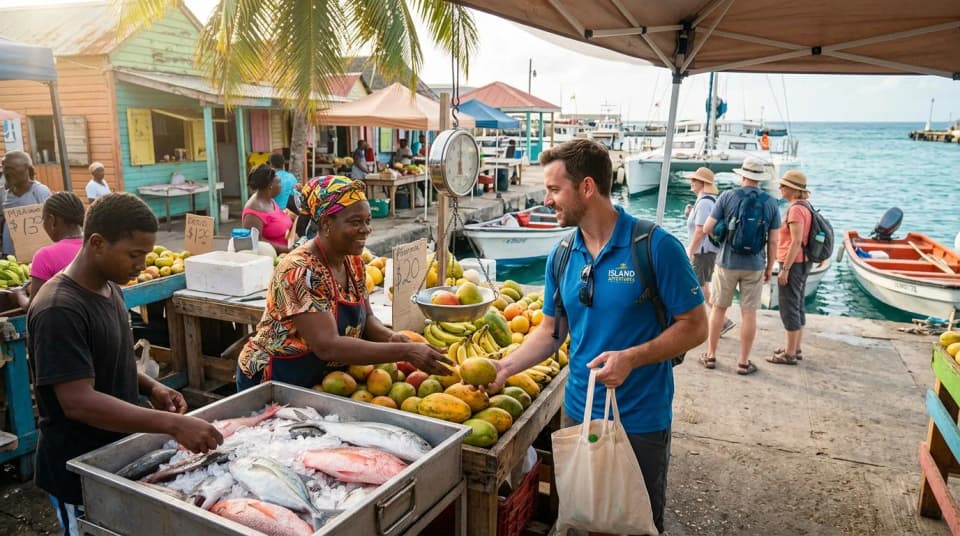
One operator can't fix a bay on their own
This is where I think small operators underestimate themselves. A reef or a bay doesn't care which company's boat is on it. If you cap your group and the boat next to you packs in twice as many, the site still takes the hit.
When I started building Junglebee, I knew the tour company owners and managers. I went around to all of them to talk about building one shared system. Everyone was interested, and the top four tour companies joined as investors.
I think regenerative tourism works the same way on an island. The useful version isn't one operator with a badge. It's a handful of operators agreeing on buoys and group sizes at the busy spots, then holding each other to it. On a small island you already know everyone. Use that.
Start with the boat, put the word on last
If a guest asks you whether your trip is regenerative, I'd rather you answer with what you do than with the word. Here's our group limit, and here's why we're on a buoy and not an anchor. The lunch came from a bakery down the road.
Get those right and put them in your price. Then talk to the operator in the next slip about doing the same. The label can come after.
Booking page, card payments, one calendar for your website, booking page and desk. 4% per card payment, no monthly fee.