Junglebee
Jurassic Canyon Costa Rica: What I Would Compare Before Booking an Adventure Tour
A boat operator's take on what to compare before selling an adventure tour in Jurassic Canyon Costa Rica.
 Michael RouveureFounder, Junglebee ·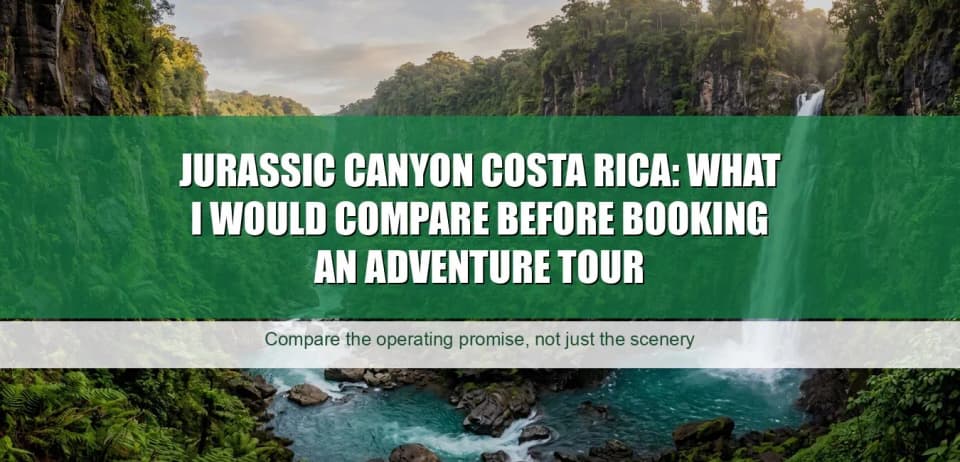
Most travel pages describe Jurassic Canyon Costa Rica like a postcard. I would not sell an adventure tour that way. A guest does not care how blue the water looked if the guide, access, and weather call were unclear before they left the hotel.
I learned that lesson before Junglebee existed. When I was running SXM Deals, I had a significant booking waiting for an operator to confirm. I sent the request and waited. It took something like two days to get an answer. Two days. Not two minutes. By then the guest was gone and I had lost the booking.
The beautiful part is not the part I would compare first
The Jurassic Canyon listing I found describes a waterfall trek around Pueblo Nuevo, with the Barroso waterfall, steep terrain, and slippery rocks. That is enough to make somebody want to go. It is not enough for me to decide whether the product is ready to sell.
When I was a deckhand and later a captain around St. Maarten, Anguilla, and St. Barts, I learned to separate the picture in the brochure from the day we could actually deliver. A calm photograph never told me whether the wind would turn or whether the crew had a clear plan for getting everybody back.
For an adventure operator, I would compare the operating promise before I compared the waterfall:
- What the guest is really doing: Is this a walk, a scramble, a river crossing, or all three?
- What the guide controls: Which parts are fixed, and which depend on water level, rain, or the group?
- What the booking includes: The meeting point, guide, entry arrangement, transport, and anything the guest has to bring.
If those answers are hard to find, the product is not ready just because the photos are good.
Access is part of the experience
With a boat tour, I never treated the marina as a footnote. The guest needs to know which dock, which gate, what time, and what happens if the cruise ship is late. A canyon operator has the same job on land.
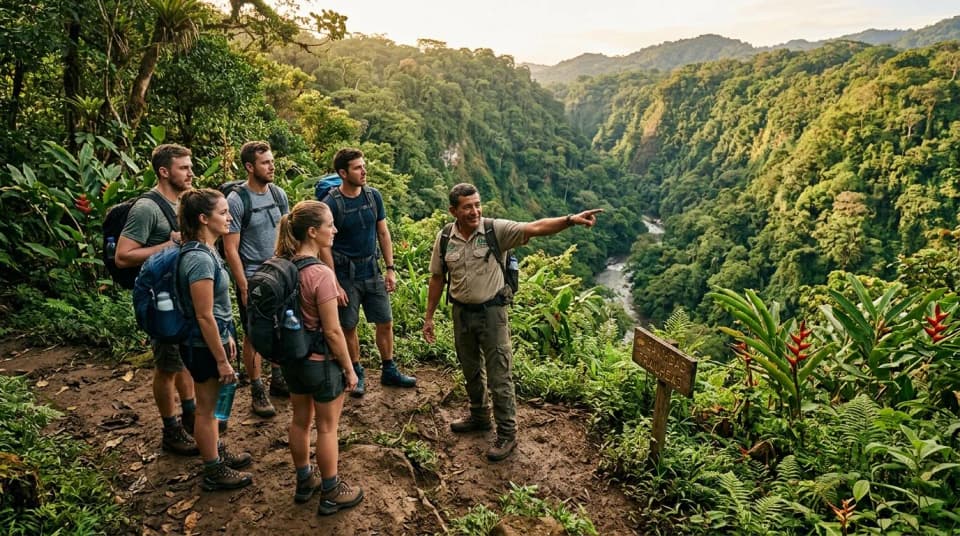
The meeting point needs to be precise enough that a first-time visitor can find it without sending three messages from the side of a mountain. The listing names Pueblo Nuevo, but a good operator should still give clear final-approach instructions. A town name is not a handoff.
I would put the access instructions in the booking confirmation, not in a separate message somebody may or may not read. Include:
- A usable meeting point: Give the exact place, a recognizable landmark, and the time to arrive.
- A person to call: One guide or office contact should own the arrival question on the day.
- A clear equipment list: Shoes, dry clothes, water, and anything else should be stated before payment.
Water and weather need a real decision, not a cheerful sentence
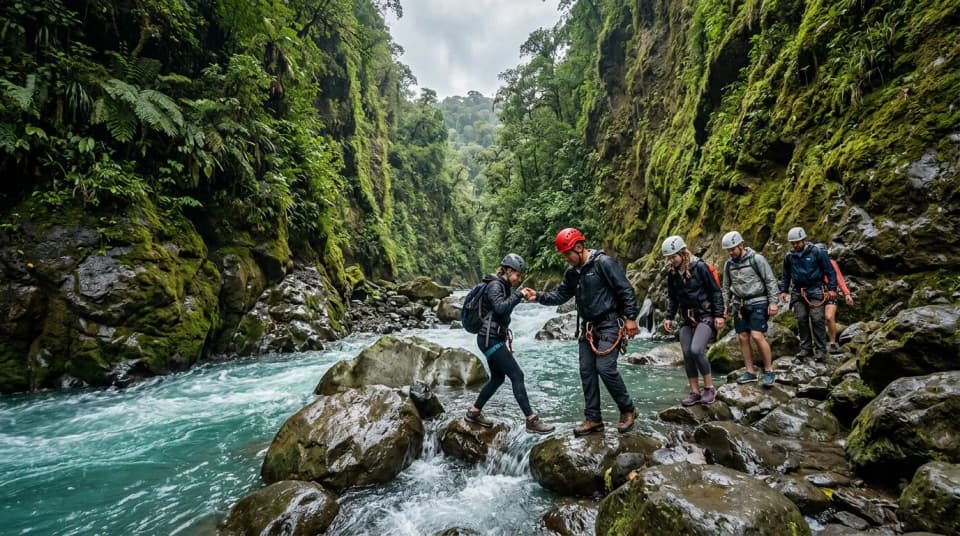
This is where I get strict. A waterfall canyon near hydroelectric infrastructure is not a place for an operator to improvise a safety policy after the group has arrived. The Costa Rican Electricity Institute has warned about the danger of unauthorized entry around Rio Toro and Quebrada Gata. That is not marketing copy. It is an operating constraint.
I would ask the guide exactly how the go or no-go decision is made. Who checks the conditions? How close to departure can the plan change? What happens to the guest's booking if the water is too high or access is closed?
A good cancellation process is not an admission that the product is unreliable. It is evidence that the operator understands the product. I grew up with weather days on the water. Sometimes the correct answer is no, and the job is to give the guest that answer early enough that they can still have a good day.
My opinion is simple: if an operator hides the weather decision because it might cost a booking, the operator is selling a photograph instead of a tour.
A guide is not just somebody who walks at the front
The competitor listing describes guides accompanying the group and helping when needed. That is a useful starting point, but I would want to know what that means in practice.
On a boat, the first mate is watching more than the guest who is talking to him. He is watching the propeller, the current, the other swimmers, the time, and the person who has gone quiet. A canyon guide has a similar responsibility. The guest may think the exciting part is pushing farther into the canyon. The guide needs to know when the group has reached its limit.
Before I sold this kind of trip, I would ask:
- How do you brief a guest who is not comfortable on steep or slippery ground?
- How do you keep the group together when one person moves faster than another?
- What is the turnaround point if conditions change?
- How do you record an accessibility or medical note before the meeting?
The booking should carry the whole promise
An adventure booking is more than a date and a name. It needs the meeting point, the group size, the guest's questions, the guide assignment, the weather decision, and the payment record to stay connected.
That is the same problem I was trying to solve when I built the system behind Junglebee. We built it around the handoff because I had already watched bookings disappear while somebody waited for an answer. If you want to see how we approach charter and tour workflows, our booking system for charters shows the kind of connected record I mean.
But do not buy software because the calendar looks clean in a demo. Test it with an awkward adventure booking. Add a guest who needs extra instructions. Change the meeting time. Mark the trip weather-dependent. Ask what the guide sees, then ask what the office sees after the change.
Sell the day you can actually deliver
Jurassic Canyon Costa Rica has the kind of name that does half the marketing by itself. That is exactly why I would be careful. A dramatic name can make an operator skip the less exciting work.
Write down the promise. Make the access clear. Put the weather decision in somebody's hands. Give the guide one current brief. Then run the booking as if the guest is standing at the meeting point asking a question you did not expect.
That is the comparison I would make before looking at another photograph. The best adventure product is not the one with the biggest scenery. It is the one where the operator, guide, and guest all know what happens next.
Booking page, card payments, one calendar for your website, booking page and desk. 4% per card payment, no monthly fee.