Junglebee
Fishing Charter Booking Software: What Actually Matters on the Dock
Fishing charter booking software should handle deposits, weather changes, crew capacity and dock-day reality - not just put a calendar online.
 Michael RouveureFounder, Junglebee ·
How do you compare fishing charter booking software when the real test happens at 5:40am, before the first mate has had coffee and while the weather is changing by the minute?
You do not start with the prettiest calendar. You start with the day that goes wrong. A guest has paid a deposit, the wind has come up, one boat is already full, and somebody is asking whether the trip can move to Thursday without creating three new problems.
I learned that lesson before I built Junglebee. When I was running SXM Deals, I had a large booking waiting on an operator's confirmation. I did not want to take a guest's payment for a trip the operator might not accept. I sent the message and waited. The answer took something like two days.
Two days. Not two minutes. That is not a software comparison problem on paper. It is a guest problem, an operator problem, and eventually a money problem.
Fishing charter booking software has to understand the dock
A fishing charter is not just a tour with rods added to the description. You have boats, captains, crew, licenses, departure points, weather calls, fuel, and guests who may have flown in for one morning on the water. The booking system sits in the middle of all of that.
My opinion is simple: if a demo spends an hour showing you colors and calendar views but cannot explain how a weather reschedule affects the deposit and the boat's availability, you are looking at the wrong thing. A nice calendar is not a booking system. It is a nice calendar.
When I compare software for a fishing operator, I want to know what happens after the booking. That is where the dock-day reality starts.
The deposit is only the first half of the booking
Fishing charters often need a deposit to hold the date and a balance later. The important question is not whether software can collect a card. The important question is whether you can see who has paid, who still owes, and what happens when the trip changes.
- Deposit rules. Can you set the amount or percentage that holds the charter without building a manual workaround?
- Balance due. Can the office see the remaining balance without opening five screens or searching through email?
- Guest communication. Does the guest get a clear reminder about what is paid, what is due, and where to meet?
- Refund decisions. When the weather cancels a trip, can you record the decision cleanly instead of leaving the crew to remember what was promised?
That last one matters more than people think. I have watched operators make a good customer decision and then lose the details because the decision lived in a text message. The guest remembers the conversation. The office needs a record.
Weather changes should not create a second booking
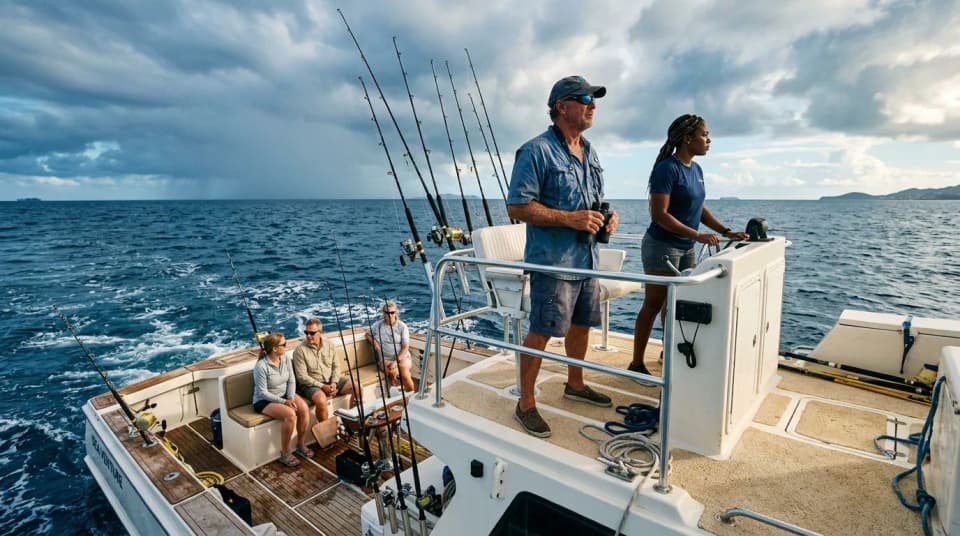
Weather is part of the business. A captain may decide that the morning run is not safe, but Thursday afternoon could work. The system should make that change easier, not force you to cancel one trip and rebuild another by hand.
Ask a vendor to show you the complete flow. Not the happy path. Say: "The wind is up, the captain has called it, and I have six guests on the booking. Show me what happens next." Then watch what they do.
You want the new date, the guest list, the payment history, and the crew's view to stay connected. You also want a clear answer for the guest. Vague messages create more calls, and more calls land on the same person who is already trying to get the boat ready.
Back when I was crewing Eagle Tours, a weather day was never only a weather day. It changed the timing of the boat, the crew, the next trip, and sometimes the hotel pickup. That is why I do not trust a booking system that treats rescheduling as an edge case.
Capacity is more than seats on a calendar
A fishing operator may sell a private charter, a shared trip, or several products from the same boat. The capacity rules can be different for each one. A private group may fill the boat with six guests. A shared trip may need a minimum number to run. A captain may be available for one departure but not the next.
When you compare fishing charter booking software, test these situations:
- One boat, different products. Can the same boat support a private charter and a shared trip without double-booking it?
- Crew constraints. Can you see when the boat is available but the captain is not?
- Pickup and turnaround time. Does the system protect the time needed to return, clean up, refuel, and get moving again?
- Last-minute changes. Can the dock team understand the change without reading a long email thread?
Software built around a simple tour schedule may look fine until you add those rules. Then the operator starts keeping a second calendar, a whiteboard, or a group chat. That is usually the sign that the software is not holding the shape of the business.
Payment settlement is part of the comparison
Do not compare the booking screen and ignore where the money lands. If you operate in the Caribbean, your payment route and your local bank matter. A booking can look successful in the system while the payout process creates work for the owner every week.
We built Junglebee for Caribbean operators because we kept seeing local payment and payout questions treated as somebody else's problem. If your business uses more than one currency, entity, or island bank, make the vendor explain the settlement flow in plain language. Who processes the payment? When do you get paid? What appears in your records?
If the answer is a maze of overseas accounts and manual transfers, that is not a small detail. It is part of the cost of the software, even if it is not listed on the pricing page.
The fishing operator test I would use
Before you choose, give every vendor the same five-minute story. Six guests book a shared morning trip. They pay a deposit. A weather call moves the trip to Thursday. One crew member is unavailable, the boat needs a turnaround window, and the guest still owes a balance.
Ask the vendor to show you the booking from the office view, the crew view, and the guest communication. Then ask what your records show after the change. You will learn more from that test than from another list of features.
And if you want to see how we handle the booking side for Caribbean charters, our charter booking system page is there to inspect. Do not take my word for it. Put your ugliest weather day into the demo and see if the system still makes sense.
Booking page, card payments, one calendar for your website, booking page and desk. 4% per card payment, no monthly fee.