Junglebee
How to Make Solo Travelers Love Your Tour
Solo travelers are a big untapped market for many tourism businesses. Here's what you need to know.
 Michael RouveureFounder, Junglebee · · updated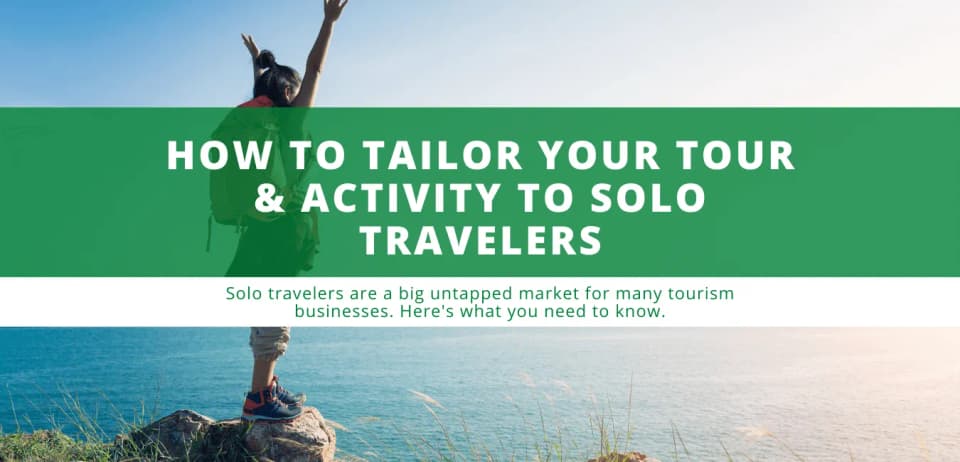
Her name was Claudia. German, mid-forties, traveling alone for the first time after a divorce. She booked a snorkel trip with a catamaran operator I know - showed up at the dock with a dry bag and not much else. The crew didn't know what to do with her. They paired her at the back of the boat with the gear pile. Nobody introduced her to anyone. By the time they hit the reef at Tintamarre she'd spoken maybe ten words to another human being.
Then one of the crew noticed she and a couple from Boston were both hovering over the same coral head watching the same sea turtle. He just said, out loud, "You two are the only ones who spotted her - she's been here since Tuesday." That was it. By the time the boat got back to Simpson Bay, Claudia and the Boston couple were making plans to rent a car the next day and drive the French side together. Claudia tipped forty percent. She left a five-star review that night from her hotel room.
The crew did one thing. One thing. And it turned a forgettable afternoon into the best day of her trip.
Solo travelers are north of 30 percent of Caribbean leisure bookings right now and most operators treat them like a scheduling inconvenience. That's a mistake. A fixable one.
The solo supplement is a tax for being alone
I'll say this plainly: charging a solo supplement on a group tour is telling your guest you'd rather not have them.
Think about what you're actually doing. You have a catamaran that holds 24 people. A solo traveler wants to buy one seat. And your response is to charge them double the per-seat rate because they didn't bring a friend. The boat is going out anyway. The fuel cost is the same. The crew cost is the same. You're penalizing someone for being your customer.
I know operators who dropped the supplement and watched solo bookings climb within two months. Because once you remove the penalty, the price math makes sense and they book.
Drop it. It is not protecting your margins. It is protecting an empty seat.
Set aside one or two seats per departure as single seats
This is the structural fix, and it's simple. For any group tour departure, designate one or two spots as single-seat inventory. Price them at the normal per-person rate. Make it explicit in your booking calendar - "single seat available" - so a solo traveler landing on your page knows immediately they can book without the weird double-pricing gymnastics.
If those seats don't fill, you haven't lost anything. If they do fill, you've added revenue from a segment your competitor is pushing away with a supplement.
The booking should be one person, one price, done. On Junglebee you can set seat-level inventory per departure, so allocating single seats is just a field in the trip setup.
The welcome matters more than the itinerary
Most operators spend more time planning the snorkel route than the first ten minutes at the dock. For a solo traveler, those first ten minutes are the whole trip. They're standing there alone, watching families settle in and couples share sunscreen, deciding right now whether this was a good idea.
A few things that cost nothing:
- Name tags on the gear bag or boarding pass. Something with their first name. It gives the crew a name to use and gives other guests an opening.
- A direct intro from the captain or first mate. Not a group announcement - a direct "Hey Claudia, I'm going to put you next to Marcus and Sara from Boston, they've snorkeled this reef before and they know where the turtles are." Done.
- Paired seating, on purpose. Don't sit the solo guest at the end by themselves. Put them next to another couple or small group who look approachable. You've seen your guests for fifteen seconds and you already know more than you think.
None of this is complicated. It's just paying attention. The operators who are good at it don't even think of it as a strategy - it's just how they run a boat.
For dive and snorkel: assign the buddy before the trip
If you run dive or snorkel tours, solo guests have a real practical problem: they don't have a buddy. Some operators handle this on the dock the morning of, which works about sixty percent of the time and is awkward the other forty.
The better move is to handle it the night before. Text the solo guest directly - something like: "Hi Claudia, tomorrow's snorkel trip - I'm going to pair you with one of our crew as your dive buddy for the reef section. His name is David, he's been diving this spot for eight years and knows every turtle by sight. See you at 8am." That's it. Thirty seconds of effort. She sleeps better. She shows up confident. She already has a name to say hello to when she gets to the dock.
The text the night before is good guest service regardless. But for someone alone in a hotel room wondering if this was a good idea, it lands differently.
Your photos are telling solos not to come
Go look at your tour photos right now.
Couples holding hands on the deck. Families laughing at the back of the boat. A group of friends jumping off the bow. Every image is signaling: this experience is for people who came with other people.
Solo travelers look at those photos and do the math. Not for me.
You don't need a professional shoot. You need one or two images of a solo guest genuinely enjoying the trip - leaning over the rail watching the water, mask on, turtle below. Or sitting at the bow alone with a coffee looking at the horizon. Images that say: you can come by yourself and it will be good.
Same logic applies to your booking copy. If every sentence is "bring your family" or "perfect for couples," the solo traveler reads right past it. One line - "solo travelers welcome, single seats available" - changes the read completely.
The one thing that actually makes solos loyal
Claudia came back the following winter. She sent two of her friends ahead of her - both traveling solo - and told them to specifically request the same crew. She left another review. She tagged the operator in a post from the reef.
That's what happens when a solo traveler has a genuinely good time. They don't just come back - they send people. Because the thing they were afraid of, the awkwardness of doing something alone in a group, didn't happen. And they want their friends to know that place exists.
You don't have to build an entirely different product for solos. You have to make the product you already have feel like it was built for them too. Remove the supplement. Hold a seat. Say their name at the dock. Text them the night before.
That's the whole list. And most of your competitors aren't doing any of it, which is the only number you actually need.
Booking page, card payments, one calendar for your website, booking page and desk. 4% per card payment, no monthly fee.