

May 26, 2026
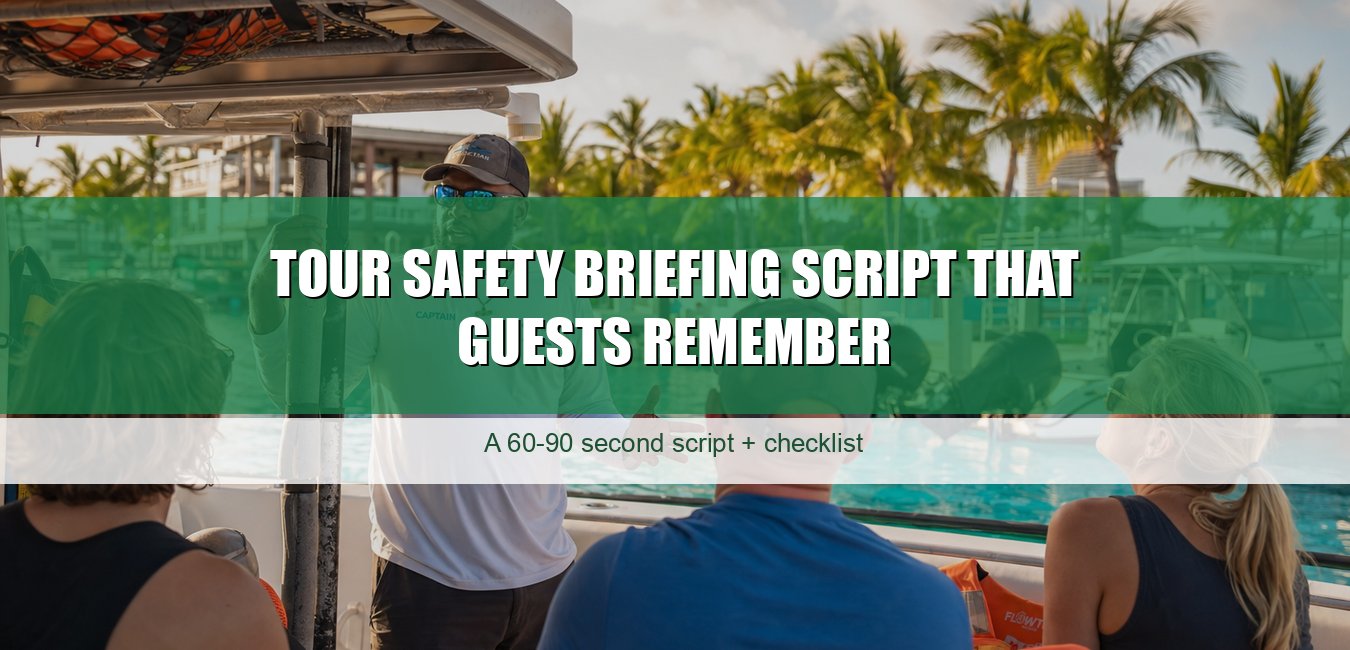
The first safety briefing I ever gave on Eagle Tours, I read it off a laminated card. Word for word. Sounded like a flight attendant who'd rather be anywhere else.
I was a deckhand, maybe seventeen, and the captain handed me the card and said go talk to the guests while he warmed up the engines. So I did. Life jackets are here, exits are there, please remain seated. Forty seconds of nothing. I watched a family of four nod politely and forget every word, because I'd given them no reason to listen.
I've given a few thousand of these since, as deckhand, first mate, and captain. Here's what I learned the slow way. The legal-sounding version is the one nobody remembers. The part guests keep is the part where you sound like a human who's done this run a hundred times and would like them home in one piece.
Guests don't judge your safety the way you do. They can't see your maintenance log or your radio check. So they judge the one safety thing they can see, which is you, talking, in the first sixty seconds.
If the captain sounds unsure, if a deckhand is digging through a locker while you talk, if it's all mumbled over an engine already running, the guest quietly decides the whole operation is sloppy. The route, the gear, the decisions out on the water. All judged off one bad minute at the dock.
A clean briefing does three jobs before you've untied a line. It sets you as the person in charge. It calms the nervous ones, and there's always a nervous one. And it heads off the small stuff, the slips and the mild panic, which is what turns into a one-star review.
You need a default. Something your crew delivers the same way every trip, even when everyone aboard looks like they've done this before. Practice it till it sounds like talking, not reciting.
"Good morning everyone, welcome aboard. Quick safety briefing before we head out, give me one minute."
"First, life jackets. They're located [point to the exact spot]. If we need them, we'll tell you and the crew will help you put them on. Want to see how one fits right now? Just ask us, any time."
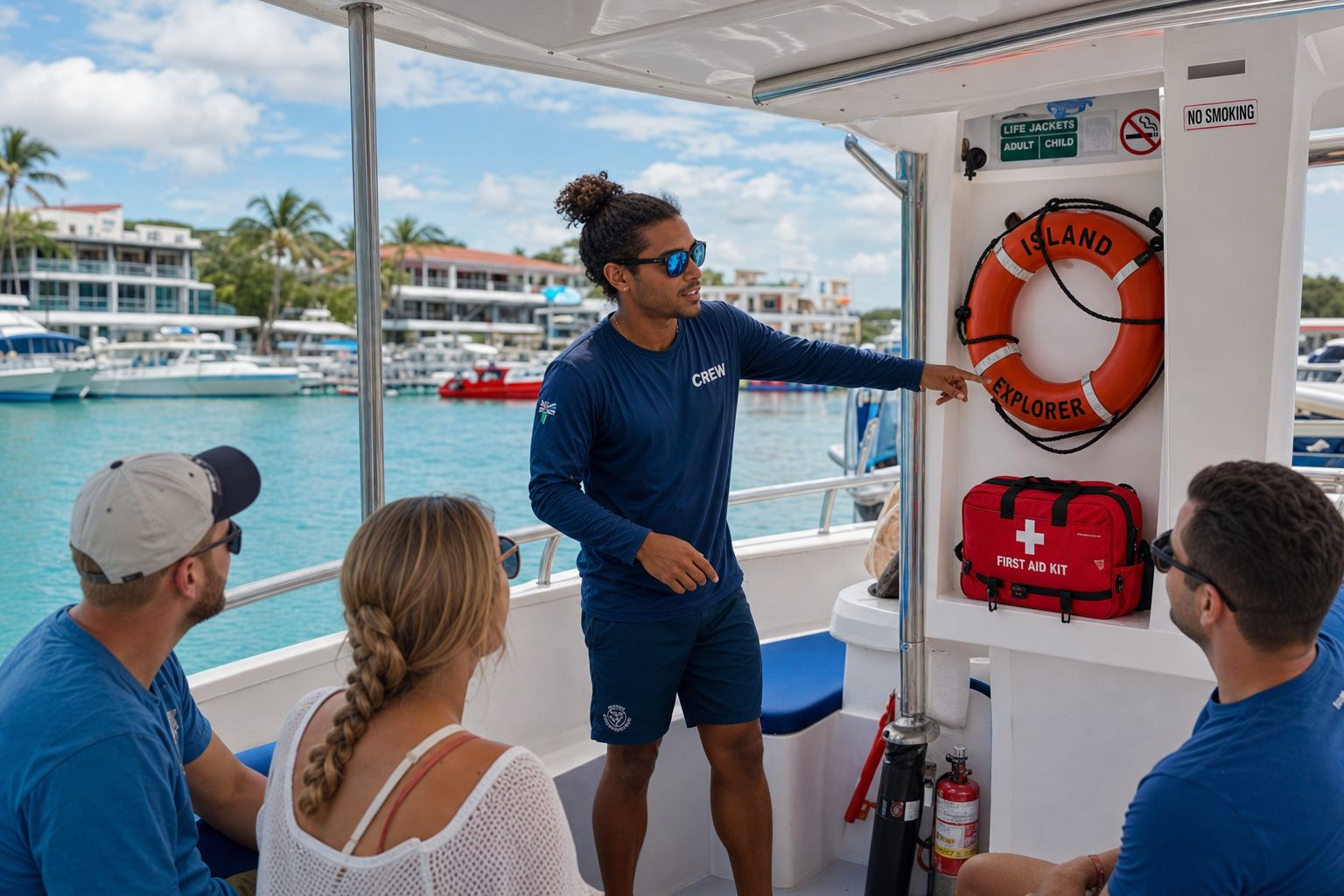
"If we ever need to move quickly, follow the crew and move to [point to the safe seating area or muster spot]. Our ring buoy is [point] and the first aid kit is [point]."
"If someone goes in the water, do not jump in after them. Point at them, shout man overboard, and keep your eyes on them. We handle the recovery, that's our job."
"If you start feeling unwell, tell us early. Way easier to help before it becomes a problem."
"Last thing. One hand on the boat when you move around. Nobody sits on the railings. Kids stay seated unless a crew member says otherwise. Any questions?"
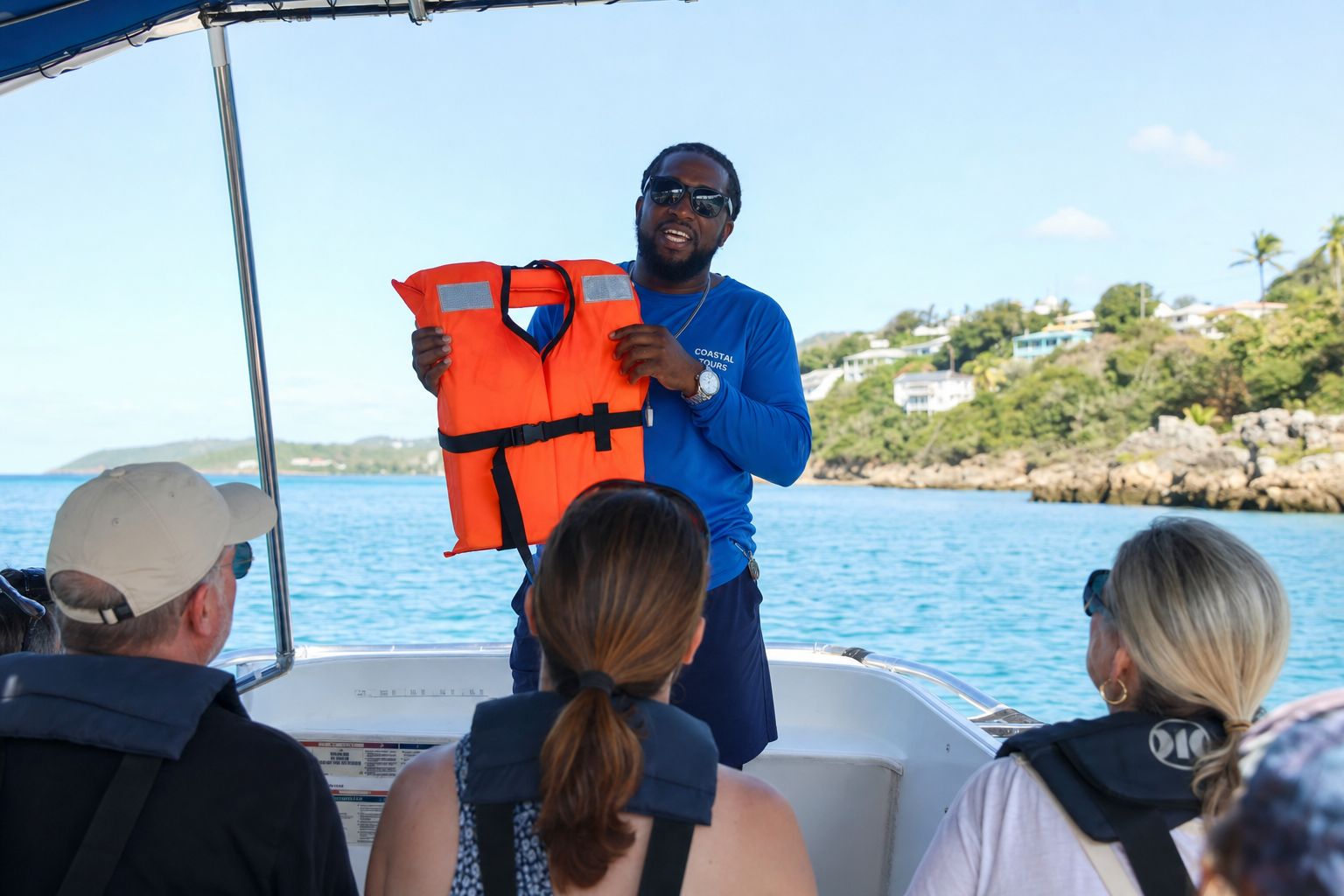
Every island writes its own rules, but the bones of a good briefing are pretty universal. The U.S. Coast Guard passenger safety orientation is a clean reference point. It comes down to telling passengers where the life jackets are, where the emergency exits and embarkation areas are, where the ring buoys are, how to get a life jacket demo, and making sure late boarders get the same information as everyone else.
Turn that into a must-hit list your crew runs every trip:
Two more I add down here that no mainland checklist mentions. Tell people where to put their phones, because someone always loses one over the side reaching for a photo of Pinel Island, and a guest who goes after a dropped phone is a guest in the water. And give the sun warning straight up. Our St. Maarten sun cooks a pale visitor in an hour flat, and heatstroke at noon is a safety problem, not a sunburn.
Most guests lose every spoken word the second the music comes on and the rum punch gets poured. If you want it to stick, you need three beats.
And a few small things that change everything. Face your guests, don't brief them while staring at the helm. Kill the engine noise if you can, do the talk before you fire up or at idle. Use the same phrasing every trip so the crew stops improvising. And pick one moment to go quiet and serious, just a beat, so they know this part is real.
If there's ever an incident, "we always do a safety briefing" is a weak thing to stand on. You want a light record that doesn't turn your dock into a clipboard factory.
This is one spot where the booking software earns its keep. We built Junglebee to send pre-trip messages and collect digital waivers and acknowledgements right inside the booking flow, so the record exists before anyone walks down the dock and your check-in stays fast.
The operators who do this best treat the briefing like a small performance where everyone knows their part. Set roles every trip.
Then drill it. Not in a classroom. On the boat, with real gear, in real wind and real engine noise, because that's where you'll actually be giving it.
If you take one thing from this, take this. The script gets you covered. The human delivery is what guests remember. Read the card if you have to, but say it like you mean it. A family of four can tell the difference, and so can a five-star review.


