Junglebee
Tour operator vs travel agent: the operator's view
Tour operator vs travel agent from someone who has run both: who owns the boat, who eats the refund, and why operators treat agents as a channel.
 Michael RouveureFounder, Junglebee ·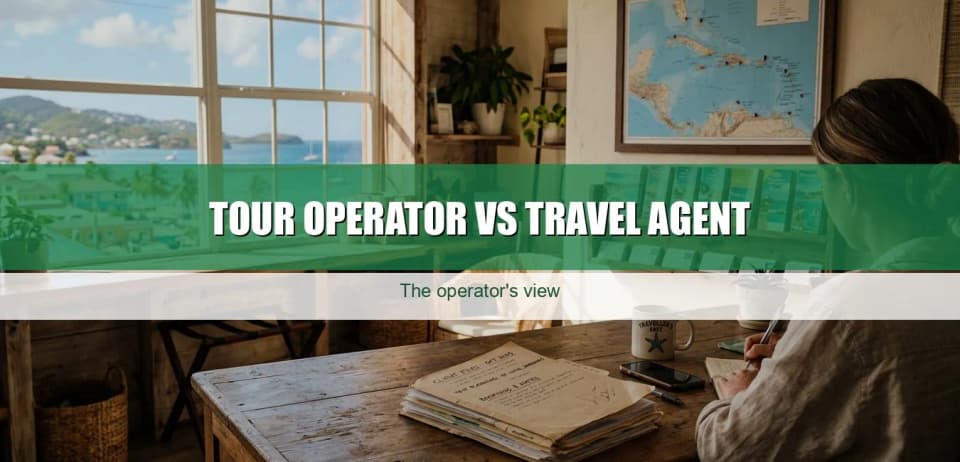
The most common question I get at the dock isn't about the reef or the rum punch. It's a guest standing at the gangway, slightly confused, holding a printout from a website they don't quite remember, asking me: "Wait, I booked through somebody else - so who do I actually talk to?"
That little moment of confusion is the whole tour operator versus travel agent thing in one sentence. The guest can't tell who did what, because from where they stand, both of us just sold them a boat trip. But on our side of the dock the two jobs aren't even close.
Who actually owns the boat, the seats, and the risk
Strip away the textbook definitions and it comes down to one question: who controls the inventory and carries the operating risk?
The operator usually controls it. I have the boat, the captain, the crew, the fuel, the insurance, and the twelve seats leaving the dock at 2pm whether they're full or empty. That's me. That's Eagle Tours, that's Aquamania, that's the dive shop down the road. We carry the cost of the day no matter what.
A travel agent usually owns none of that operating capacity. An agent - whether it's a hotel activity desk, an online agency like the one I used to run, or a big OTA like Viator - sells access to my seats. They find the guest, collect or facilitate the booking, and send it into my operation. Useful work. Real work. But if nobody shows up, the agent loses a commission and I lose an entire trip's worth of fuel and crew. We are not carrying the same risk, and that difference shapes everything else.
What I learned running the agent side first
Before I ever built software I was the agent, not the operator. Back in 2012 I ran a site called SXM Deals, booking tours and charters across St. Martin for companies I didn't own. So I've sat in both chairs, and I'll tell you the agent chair taught me the most.
I had a big charter come in one day. Significant money. I didn't want to charge the guest's card before the operator confirmed he had the boat and crew, because if he didn't, I'd be the one refunding a small fortune. So I emailed him and waited. Two days. Not two hours. Two days. By the time he answered, my guests were on someone else's catamaran.
That's the part guests never see. As the agent I held the guest, the payment, and the promise, but I held zero control over the actual boat. The operator held the boat and was elbow-deep cleaning it while my booking died in his inbox. Two roles, one trip, and the handoff between them is where the money lives or dies.

Who eats the refund when the weather wins
Every comparison article explains the roles. None of them answer the actual question: when a morning run gets blown out, who eats it?
The Christmas Winds come through in January, the wind's at 30 knots, and I cancel the trip. The guest wants their money back. The agent who sold the seat already counted their commission. So who refunds the guest?
The operator does, almost always. The money may flow back through the agent or OTA, but the hit usually lands on the operator. In a marketplace model, the platform may refund the guest and pay the supplier nothing or deduct it later. In package-travel situations, the organiser or retailer may have its own consumer-law obligations. Sometimes the agent still wants their commission on a trip that never left the dock. Get that settled in writing before the season starts. Otherwise you're arguing about it over WhatsApp at 7am with a parking lot full of disappointed guests.
Why I treat agents as a channel, not a rival
A lot of operators get this backwards. They look at the agent commission - 15 to 30 percent, depending on the channel and agreement - and decide the agent is a parasite eating their margin. I understand the feeling. I felt it too. But it's the wrong way to count.
An agent is a sales channel that costs nothing when it's quiet. I don't pay a hotel desk or an OTA to sit there in a slow August. They only cost me when they bring me a guest I wouldn't have found on my own. Compare that to fuel, crew, and dock fees, which bill me every single day whether the phone rings or not. A commission on a booking I'd never have gotten otherwise is not a loss. It's a guest who'd be on another boat without that channel.
The trap isn't paying commission. The trap is letting the channel own the guest relationship and your inventory. When a hotel desk sends a guest down with a scrap of paper and a room number and no clean booking, that's not a partner - that's a mess landing in your lap. I lived through years of exactly that, paper chits and phone calls, before I decided to build something better.
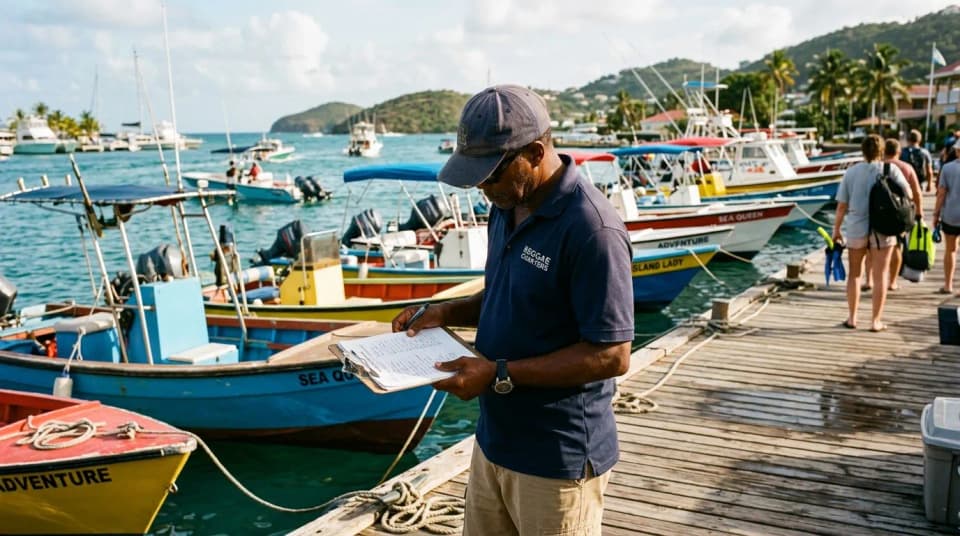
What each role actually does on the day a guest misses the boat
Picture the worst-case morning. A guest who booked through an OTA is stuck in cruise-ship traffic and rolls up to the dock ten minutes after we've cast off.
The agent's sales job at that point is mostly over, though the OTA or desk may still handle messages, changes, or refunds. They sold the seat weeks ago and they're not standing on my dock. The operator's job is just starting. I'm the one deciding whether to turn the boat around, slot them into the afternoon run, issue a credit, or hold the line on the no-show policy. The guest is angry at the agent's brand but standing in front of me. The promise was sold through one party and usually has to be delivered by the operator.
That gap is exactly why we built Junglebee. When an agent or a hotel desk or an OTA books a seat, it falls straight into the operator's system in real time, with the deposit, the policy, and the rebooking options all attached. The agent sells, the booking lands clean, and on the messy mornings I'm not reconstructing what some website promised - I can see it and I can fix it. You can see how that side works on our booking system for charters.
The short version, from someone who's stood in both spots
If a guest ever asks you who to talk to, the honest answer is this: the travel agent helped you find the trip and the operator is the one running it. One usually sells or facilitates the seat. The other controls the boat, carries the operating cost, and answers for the day when it all goes sideways.
Treat your agents as the channel that finds you guests, not the enemy taking your margin. But be careful about letting them become the only place your inventory or guest data lives, because when the wind picks up and the boat's already gone, the guest is usually going to be standing in front of you. Not them.
Booking page, card payments, one calendar for your website, booking page and desk. 4% per card payment, no monthly fee.