Junglebee
Tour operator marketing: what I'd actually spend on
Most tour operator marketing advice was written for SaaS or e-commerce. Here is what I would actually spend the next week on as a small Caribbean operator.
 Michael RouveureFounder, Junglebee ·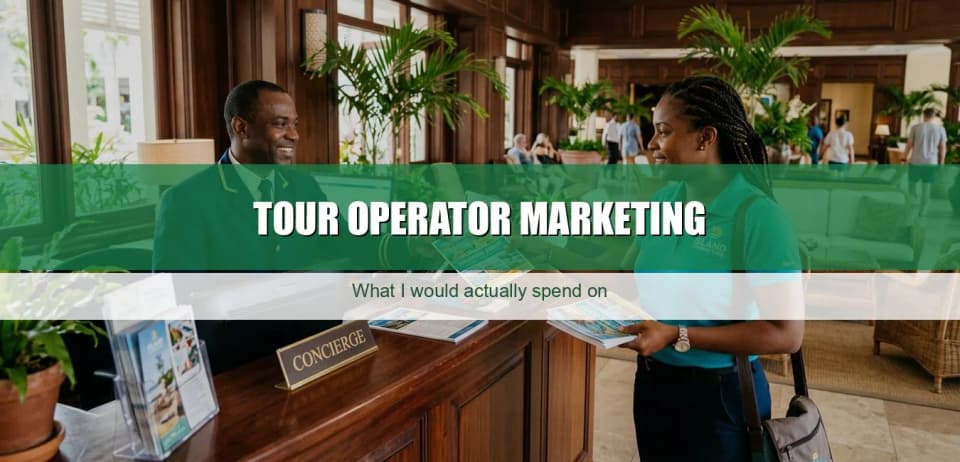
A concierge at a hotel on the Dutch side once sold ten of my charters off a single photo.
This was back at Eagle Tours, years ago. We'd run a private trip to Tintamarre, and one of the guests took a picture of the boat anchored over that ridiculous clear water, crew handing out drinks, the whole thing looking like a postcard nobody paid for. I printed it, badly, on regular paper, and dropped a stack at the activity desk of a hotel we worked with. No campaign. No budget line. Just a real photo of a real trip on a desk where guests stood around every morning asking "what should we do today?"
That photo booked more charters that season than anything else I did. And I've spent years since watching operators ignore that lesson while they chase things that look like marketing and aren't.
What "tour operator marketing" actually means down here
A lot of marketing advice you'll read feels like it was written for software companies or online stores. It's all funnels and retention curves and abandoned-cart emails. Much of it doesn't survive a Caribbean charter day.
We don't have a funnel. We have a guest who lands on a cruise ship at 8am and is gone by 4pm. We have a couple in a hotel room deciding tonight what they'll do tomorrow. We have weather that can cancel your whole calendar on Tuesday. The "customer journey" for an operator is short, local, and built almost entirely on trust and timing.
So marketing for us isn't about brand awareness or going viral. It's about being the obvious answer in the small window when a guest is actually deciding. That's it. Everything else is decoration.
The three channels I'd work first
If you stripped away everything and asked me what I would work first for a small operator, it comes down to three things. None of them are exciting. In my experience, all of them can work.
- The people who already came back, and the people standing next to them. A guest who had a good run with you is often one of your cheapest bookings and one of your best ads. The photo from their trip, the follow-up message, the "tell your friends" that actually has a link in it. This is repeat-guest work, and for many small operators it can pay better than chasing another cold audience.
- The concierge desk and the activity desk. Hotels are often where the deciding happens. A real relationship with the people behind those desks, plus something physical they can hand a guest on a cruise day, can beat a thousand impressions on a screen nobody's looking at.
- Google showing your business when someone searches your harbor town. Somebody types "boat tours Simpson Bay" into their phone from a beach chair. If your verified Business Profile is complete, with current photos, current hours, and reviews you answer, Google says you're more likely to show up for relevant local searches and stand out when you do. If your profile is half-empty, you're giving the next operator an opening.
Notice what's not on the list. Notice it's all close to the dock.
The stuff that can look busy and move little
I've watched a lot of operators pour time and money into things that feel like marketing and often do less than they hoped for a small Caribbean shop.
Broad social video is the big one. An operator can spend three weeks trying to make a dance trend work, get twelve thousand views from people in countries that will never visit your island, and still book no trips from it. Views are not guests. A teenager in another hemisphere watching your catamaran do a spin is not standing on your dock with a credit card.
Then there's the "viral campaign" idea. A six-boat operation in Marigot should not build its plan around going viral. Stop waiting for that. And there's paying an agency that's never set foot in your harbor. They may run you generic ads, send you a dashboard full of numbers that go up, and never once understand that your whole December depends on Christmas Winds and cruise schedules. They don't know your season. You can't outsource knowing your harbor to someone who's never seen it.
I'll be honest, this gets to me. Small operators have so little time, and they spend it on the marketing that's easiest to talk about instead of the marketing that fills boats.
The repeat-guest math nobody runs
One number I never hear operators talk about: what does it actually cost to get one new guest, versus to get one old guest to come back or send a friend?
A new guest might cost you an ad, a fee to an OTA, a cut to whoever sent them. A returning guest might cost you a follow-up message and the fact that you were good to them the first time. In most businesses, retention is usually cheaper than acquisition, and for small operators that should be enough reason to build a simple habit around it. Too often, the trip ends, the guest flies home, and that relationship just evaporates off the back of the boat.
The fix isn't fancy. It's a captain-picked photo from their actual trip, sent on WhatsApp the same evening, with a simple "great having you out, here's a link if you want to send friends our way." That's the whole machine. A real photo, the right channel, the right night. We built parts of this into Junglebee because guest records that remember somebody are worth more than any ad I could buy. A guest re-typing their card, or worse, forgetting you exist, is money you left on the dock.
What I'd do this week if I were starting Eagle Tours over
If you handed me a small operation today and a thousand to spend on marketing, I wouldn't spend most of it. I'd spend my time first, in this order.
I'd fix the Google Business Profile before anything else. Real photos, current hours, every review answered like a human, so when someone searches the harbor town I show up looking like a business that's awake. Google lets you manage that profile at no charge, and for a local operator it may be the best hour you'll spend all month.
Then I'd build the repeat-guest habit. One good photo per trip, one message that evening, every single time, until it's as automatic as fueling up. Then, and only then, I'd walk into the two or three hotels near my dock and build a real relationship with the desk, with something printed they can actually put in a guest's hand on a cruise day.
That's it. That's the whole plan. No agency, no viral anything, no money lit on fire chasing strangers in other time zones.
Because that concierge desk on the Dutch side didn't sell ten charters because of a clever campaign. It sold them because of a real photo of a real trip, sitting in the exact spot where a guest was deciding, handed over by someone who trusted us. Get those three things right and you've done more useful marketing than another week of chasing noise. Everything else is decoration.
Booking page, card payments, one calendar for your website, booking page and desk. 4% per card payment, no monthly fee.