

May 15, 2026

Before Aquamania put their entire operation onto a digital system, booking an add-on was basically a telephone game.
A guest would call the activity desk at their hotel, the desk agent would call Aquamania, somebody would scribble "2 snorkel kits + 1 photo" on a sticky note, and that sticky note would either make it to the dock or it wouldn't. When it didn't, the guest showed up expecting gear they'd paid for, the crew had no idea, and somebody had a bad morning. Aquamania is one of the biggest tour operators on St. Maarten. They were organized. They cared. But the whole add-on piece just lived in the space between two phone calls, and that space was full of holes.
The thing I kept seeing watching operators like them: the problem was never that guests didn't want the extras. They did. The problem was the operators had no clean way to take the money and deliver on it.
Running a tour in the Caribbean is already a full day's work before you think about upsells. Weather to watch, crew to coordinate, waivers to collect, a boat that needs fuel. Somewhere in all of that, offering a photo package or a snorkel kit rental just falls off the list.
And the first attempt at add-ons is often awkward enough to put operators off for good. A captain yelling "anyone want the photo package?" while untying lines and loading twelve people is not selling. It's noise. Nobody says yes, the captain feels like a failed salesman, and that's usually the end of the experiment.
So the operators who do it well don't rely on the captain to do the selling at all. They build it into the booking, before the guest ever sets foot on the dock.
When Aquamania moved their reservations onto a digital booking system, the add-on piece was almost an afterthought. The main goal was getting off paper and stopping the phone-tag cycle with hotel activity desks. I'd run into this same pattern running SXM Deals - desks would either call the operator for availability, sometimes waiting a day to confirm, or just send the guest with a handwritten slip. The operator had to figure out which hotel, which room, what was included. It was a mess just to process a basic booking, never mind an add-on.
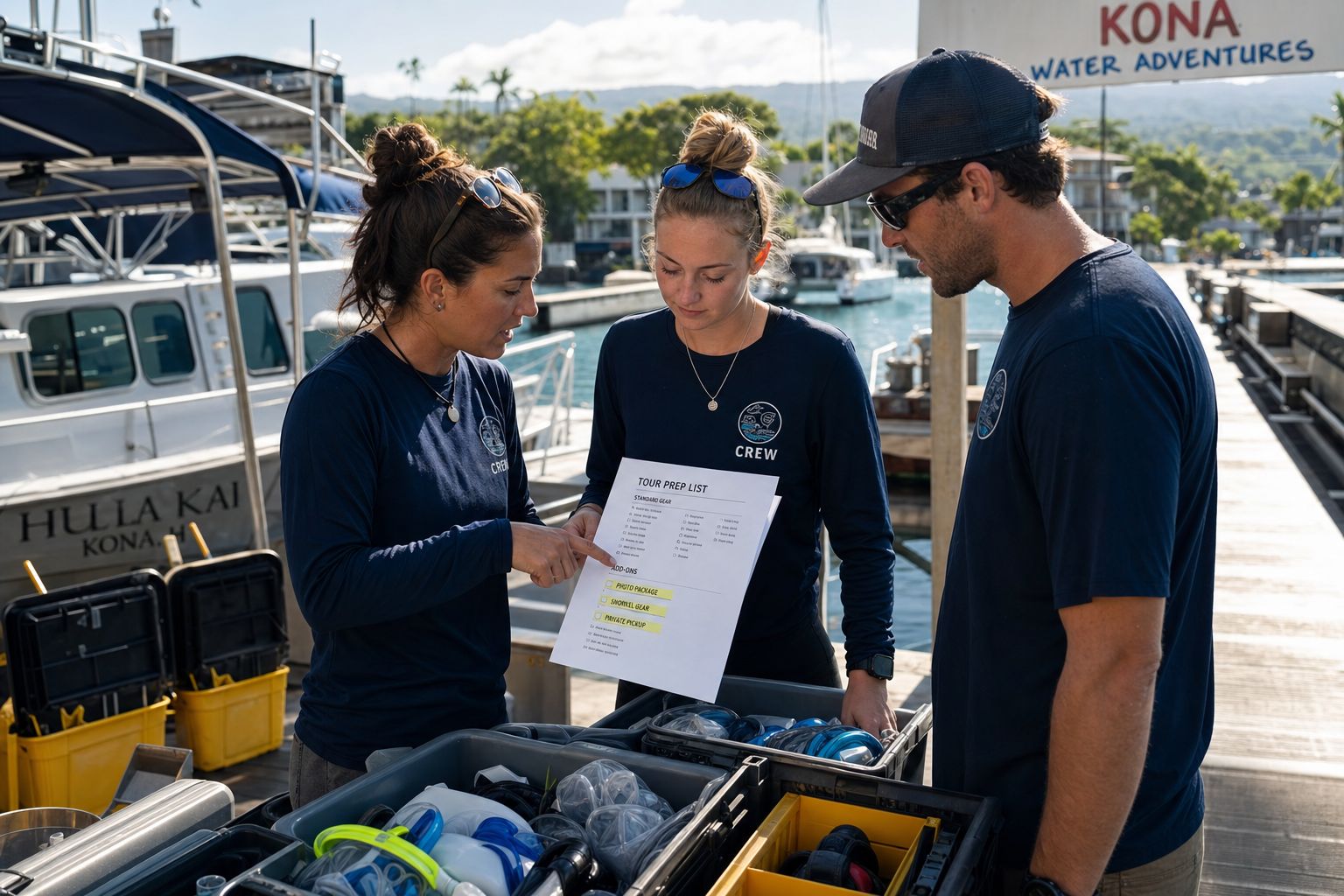
Once the booking flow was clean and digital, something shifted: Aquamania could attach add-ons to specific tours at checkout, and guests would just pick them. No crew pitch. No sticky note. The guest booked their catamaran trip, saw a checkbox for the snorkel kit rental and the photo package, ticked both, and paid. By the time the crew was prepping the boat, the prep list was already in front of them - how many kits, how many photo guests, what they'd paid for.
The lift in average booking value wasn't because they'd changed the trip or the price. It was just because the offer was in front of the guest at the right moment, when they were already in "yes" mode and already pulling out their card.

I'll be honest: I have an opinion here that runs against most booking software demos. Every demo I've sat through has fourteen add-on line items, each one described as "monetizable." In the real world, operators who launch fourteen add-ons sell about two of them and eventually take the whole thing down because managing the rest is a headache.
Three is the right number. Maybe four. More than that and guests freeze up, pick nothing, and you've cluttered your checkout for no revenue.
Pick your three, load them into your booking flow, and leave them for a season. The attach rate will tell you which ones work. The ones that don't sell - cut them. Don't add more first.
FareHarbor's own guidance recommends keeping custom fields to six or fewer per booking form to avoid cart abandonment. That's a useful ceiling. If your checkout has guests scrolling and sighing before they've even paid, you've already lost the add-on sale and possibly the whole booking.
Clean add-ons look like this: a checkbox, a clear description, a clear price, no fine print. No "from $15" with a note about pricing varying by group size. The guest should be able to read it in four seconds and decide. Bundle when it saves people a decision - "snorkel kit + photo package" as a single click beats two separate choices every time.
The pricing math is mostly about proportion. If your tour is $95 per person, a $15 towel kit feels easy. A $60 "priority boarding" fee feels like a trap. The upgrade has to feel small relative to what they've already committed to.
And be specific about what they're getting. "Photo package" is vague. "15 edited photos plus a short clip, emailed the same night" is a promise. People pay for something they can picture, not a category name.
One more thing: protection products convert better than most operators expect. FareHarbor reported its Trip Protection generated $10.1 million in revenue for FareHarbor operators in 2025. You are not an airline, but the psychology is the same - guests pay for peace of mind when you offer it cleanly. A flexible reschedule option for weather-sensitive tours is an easy one to test.
If you've never sold an add-on, don't build a menu next Monday. Pick the photo package - high margin, zero inventory risk, guests love it, and it turns into social posts that market your next tour. Attach it to your top two trips and run it for a month.
Track three numbers: attach rate (percentage of bookings that add it), revenue per booking before and after, and whether it shows up in your reviews. When guests start mentioning the photos in their reviews, you've turned an upsell into your best word-of-mouth.
A clean setup on something like Junglebee handles the mechanics automatically - add-ons tied to specific tours, inventory-capped so you can't oversell gear you don't have, confirmation emails that reflect what the guest bought, and a crew prep list before departure. No phone calls. No sticky notes.
The operators who do this well didn't overhaul their businesses. They just stopped leaving the extras to a conversation on the dock and put the offer somewhere the guest could say yes without anyone having to ask. That's all Aquamania really changed. And I'd say the sticky notes were not missed.


