

April 1, 2026
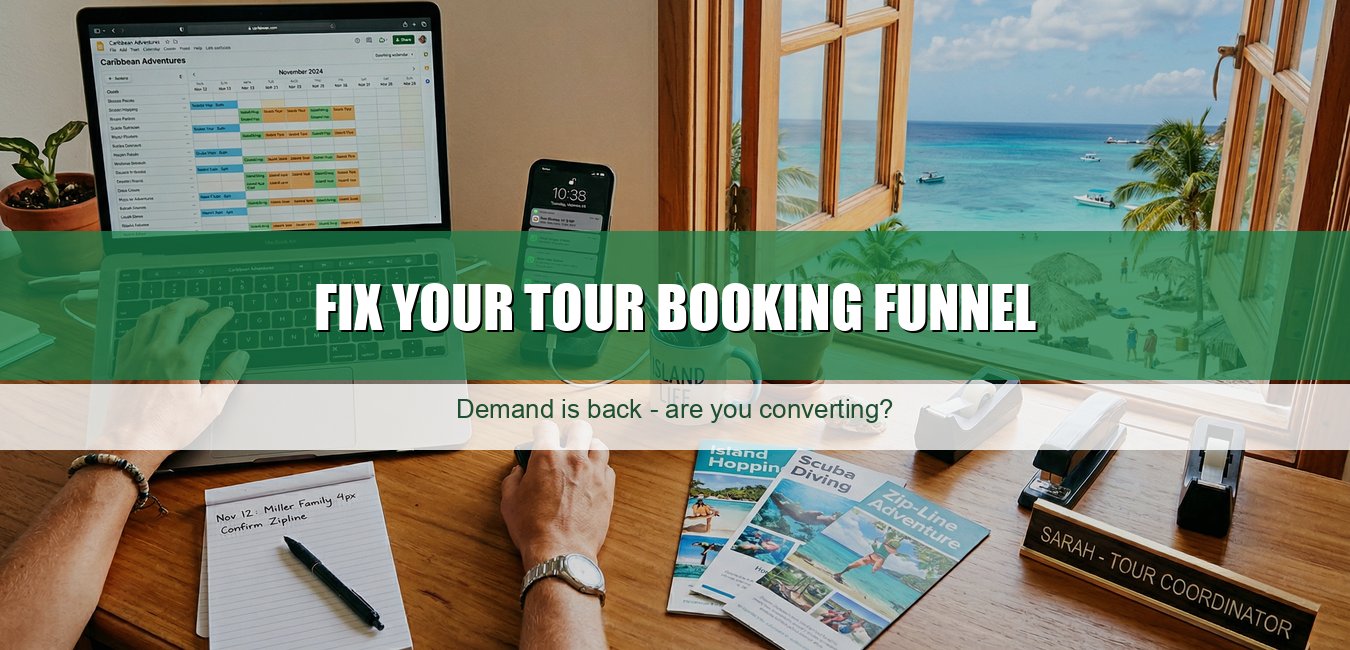
What is going to break first when bookings double?
I ask every operator that question before high season. Most say "I don't know, hopefully nothing." That's not an answer - it's a prayer. What breaks first is never the inbound. Traffic shows up fine. What breaks is the funnel you built during slow season and never looked at again.
Caribbean summer demand for 2026 is already up 15% year over year. International arrivals hit 99% of pre-pandemic levels in 2024. The guests are back. And most booking funnels are still optimized for a slow August, quietly eating half that demand before it ever reaches a confirmation email.
Here is my honest take: when demand returns, weak operators celebrate. Strong operators panic - because demand exposes everything broken in the funnel that low traffic hid. A 2% conversion rate looks fine when you have 20 visitors a day. Double the traffic and you are leaving real money on the dock twice as fast.
I've watched operators run Google Ads, post every day, do everything right on the acquisition side, and then lose 80% of the guests who actually showed up. That 80% abandonment figure is real - the industry average for travel booking sites, according to analysis of hundreds of millions of online transactions.
And it's not mysterious. The same five problems come up every time:
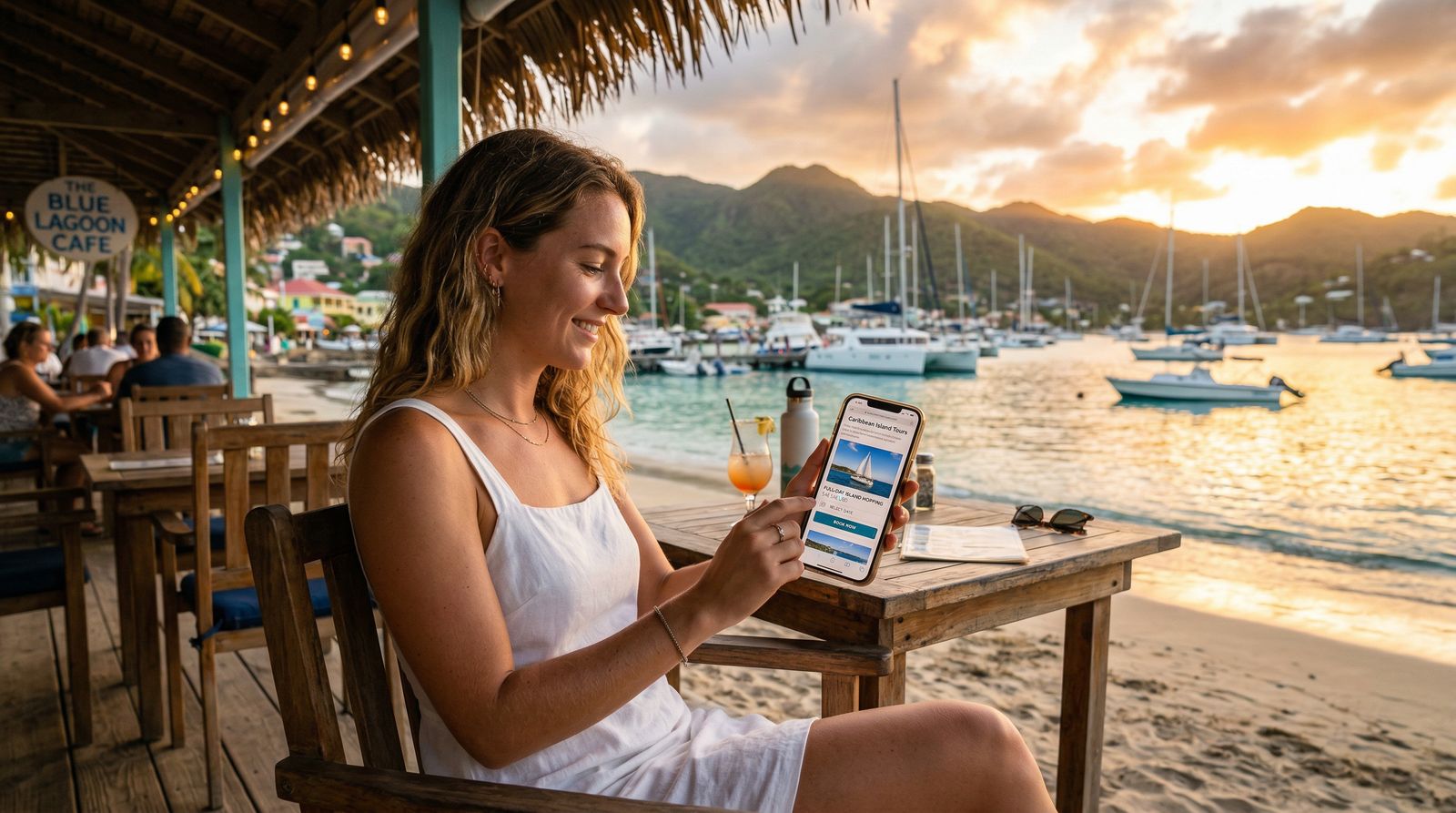
A while back I got a message from a guest through Instagram. She'd tried to book a catamaran trip on her iPhone twice. The form kept crashing after she entered her card number. She wanted to know if she could just Venmo the deposit.
The operator had no idea. The form crashed silently - no error, no flag on their end, just a frustrated guest looking for a workaround. She was patient enough to find the Instagram page. Most people aren't. Most just book somewhere else and the operator never knows why the numbers are flat.
That's what I mean when I say demand exposes the funnel. At low volume, one crashed form is invisible. At high volume, it's a week of lost revenue. And you only find out about it when someone patient enough to complain actually complains.
The two questions every traveler wants answered before they commit: when can I go, and how much does it actually cost? If your site makes them dig for either, most won't bother.
A live availability calendar on the listing page - not behind a "check availability" click - changes the dynamic. The guest sees that Saturday has four spots left and Sunday is open. That's a decision they can make. A blank page with "Contact us for availability" is not a booking funnel. It's a waiting room.
Same logic on price. Hidden fees that surface only at checkout erode trust fast. And trust is what gets someone across the finish line when they found you three minutes ago.
Over 85% of travelers who abandon a booking would consider coming back to finish it. Most operators do nothing after someone leaves the checkout page, which means they're leaving the easiest possible revenue sitting there.
A few things that actually work:
You don't need a redesign. You need to go through your own checkout on a phone right now - 4G, not Wi-Fi - and count how many times you want to give up. Then fix what you find.
The short checklist:
If you're on Junglebee, a lot of this is already handled - the mobile checkout, the live availability, the direct payment flow. But the add-on transparency and the form discipline are things you control regardless of which system you're on. They cost nothing to fix. They just take someone actually looking.
Walk your own funnel. On your phone. On a slow connection. As a first-time guest who found you on Instagram and has never heard of you before.
Half the friction I see in Caribbean booking funnels is invisible to the operator because they never do this. They know where the button is. They know the price includes the park fee. Guests don't have any of that context.
The demand is back. The question is whether your funnel is ready to catch it, or whether it's still set up for a slow season when losing a few bookings didn't really hurt.


