

March 24, 2026

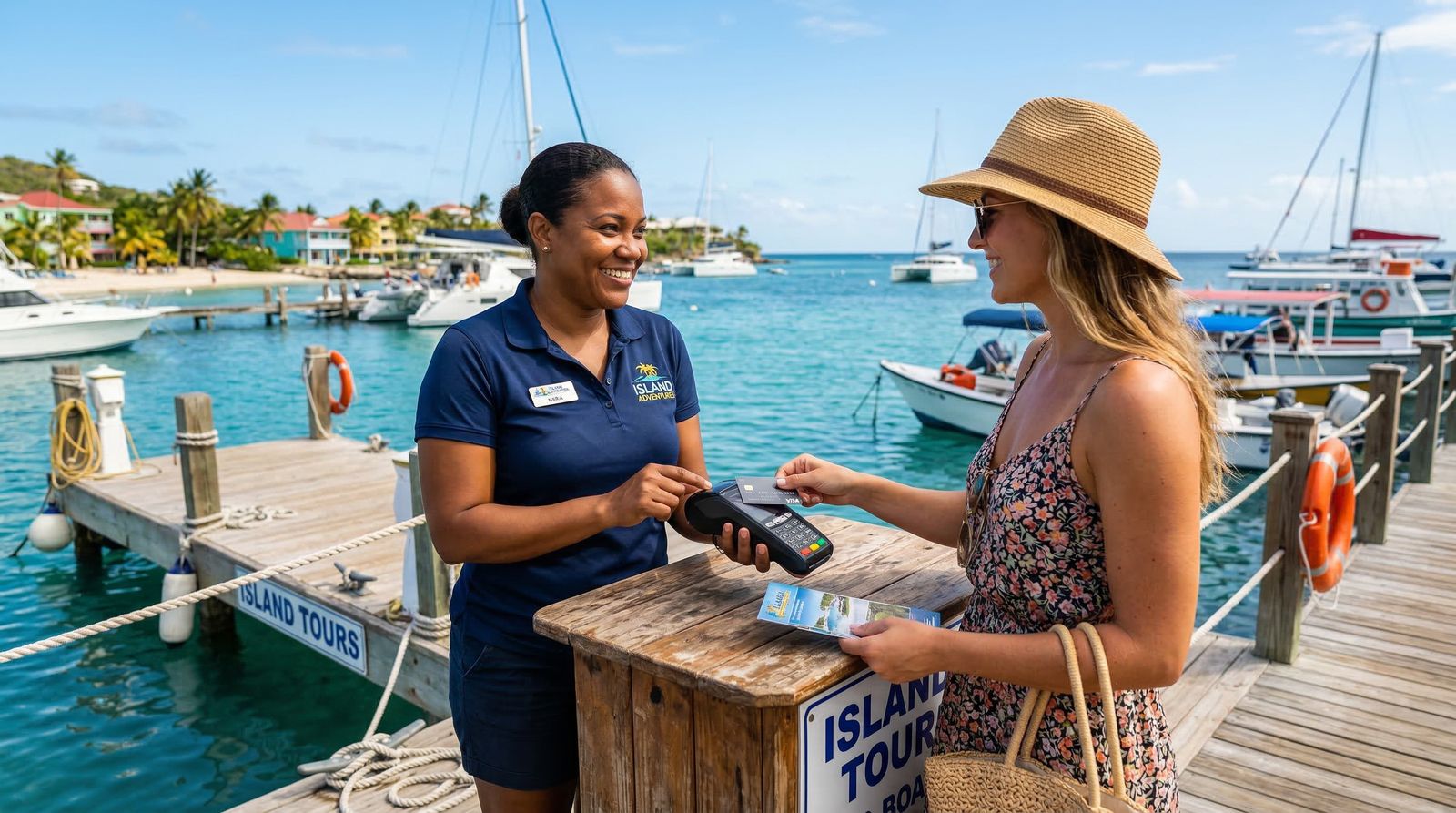
A guest showed up at the dock in Simpson Bay one morning with nothing but a Visa card and a smile. No cash. No app. Her hotel concierge had told her the tour was "pay at the boat." The captain I was talking to - a guy running a tight little 2-boat snorkel operation - had to tell her he couldn't run cards. She said she'd go find an ATM. She never came back.
That's a real thing that happens. And it keeps happening because a lot of small Caribbean operators are still one awkward conversation away from losing a booking to the nearest ATM.
So let me walk through the actual ladder - from cash and PayPal links on the dock to a setup where you're taking cards cleanly, keeping the money, and not panicking every time a guest shows up with plastic.
I understand why people start with PayPal. It works almost everywhere, you can send a link over WhatsApp in ten seconds, and everyone's heard of it. But if you run tours in the Caribbean and PayPal is your main payment system, you are going to get hurt by holds.
PayPal's fraud systems are trigger-happy with Caribbean merchants. They will freeze funds. I've talked to operators who had four figures sitting in "review" for weeks during their busiest season. You took the booking, you ran the tour, your guest was happy - and the money is just sitting there while PayPal decides whether to trust you.
Use PayPal as a backup for the guest who insists. Don't build your cash flow around it.
In 2026, Stripe is live in most Caribbean territories that fall under US, UK, or EU jurisdiction. USVI, Puerto Rico, Barbados, Jamaica, Bermuda, Aruba, Curacao, the French islands - yes. Some smaller islands still have gaps. If your local bank is the gatekeeper, you may end up with FirstCaribbean, RBC, or Scotiabank Caribbean as your acquirer. Those accounts take longer to open and typically run 3.5% to 5%. Annoying, but workable.
Go to stripe.com/global and check your country. Two minutes. If Stripe is available, their 2.9% plus 30 cents beats most island-bank merchant rates by a full point.
Once you know your processor, you have two setup paths:
For most small operators - one to four boats - hosted checkout is the right start. If you're pushing serious volume, the math changes and a direct account makes sense.
Stop thinking about it. Run through this in order.
I know an operator who took card payments over the phone for a full season before someone pointed out he was getting charged a different rate. He was typing card numbers manually into his terminal - what processors call card-not-present transactions. His rate was sitting at 3.8% instead of 2.9% because manual entry carries higher fraud risk and processors price for that.
He'd run about 180 bookings that way. A few hundred dollars gone, and he never knew.
If you sometimes take a card over the phone, that's fine - but know the rate is higher. Better: send a pay-by-link over WhatsApp. The guest enters their own card. You get a cleaner rate and a transaction record with their email attached.

I'd say 90% of small Caribbean operators in 2026 should just use Stripe. It works in most territories now, the documentation is the best in the industry, the dispute process is manageable, and you're looking at 2.9% plus 30 cents. That's not cheap but it's the market rate.
The 10% who need a local acquirer already know who they are. You're on an island where Stripe isn't available, or your bank is requiring you to go through them, or your volume is high enough that the local rate actually pencils out better. Go do the paperwork. It's not fun but it's the right call for your situation.
What I'll push back on is the operators who are routing Stripe through an overseas bank account because their island isn't officially supported. I've seen this. Money lands in a Canadian or US account, then gets wired back to the Caribbean. It's dodgy, I'll be honest. I don't know how that survives a tax audit, and I don't know why you'd build your business that way when there are compliant options - including JB Pay through Junglebee, which pays out to your local island bank directly. But even if you're not using us, please stop routing your Caribbean tour revenue through a foreign account. It's not worth it.
The captain who lost that booking to an ATM run didn't need a complicated setup. He needed a $30 card reader clipped to his phone and a Stripe account that took him a morning to open. That's the whole thing.
The guest who doesn't come back from the ATM - that's cash you earned by showing up and doing the work. Don't lose it because the payment setup felt like a project you'd get to later. It's not complicated. It's one morning, done properly, and then it works.


