

June 4, 2026

If I were starting a paddleboard tour business in Key West tomorrow, the first thing I'd do is not buy a single board.
I'd go figure out where the wind comes from at 2pm, who runs the activity desk at the hotel down the street, and how a guest pays me before they show up. The boards are the easy part. Anyone can buy boards. I grew up on the water in St. Martin and worked my way from deckhand to captain at my parents' Eagle Tours, and I've watched a lot of small water businesses get born across the Caribbean. The ones that make it aren't the ones with the best gear. They're the ones with the back office sorted before they take a single dollar.
Key West isn't my home turf. But a small, beginner-friendly water tour is the same animal whether it's the Lower Keys or Simpson Bay. The bones don't change.
Every island has a rulebook, and Key West is a small island with a big one. Florida doesn't hand out one statewide license. Most operators need a local business tax receipt from the county, and often a separate one from the city you launch from. So you're dealing with more than one desk before you're even wet.
And if you rent boards, treat it like a real livery, because legally it is one. Florida has specific rules for any business leasing or renting vessels, paddlecraft included. Pre-rental instruction. Signed attestation forms. Not optional.
The part operators forget is the water itself. A lot of the Keys sits inside the Florida Keys National Marine Sanctuary, and a sanctuary permit is generally about authorizing activity that would otherwise be off-limits. If you're unsure, their permit coordinator is a phone call. We deal with the Caribbean version constantly. Marine park user fees, protected reefs, zones you can't anchor in. My rule is simple: write down your exact launch points and routes first. Once you know where you'll operate, it's obvious which agencies you need to call. Most people do it backwards and pick a logo first.
On paper Key West looks like flat tropical water in every direction. In real life your guest experience is decided by wind, chop, and how exposed your route is. I've put enough beginners on the water to know the gap between a five-star review and a refund is usually a 12-knot breeze on the wrong stretch.
So build your first two tours around consistency, not scenery:
The goal is to deliver the same trip in a stiff breeze as on a glass-flat morning. Boring and repeatable beats spectacular and weather-dependent every time. A run you cancel half the season isn't a product.

A paddleboard tour feels casual. Your safety standard can't be. Guests notice, and if something goes sideways you'll be glad you built the structure early. For Florida paddlecraft rentals, liveries have to give pre-rental and pre-ride instruction and use an attestation checklist for human-powered vessels anyway, so you're building it regardless.
And the part nobody tells you: the briefing sells. When a guest feels taken care of in those first five minutes, they tip more and leave better reviews. I've seen a confident crew turn a nervous first-timer into a repeat guest before the board even hit the water.
Key West visitors will happily pay for a smooth, guided experience, especially one with photos, real wildlife knowledge and easy logistics. Don't race to the bottom. A simple starter ladder:
Whatever you pick, protect your time. Clear start times, an arrival window, and a weather policy you can defend. The cheapest operator on the dock is rarely the one still running boards in three years.
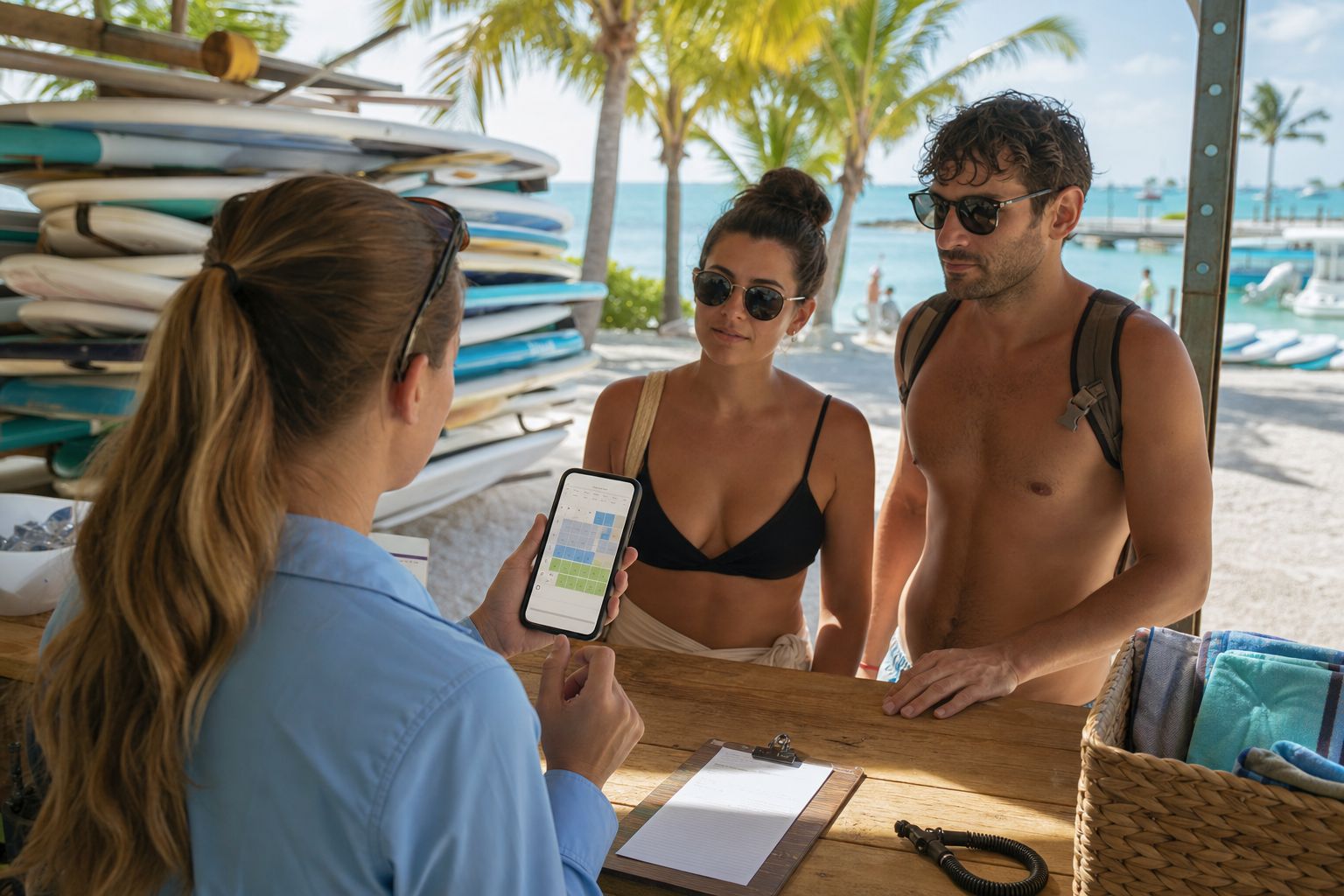
OTAs fill gaps, sure. They also train you to discount and they quietly take ownership of your guest relationship. In a town like Key West, direct bookings are very doable if you make the thing easy to buy.
That concierge relationship is where this whole thing lives or dies. Back when the booking gap first hit me running SXM Deals, the worst pain was an activity desk sending a guest over with a scrap of paper and a room number, and the operator scrambling to figure out where it even came from. The fix is letting people pick a time, pay a deposit, and get an automatic confirmation without you touching anything. We built Junglebee to do exactly that, so a hotel can book you direct and it lands clean.
You don't need a perfect business to start. You need a safe route, a reliable schedule, and a way to take money online while you're out on the water.
Keep the first month boring. Confirm routes and licensing and write your safety briefing in week one. Run three to five practice tours with friends in week two, timing every step from check-in to pack-down. Shoot real photos and turn on online booking in week three. Start partnerships and gather reviews in week four, then nudge prices up once you've got proof.
The single rule I'd give anyone starting a small water tour, in Key West or anywhere, is this: your back office has to answer the moment a guest says yes, because you won't be near your phone. The deposit charged, the confirmation sent, the slot held, all while you're paddling a family through the mangroves. And look at what a system really costs you per booking, your own time included, not just the sticker. You can see how we handle that on our pricing page. Build the business that answers in two minutes, not two days. I learned that one the expensive way.


