

April 30, 2026

Antigua is not my home turf. My world is St. Maarten, Simpson Bay, Eagle Tours, that whole orbit. But I've watched the eco-tour category grow across the Caribbean for the better part of a decade, and I know operators running mangrove kayak tours in Antigua right now. What I've seen is this: the ones who treat it like a real business - permits in order, clean booking flow, group sizes they can actually control - they're doing better than most powerboat operators I know. Quietly. Without a lot of noise about it.
So here's what works in Antigua specifically. Not a general "how to start a tour business" lecture. What actually matters for this product in this destination.
The first thing operators get wrong about mangrove kayaking is they see the ticket price and assume the margins are thin. You charge $65 or $85 a person, not $200. So they assume the numbers don't work.
Run the math differently. A powerboat snorkel burns fuel, requires a licensed captain, needs daily engine checks, and has insurance costs that scale with horsepower. A kayak tour needs a great guide and a van with roof racks. Your cost-per-trip is dramatically lower - and your group size is naturally small, which means your reviews are better, your repeat rate is higher, and you're not playing the "fill 40 seats or lose money" game every cruise ship day.
I've watched kayak operators in the Eastern Caribbean run six-to-eight person tours with margins that would make a catamaran owner quietly envious. The boat doesn't need fuel. That's not a small thing.
Antigua and Barbuda has a Small Craft Control Act that applies to commercial watercraft operations - and kayaks used commercially fall under it. The maritime authority is clear: no vessel is exempt from local licensing and safety requirements just because it's human-powered.
The practical list to work through:
Put one person in charge of compliance - even if that person is you - and put renewal dates in your calendar six weeks early. Getting caught without the right paperwork in peak season is not a fine you want to pay, and it's not a conversation you want with the hotel activity desk that just started sending you guests.

Most bad reviews for kayak tours aren't about the kayaking. They're about chaos around it. Guests who couldn't find the meeting point. A guide who wasn't sure when to cancel for wind. A waiver someone didn't sign until they were standing on the beach in the sun.
Your operating system - not your paddle technique - is what makes reviews good:
The operators I know with the best TripAdvisor numbers aren't the most dramatic guides. They're the most predictable. When guests feel guided - not rushed, not improvised at - they give you the five-star review and the referral.
Most first-time operators underprice. They see what a competitor charges and copy it. The problem is you have no idea what that operator pays for staff, storage, insurance, access fees, or the vehicle they use twice daily.
Price from your real costs outward. Antigua had 197,206 cruise arrivals in January 2026 alone - a record month. A lot of those guests have real budgets and want an experience worth posting. You don't need to be the cheapest thing on the pier.
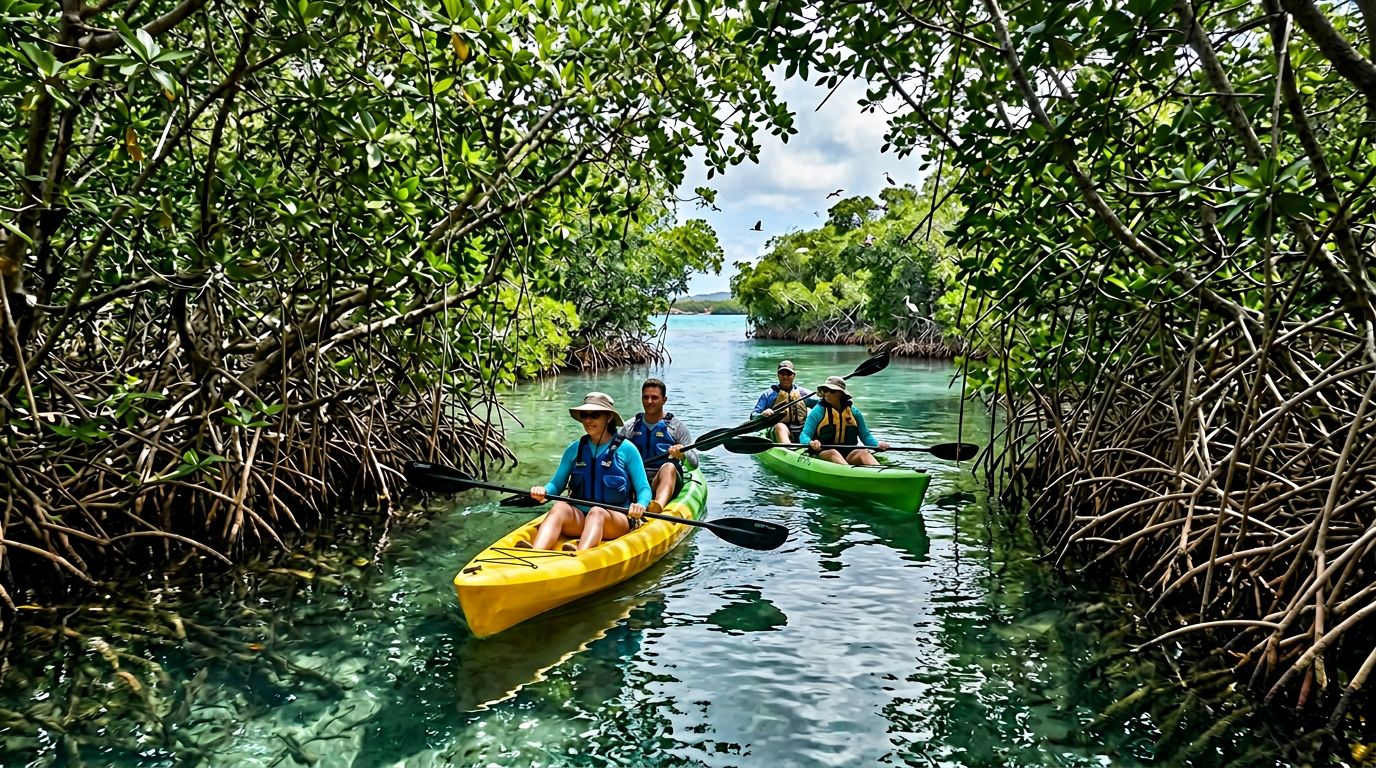
Eco-tour operators who struggle longest are the ones whose booking process is "text me and I'll check availability." It works at four tours a week. It falls apart at fourteen, and it never scales to selling through hotel concierges and cruise-day partners at the same time.
Before you invest in advertising, fix the flow:
A booking system built for Caribbean tour operators - one that handles deposits, capacity limits, and payments that land in a local bank account - takes about an hour to set up. You can check what that looks like at junglebee.com/booking-system-charters.
I've watched operators in this region fixate on follower counts and OTA rankings when the number that actually builds a kayak business is simpler: what percentage of your guests refer someone within 30 days.
Small-group eco tours are a word-of-mouth product. The guest who paddled through the mangroves at sunset, saw a night heron, and got back to the dock on time - that guest tells four people before they're back at the hotel. The guest who stood in a parking lot confused about where to go doesn't tell anyone except TripAdvisor.
Antigua isn't my turf, but the pattern is the same everywhere I've seen it. Get the operations right. Get the reviews. The marketing finds itself.


