

April 23, 2026

A while back I talked to an operator on Curacao who had been running a glass bottom boat for almost two years. Nice boat. Good reef access. Decent location near Willemstad harbor. And he was struggling to fill it. I asked him who he was selling to. "Everybody," he said.
That was the problem.
Glass bottom is not a product for everybody. It is for the guest who wants to see the reef but is not going in the water. The family where grandma is not putting on a snorkel mask for anyone. The cruise passengers with two hours and three kids. That guest exists in large numbers in Curacao. In 2025 the island saw 788,427 stayover arrivals - up 13% over 2024 - plus 881,665 cruise passengers on top of that. But you have to know which guests you are talking to, or none of that volume matters.
My home is St. Maarten, not Curacao. But I know the ABC islands from years of watching operators there, and the operators we work with through Junglebee. Glass bottom in Curacao is a genuinely good product - low skill barrier, family-friendly, no dive certification, no wet hair. If I were setting it up there, here is how I would think about it.
Most operators start by shopping for a vessel. They find a glass bottom boat, figure out a route, and then wonder why the tour is hard to explain in a single sentence. Start with the guest instead. Your core customer was already looking for this product and relieved to find it. Build everything around that person.
If your tour only works when the sea is flat, you will refund your way through the windy season. Build a plan B route - a calmer alternate stop for choppier days.
The south coast of Curacao tends to be calmer than the north, which matters a lot for glass bottom viewing. Chop and murk kill the experience faster than anything else. A guest who cannot see clearly through the glass does not blame the weather. They blame the tour.
Use mooring buoys wherever the Curacao Marine Park has them. Keeps you off anchor damage and keeps your reviews clean. Have a proper marine life script ready - your guide should explain what guests are seeing through the glass in plain language, not divemaster jargon.
Spanish Water, the big lagoon on the southeast side, is worth knowing for protected conditions on rougher days - especially useful for private charters. Klein Curacao day trip guests often come back wanting more water time, and glass bottom is a natural next-day option for them.

Curacao has its own regulatory environment under the Kingdom of the Netherlands. Vessel registration, captain credentials, and commercial passenger permits are not things you guess at. Talk to the harbor authority before you take any money. Ask what you need on board for commercial passenger trips. Get it in writing.
One more thing - if you are marketing to Dutch and European visitors, and you will be, having materials in Papiamento and Dutch alongside English is a small touch that lands well with local referral partners.
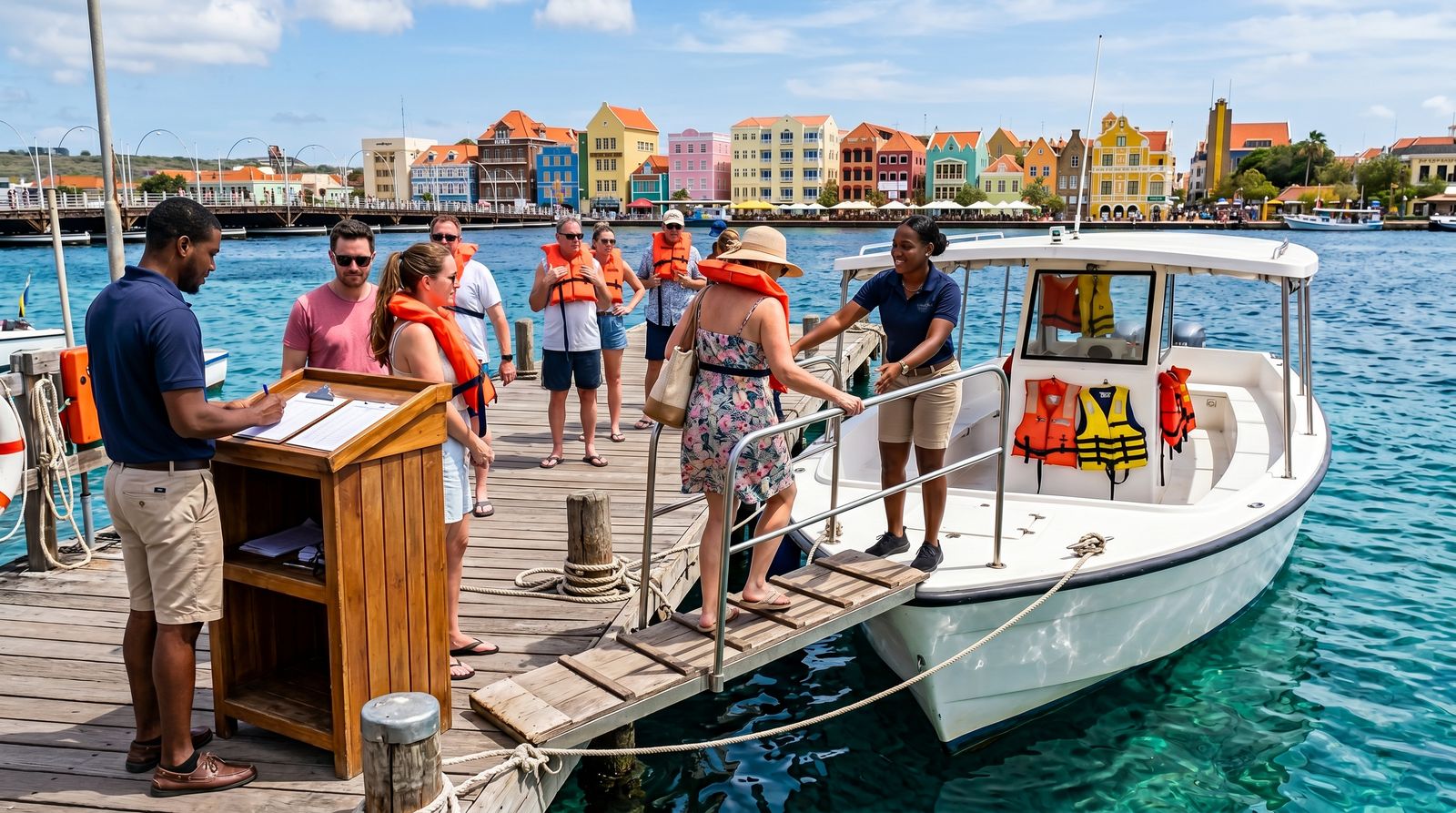
Glass bottom is a volume product. Keep the price ladder simple: adult rate, child rate, private charter rate. Morning departures often sell themselves on water clarity alone. Late afternoon might need a small sweetener - a sunset perk or a drink included.
When the season picks up, you need online checkout that works on a phone, automated confirmations, and a live availability calendar that does not overbook. A charter-focused system handles this without the back-and-forth that eats an operator's afternoon.
Funny story about the operator I mentioned at the start. After we talked, the thing I kept coming back to was not his route or his boat. His guests were showing up at the wrong dock. There was a marina with two entry points and his confirmation email told people nothing. He was getting one-star reviews from people who had a fine tour - they were just annoyed by the twenty minutes before they found the boat.
I would not launch with four tour variants, a sunset run, and a Klein Curacao add-on all at once. Launch with one product - the 2-hour reef tour - priced correctly, legally clean, with a booking flow that works on a phone. Run it until the reviews are consistent. Then add.
Curacao has the arrivals to support a real glass bottom operation. The 881,665 cruise passengers alone are a market that other islands would give anything for. The gap is almost always execution, not demand. A tour that starts on time, at the right dock, with a guide who knows what they are talking about, will stand out faster than you expect. When you are ready to set up deposits and online bookings that pay out to your local bank, take a look at how we price it at Junglebee - built for exactly this kind of Caribbean operation.


