

May 29, 2026
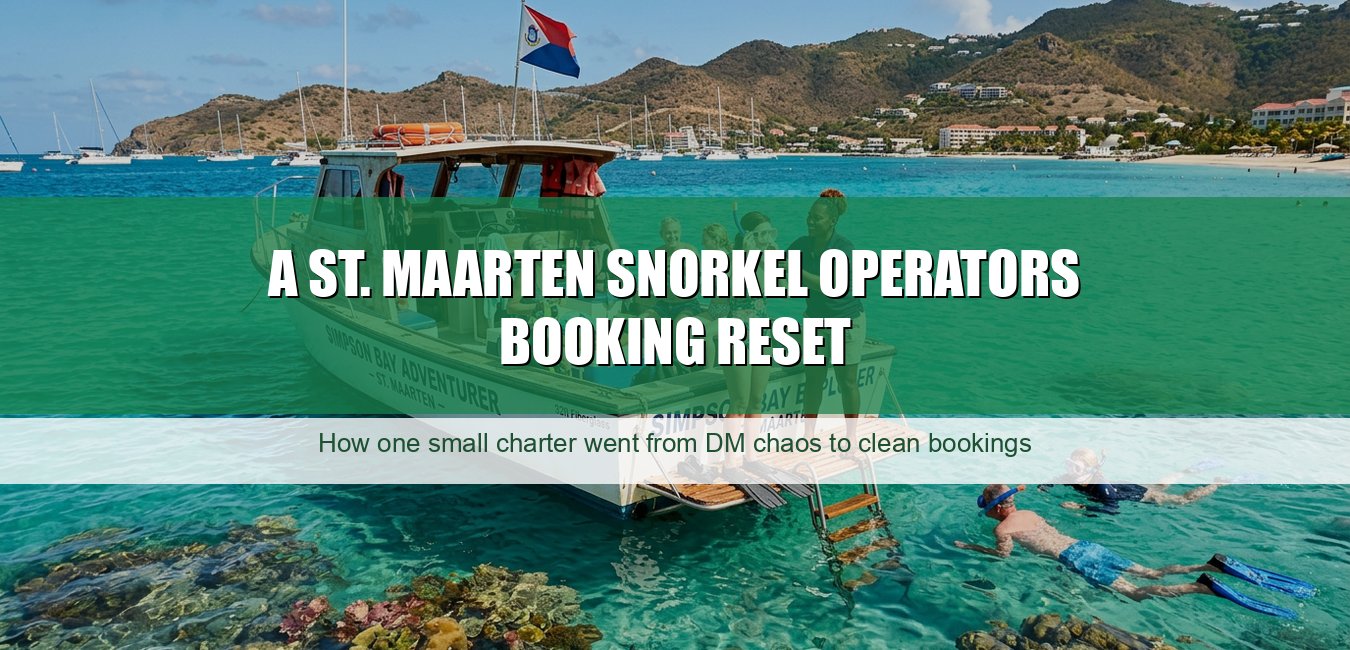
A snorkel operator I know in Simpson Bay was running a six-guest boat off her phone. Instagram DMs, WhatsApp threads, a Google calendar she pretended was reliable, and a notebook with deposits scribbled in pencil. She was busy. Turning people away most weekends. And she was still losing money on three out of every ten trips, and she could not tell you why.
I grew up doing this work in St. Martin, deckhand to captain, so when she told me her season looked great on paper but her bank account disagreed, I knew exactly where the leak was. It was not marketing. It was the booking flow. This is the story of how she got off her camera roll, and what it actually took.
Her high season looked full. But when she counted only the trips that ran, paid, and tipped, the math fell apart. And the pattern is one every small operator down here has lived through.
She did not have a marketing problem. She had a bottleneck, and the bottleneck was her. I know that one personally. Back when I was running SXM Deals, the bottleneck was me too, sitting on bookings waiting for an operator to confirm. So every extra DM she got made the chaos worse, not better.
The first thing she did was stop negotiating availability in DMs. She set up a booking page with real-time availability, fixed departure times, and a deposit taken at checkout. Non-negotiable.
Her reply to every DM became one sentence: "Here's the live calendar, lock your spot here." And if a guest would not click the link, they were never going to pay anyway. That filter alone gave her back two hours a day.
A few details that mattered for a small St. Maarten boat:
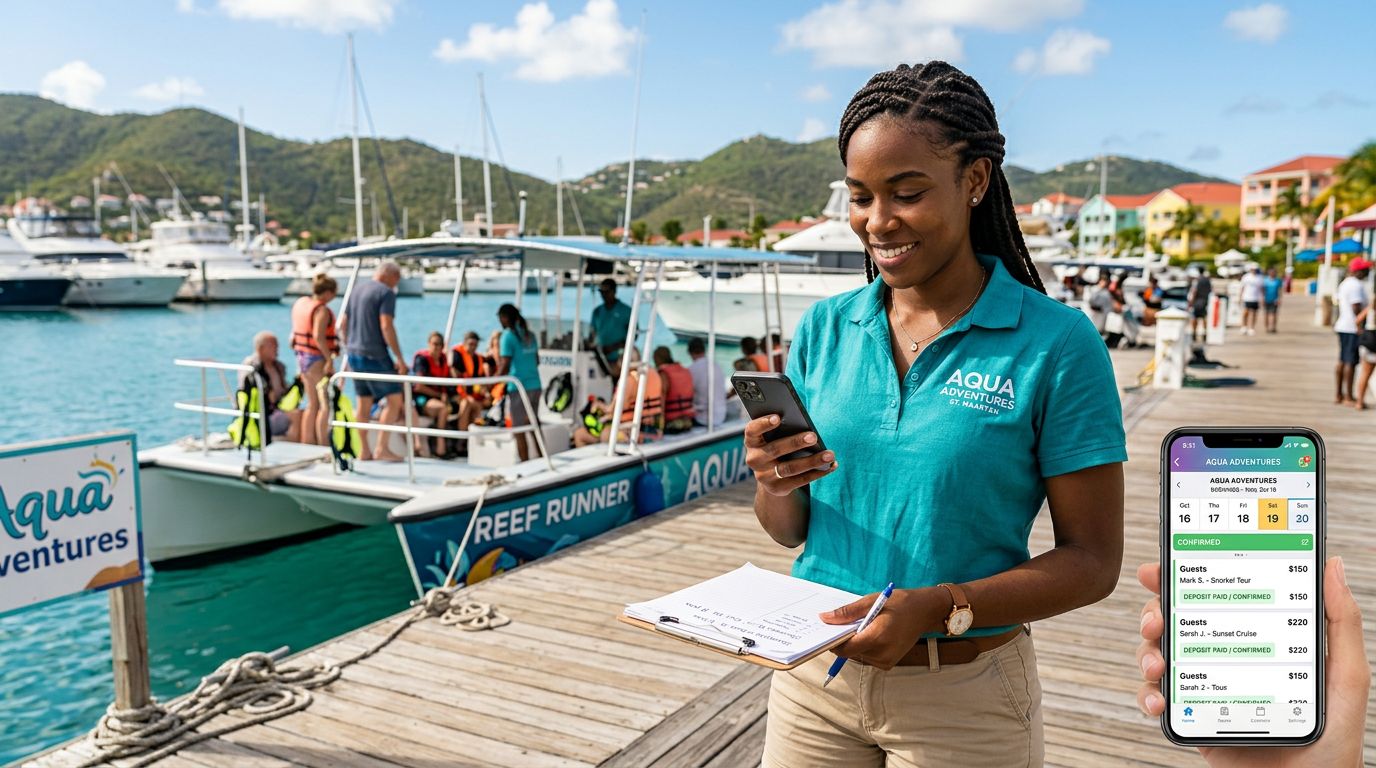
St. Maarten's Man of War Shoal Marine Park has real rules. You are expected to brief guests on not touching coral, not feeding fish, holding buoyancy, and using mooring buoys instead of dropping an anchor on the reef. That guidance is spelled out in the St. Maarten Marine Park Management Plan. Park user fees get charged to anyone who snorkels, dives, or ties to a mooring inside the park, and the captain can be held responsible for them. Anyone who has moored off Pinel or Tintamarre knows the drill.
So she stopped trying to explain all of that on the dock at 8:55am. She moved it into the booking flow:
The dock turned into a five-minute hello and a proper safety briefing instead of a paperwork triage station. Guests felt looked after. And she felt like a captain again, not a clerk.
The single highest-payback change was the boring one. Automated reminders. She set a simple cadence and let the system run it for her.
None of it is glamorous. All of it adds up. Her no-show rate dropped, her review volume tripled, and her DMs got a lot quieter, because guests already knew everything they needed to know before they showed up.

One operator, one season. That is a single data point, not a study. But the shape of it matches what I see when other small Caribbean operators tighten up their booking flow.
And she is in a category that keeps growing. The global diving tourism market was valued at USD 5.59 billion in 2025 and is projected to reach USD 15.33 billion by 2034. Guests get more options every year. The operators who win are not the loudest. They are the easiest to book and the easiest to trust. I watched Aquamania, one of the biggest shops on the island, go from fully paper-based to fully digital, and the thing that changed was not the boats. It was that every booking finally landed in one place.
If you are running your St. Maarten snorkel charter out of your DMs right now, you do not need to rebuild everything by Monday. You need three small pieces of armor:
The boat does not need to change. The hull, the gear, the route, the captain's eye for a good reef day, none of that is the problem. The booking flow is the problem. Fix it, and you find out you were running a real business the whole time. I learned that the expensive way back in 2012, sitting on a charter for two days while the money walked off to someone else's catamaran. Two days. Not two minutes. Build the business that answers fast.


