

May 8, 2026
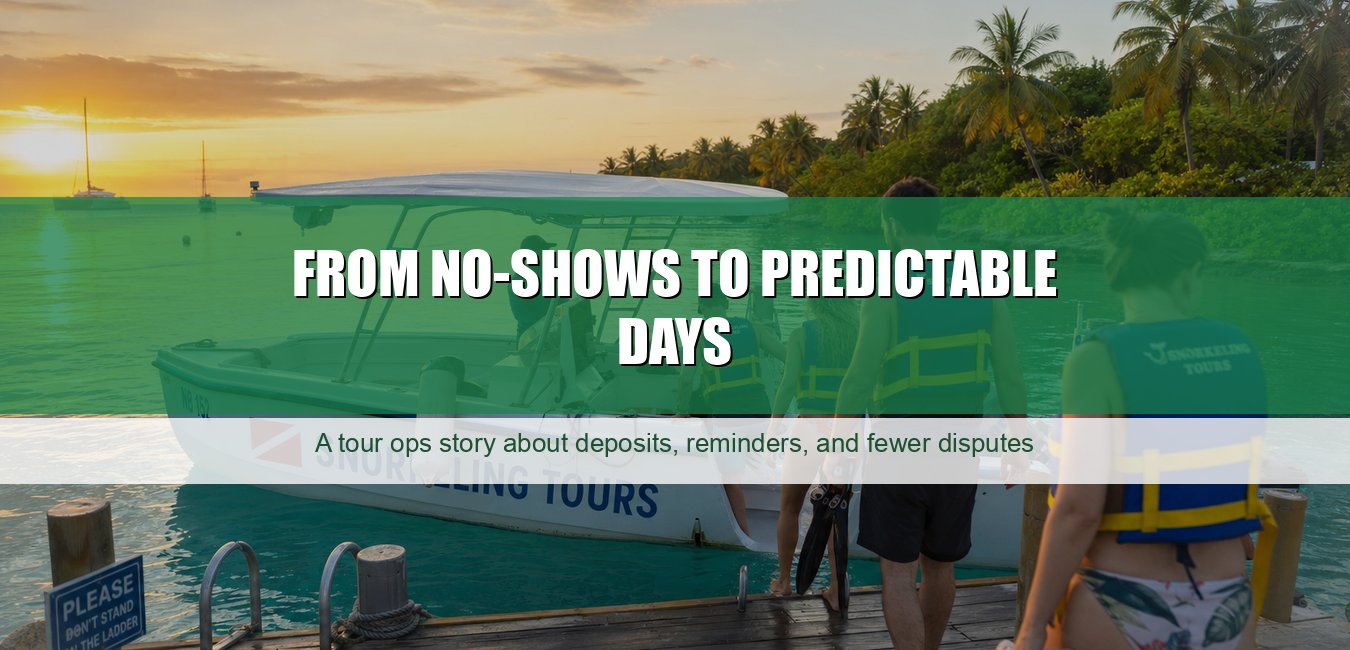
No-shows aren't bad luck. They're a process failure. And once you accept that, you can actually fix them.
I say this because I've watched operators treat no-shows like weather - something you shrug at and absorb. Two or three empty spots on a full manifest. Crew already paid, fuel already burned. The guests just... didn't come.
They're not wrong that it happens. They're wrong that it has to keep happening at the rate it does. In almost every case I've looked at, the no-show was predictable. The guest had questions they never got answered. They weren't sure about the meeting point. Or they were nervous about weather and nobody gave them an easy out that wasn't a refund fight.
The booking was soft from the start. The process made it softer.
A catamaran captain I know in Simpson Bay ran a tight operation - 10 to 15 bookings a day at peak, mostly half-day snorkels and sunset runs. On paper, high season looked great. Then I asked him to count it properly.
Crew hours were committed at 6am based on that manifest. Fuel went in the tanks. Ice and drinks got loaded. Then three or four guests would just not materialize. Some had paid a deposit. Some hadn't paid anything - his old system let people "hold" a spot with just an email. And then there were the chargebacks: guests who'd actually taken the tour, then disputed the charge claiming "services not provided."
That last one is worth slowing down on. Chargeback rates across the travel and hospitality space hit 0.26% in Q3 2025, up from 0.17% in Q1 2025. That's not enormous in isolation. But it's moving fast, and for a small operator it only takes a handful of bad-faith disputes to land you in trouble with your payment processor. Mastercard even has a specific code for the pattern - Reason Code 4853 - where a guest rejects a credit or voucher you offered them and disputes the full charge instead.
The fix isn't to get tougher. It's to get clearer, earlier.

A soft booking doesn't feel real to the guest, because it isn't. An email saying "you're on the list" isn't a commitment. A deposit is.
A dive shop I know in Antigua fought this for two seasons before they made the switch. They were afraid a deposit requirement would scare people off. It didn't. What it did was filter out the guests who were never actually going to show. The people who paid a real deposit - not 10%, not "pay on the day" - showed up. Almost always.
A few things that work:
And say it plainly in the confirmation: "You'll get a text 24 hours before with your captain's name and the exact meeting point." That sentence alone reduces a lot of no-shows, because it tells the guest something is coming and they should watch for it.
A reminder is not a cheerful nudge. A good reminder is an anxiety reducer. Most guests who ghost a tour aren't malicious - they were uncertain about something and the easiest path was to do nothing. Your reminder sequence is the chance to answer those questions before silence becomes a no-show.
Three touches is the right cadence:
The SMS matters more than the email for that last one. Email gets ignored. A text at 7am the day of the tour gets read.
Aquamania does this well. Before they systematized their reminders, their activity desk was fielding panicked last-minute calls from guests who didn't know where the dock was or whether to bring a towel. Now those calls almost don't happen. The system answers the question before the guest thinks to ask it.
Weather is the wildcard down here, and guests know it. What they don't know is whether you'll make it easy or hard for them to deal with it. If the only exit is a refund fight, some guests will just not show up and dispute it later. That's a much worse outcome for you than a rescheduled trip.
Give them a button. A reschedule link, right in the reminder, that moves them to the next available slot without a phone call. It treats the guest like an adult and it keeps your revenue intact.
This is where having the right booking system actually earns its keep. In Junglebee, operators set up deposits, automated reminder sequences, and a rescheduling flow in one place, so the system does the chasing and the saving while you're out on the water. No phone tag. No manual emails at 11pm.

Even with a good process, you will occasionally get a guest who took the tour and then disputes it. What you can do is make sure you have clean documentation every time.
The captain I mentioned at the start in Simpson Bay - after one full season with a proper deposit rule, a three-touch reminder flow, and a reschedule option - told me he'd stopped checking the manifest with dread in the morning. Staff scheduling got easier because the numbers were real. Fuel planning got tighter. And the chargebacks essentially stopped, because the documentation was there every time.
He didn't say the business got bigger. He said it got calmer. And I'd say that's actually the point.
No-shows are a process failure. Fix the process - deposit upfront, reminders that answer questions, a graceful reschedule path, clean documentation - and your mornings stop feeling like a gamble. If you want to know how we've set this up to run automatically, the Junglebee pricing page has the details.


