

March 27, 2026
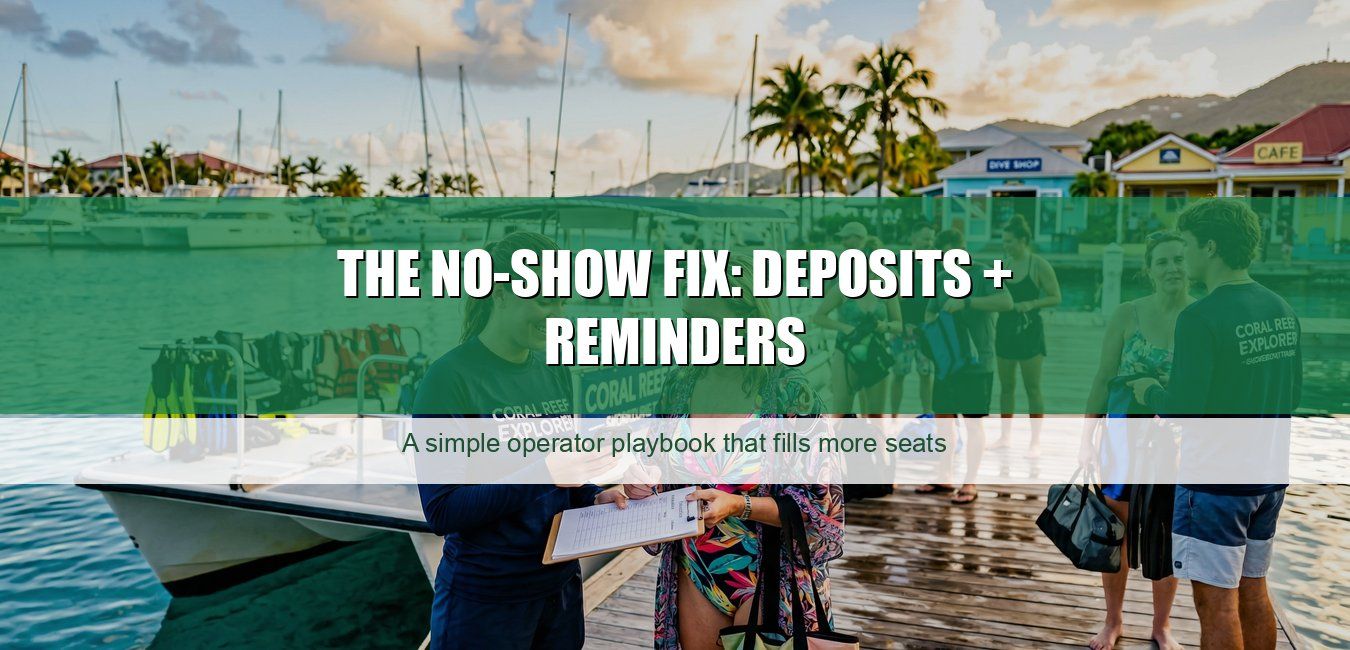
A few years back I knew an operator running day tours out of Simpson Bay - $180 per head, snorkel gear, rum punch, the full thing. He was charging a $20 deposit to hold the seat. One December morning, four people out of eight didn't show. The boat had gone out, the captain had done the briefing, the crew had counted enough life jackets for eight. Half the group evaporated.
When I asked him what happened he said, "They probably found something cheaper the night before." And he was right. Because a $20 deposit on a $180 tour isn't a commitment. It's a maybe. The guest mentally wrote off the $20 the second they booked. It was the price of keeping their options open.
The deposit is too small to sting, and the reminders are either nonexistent or a single email landing in a promotions folder. Fix both of them together and you can drive no-shows below 5%. Leave either one broken and you're fighting with one hand tied.
If the deposit cannot hurt to lose, the guest treats the booking as a maybe. You've given them a cheap exit option and they'll use it the second something more exciting comes along.
The number that actually works is 25-50% of the total tour price, collected at booking. Not after. Not "when you arrive." At the moment they click confirm.
How you set it within that range depends on your product:
When I made this change - moving from a flat $20 hold to a proper percentage - no-shows dropped to under 5% within about two months as the booking pipeline flushed through. The guests who are genuinely committed still book. The ones treating your tour as a backup plan find someone else to be a backup plan for.
Most no-shows aren't guests who decided they don't want to come. They're guests who forgot, or who got confused about where to meet. A single email 24 hours out doesn't solve this. By the time it arrives the guest's mental picture of the trip has gone fuzzy - they can't remember if it was 8am or 9am, the Simpson Bay marina or the lagoon side.
The reminder cadence that actually works runs three touchpoints:
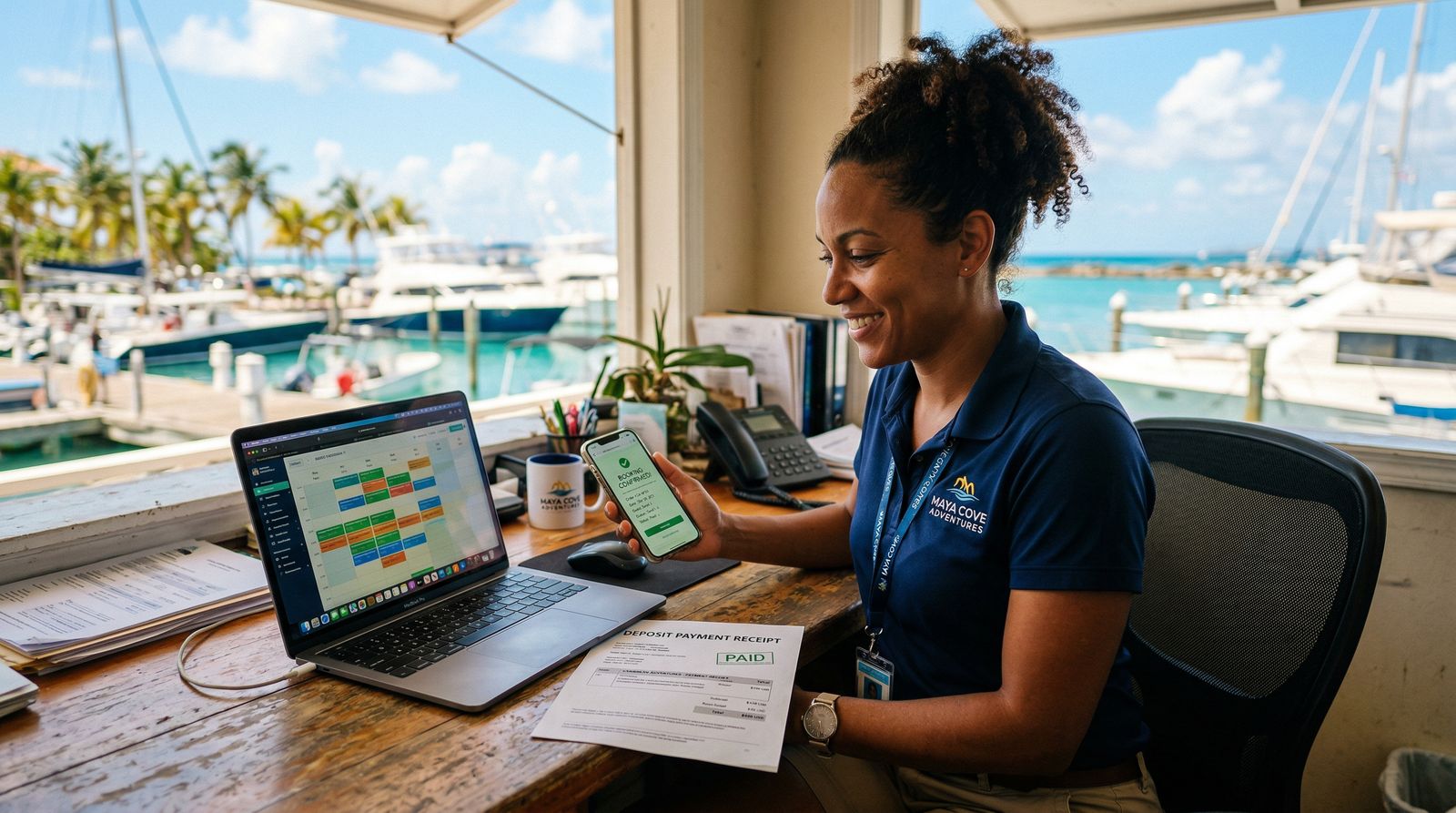
A deposit on its own gets you maybe 30% improvement. A reminder sequence on its own gets you another 30%. But together - a deposit that actually stings, followed by a timed three-message reminder cadence - operators I know consistently report no-shows in the 3-5% range. Under season pressure, that's the difference between a profitable day and one that barely covers crew wages.
The logic is simple: the deposit filters out guests who were never really committed. The reminders filter out the guests who were committed but disorganized. Those are two completely different failure modes, and each lever solves a different one. That's why you need both.
What to avoid:

One thing that trips operators up: guests who can't make it will sometimes just not show up because the cancellation process is unclear and they'd rather disappear than lose their deposit.
Publish a clear reschedule window - 48 hours is the right cutoff - and make it self-service. "Move your date, keep your deposit. Cancel within 48 hours, your deposit applies to any future booking." That's not giving money back. That's redirecting committed guests rather than losing them.
The framing matters. "Non-refundable deposit" sounds punitive. "Deposit held for your next trip" sounds like a system built for repeat guests. Same policy, completely different guest behavior.
The operator I mentioned at the start eventually moved to 50% deposits and a three-message cadence. His no-show rate over the following high season dropped from around 20% to just under 4%. His Saturday mornings got calmer. His crew stopped arriving at the dock not knowing how many guests to expect.
And in case you're wondering whether tighter deposits scare off guests - in my experience, no. Guests who are actually going to show up don't mind. They book hotels months in advance with full prepayment. A 50% deposit on a snorkel trip isn't aggressive. It's just a business that takes its bookings seriously.
If you're on Junglebee, deposits and the reminder cadence are both built into the booking flow - you set the percentage and the message timing once, and the system runs it from there. But even if you're not, the rule is the same: set the deposit high enough to sting, run three messages at 48h/24h/2h, and keep the reschedule door open. That combination is the whole fix. Not one or the other.


