Junglebee
What Actually Inspires Travelers to Book a Tour
A recent survey of thousands of travelers reveals what moves them to certain destinations and experiences
 Michael RouveureFounder, Junglebee · · updated
Every few months another research firm publishes a report on what inspires travelers to book. They survey thousands of people, run the numbers, and come back with findings like "authenticity matters" and "experiences outperform things." I've read these reports. I even used to share them. Then I spent ten years running boats and watching what actually moved the needle on real bookings, and I stopped sharing them.
This is not a survey. This is what I've watched convert.
Real photos of real guests beat stock photography every time
Not crew photos. Not aerial drone shots of the boat looking pristine. Photos of guests - actual people, slightly sunburned, holding fish, standing at the bow with their kids - do more work than any professional shoot I've ever paid for.
The reason is obvious once you say it out loud. A guest looking at your listing is not thinking "what a beautiful catamaran." They're thinking "could that be me." Stock photos of a model in a sundress at the bow answer a different question entirely. A slightly chaotic photo of a real family snorkeling at Pinel Island answers the right one.
I've watched operators double their click-through on a listing just by swapping the hero photo from a crew shot to a candid guest photo. No copy change. No price change. Just the photo. The "could be me" moment is the whole game, and most operators are still losing it with imagery that looks like a travel brochure from 2009.
A specific moment beats a list of features
Here's the difference. "Snorkeling included" is a feature. "You'll snorkel at Pinel Island where sea turtles feed in the seagrass about twenty meters off the beach" is a moment. One of those makes a guest book. The other makes them scroll past.
People do not buy features. They buy the specific, imaginable thing that will happen to them. The more precisely you can describe that moment - the turtles, the seagrass, the twenty meters - the more real it becomes in their head, and the closer they are to paying you.
This sounds simple. Almost no operators do it. Most listing copy is written as a spec sheet: duration, group size, what's included, what's not. All useful, none of it inspiring. Go look at your listing right now and count how many sentences start with "you will." If the answer is zero, that's why your conversion is what it is.
Name the captain
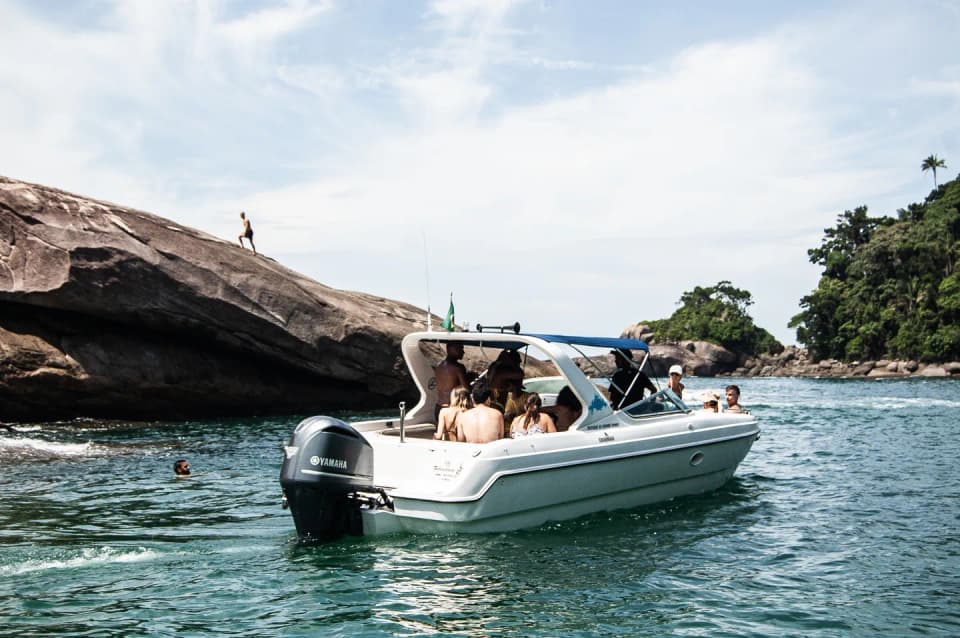
Tours feel like products until there's a person attached to them. The moment you put a name and a face on the listing - not the company logo, the actual captain - something shifts. It goes from "a boat tour" to "a trip with Jerome."
A captain I know in Simpson Bay added a simple bio to his listing: his name, a photo, how long he'd been running tours, two sentences about why he loves the route. Conversion went up that month. Not because he changed anything about the trip. Because guests suddenly understood they were booking a person, not a product. That difference matters more than almost anything else on a tour listing, and it costs nothing to fix.
The bio doesn't have to be long. Name, face, one specific thing they love about the route. That's it. Keep it short enough that a guest reads it in thirty seconds. The point is not to tell your whole story. The point is to prove there's a human being at the wheel.
Short reviews beat long ones
This one surprised me when I first started paying attention to it. You'd think a long, detailed review signals more effort and therefore more credibility. In practice, long reviews feel written. They feel composed. Guests read them and something in their brain flags it.
A review that says "Jerome knew exactly where the turtles would be. Best two hours of our whole trip" converts better than a five-paragraph essay. Under a hundred words, specific detail, one named thing - that's the review that moves people. It reads like a text someone sent their friend, which is exactly what it should feel like.
If you're following up with guests post-trip to ask for reviews - and you should be - give them a specific prompt. Not "please leave us a review." Try "what was one moment from the trip you'd tell a friend about?" That question gets you the short, specific, human answer that actually works on a listing page.
Social proof at the booking moment, not just on the listing page
There's a window between when a guest decides they want to book and when they actually put their card in. That window is where most conversions leak. They get to the checkout page and hesitate - second thoughts, comparison shopping, just drifting away.
The fix is social proof at that exact moment. Not buried in a reviews tab, not on a separate testimonials page. Right there at checkout. Something like "last booked 23 minutes ago" or "14 people are looking at this trip today" closes the hesitation gap in a way that nothing else does. It tells the guest that real people are moving on this right now, and that waiting has a cost.
Most tour operators leave this completely empty. The checkout page is a form and a pay button. We built real-time booking signals into Junglebee specifically because the booking moment is when the guest is closest to yes - and also when the most friction shows up. Reducing that friction at checkout is the highest-return change most operators aren't making.
What I'd actually change on your listing today
Most operator websites are written for the operator, not the guest. "We offer 30 years of experience." "We provide all snorkeling equipment." "Our vessels are Coast Guard certified." All technically accurate. None of it answers the question the guest is actually asking, which is: what will happen to me.
Strip the "we offer" language and replace it with "you will." Do it on one page and watch what happens. You'll convert better the same day. I'm not saying this as theory - I've seen it happen enough times that it's just a rule now.
The five things that actually move bookings - real guest photos, specific moments, the captain's name and face, short reviews, and social proof at checkout - none of them require a bigger marketing budget. They require the operator to stop describing their product and start describing the guest's experience.
That's a different mindset. It's also the whole game. The operators who figure this out don't just get more bookings. They get better guests - guests who showed up knowing what to expect and ready to have the trip they imagined. Those guests leave the good reviews. Which brings more bookings.
If you want the booking mechanics to work the way the listing promises - real-time availability, social proof signals, automated follow-ups for reviews - that's what we built Junglebee to handle. But the listing copy is on you. And it's the first place I'd look.
Booking page, card payments, one calendar for your website, booking page and desk. 4% per card payment, no monthly fee.