Junglebee
How to get more direct bookings for boat tours
How boat-tour operators actually get more direct bookings: own the dock, work the concierge, keep repeat guests, and let your site take the card.
 Michael RouveureFounder, Junglebee ·
Most advice on getting more direct bookings was written by people who have not had a trip blown out by wind. It comes from hoteliers with a front desk, or from software marketers who think a boat tour is just a hotel room that floats. So they tell you to build a booking engine, run some ads, and wait. For a boat operation that advice is thin, because the channels you actually control are different from the ones a 200-room resort pulls.
I have lived the other side of this. Back when I ran SXM Deals, I was the agent taking a commission cut off local operators, and later I built the system a lot of them now use to sell direct. So I have watched where the money leaks, and what plugs the leak. Direct bookings are worth chasing, but not only for the reason most articles give. It is not just margin. It is that when you own the booking, you own the guest - the weather-day rebook, the follow-up, the review that fills your next boat.
What the OTA cut is really buying you (and what it is not)
An OTA or a hotel activity desk can take a serious commission - often in the 20 to 30 percent range for major tour OTAs, and sometimes more. People frame that as the cost of reach, and for a brand-new operator with no reviews, fine, it can be. What it is not is a relationship. When Viator sends you a guest, you get a name and a trip. You do not get the email in a way you can use, and if the wind kills their morning charter, the refund runs through a middleman instead of the relationship you built at the dock.
So the honest question is not OTA versus direct. It is which bookings you want to pay a finder's fee on forever, and which you want to own after the first trip. A guest who found you on GetYourGuide once should not be costing you another OTA commission on their fourth visit.
Your website has to actually take the money
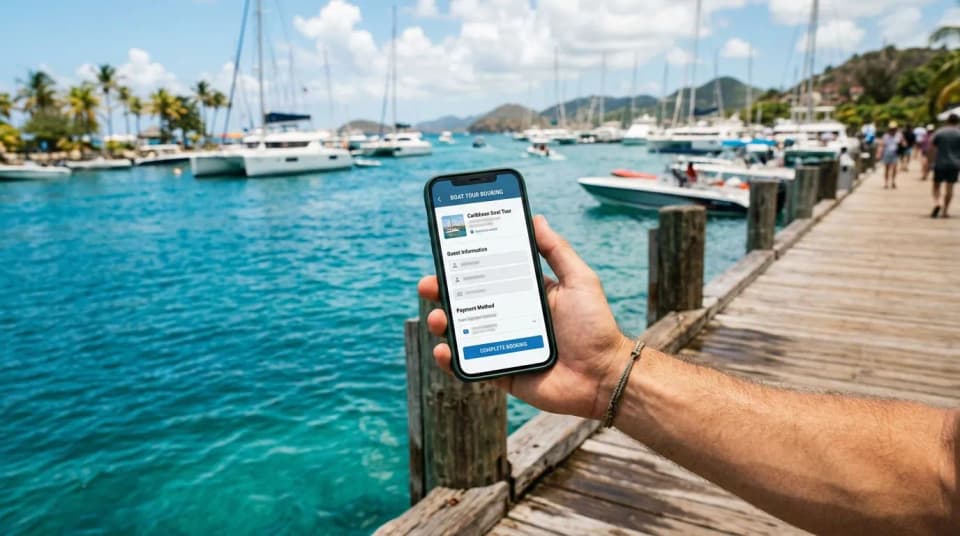
A lot of operators lose direct bookings without knowing it: the guest lands on the website, wants to book, and there is no way to pay. Just a phone number and a contact form. That guest is on vacation, three drinks into planning the week, and they are not going to email and wait. They open the OTA app instead, because the OTA takes the card right now.
In much of the Caribbean this is worse than it should be, because Stripe is not locally available in many island markets and payment setup can still be awkward, so a lot of operators just gave up on taking payment on their own site. That is the exact gap we built Junglebee to close - a widget that takes the card and wires the money to your local bank every fortnight, in US dollars. But whatever system you use, the rule is the same. If a guest cannot pay quickly on your website, on their phone, you do not have much of a direct booking channel. You have a brochure.
- Book and pay in one flow. No "we will email you to confirm" step. That delay is where you lose them.
- Works on a phone. Plenty of your guests are booking from a beach chair, not a desk.
- Shows real availability. If the Saturday cat run is full, say so, so the guest picks Sunday instead of giving up.
The dock and the concierge are channels most operators sleep on
Two useful direct channels for a boat operation are ones the generic advice tends to skip, because they are physical.
The dock itself is the most underused channel you have. A guest who steps off your boat happy is a warm lead for the next trip, and most operators just wave goodbye. A card in their hand - book direct next time, here is the code to scan - costs almost nothing and cuts out the middleman on the repeat trip. When I was crewing Eagle Tours' afternoon runs, the guests who came back were usually the ones a crew member had actually talked to on the way in.
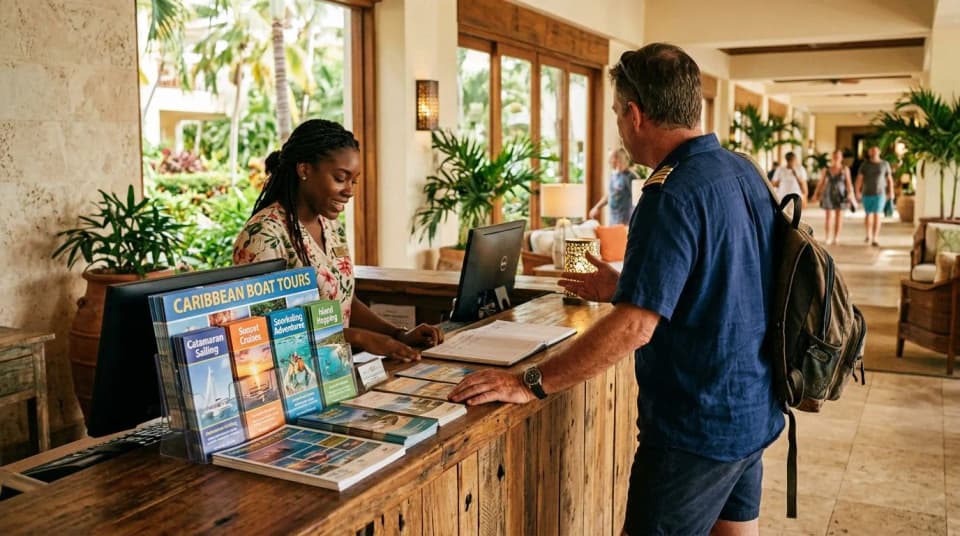
The hotel concierge is a different animal - this one is a relationship, not a listing. A concierge who trusts your boat and knows you will look after their guest will send you bookings that skip the OTA entirely. That used to run on a paper chit with a room number scrawled on it, and half the job was figuring out which hotel it even came from. Give the concierge a clean way to book you, and a reason to trust you, and you have a pipeline no ad spend can buy.
Repeat guests are the cheapest way to fill a boat
A guest who already sailed with you is the easiest sale in the business, and the one most operators skip, because they do not keep the details. If you have the email and phone number, a short note at the right moment does a lot of work. Not a newsletter nobody reads. Something like a message in January to last winter's guests, or a text to a family the week they usually visit.
Owning the booking is the quiet advantage. The OTA has the guest's email. You have a wave goodbye. Flip that, and your slow weeks fill from people who already know your boat is worth the money.
Reviews are the engine that feeds all of it
None of the above works well if nobody can see that your trips are good. Reviews are what turn a stranger scrolling on their phone into someone who books you directly instead of the cheaper listing next to yours. The best time to ask is roughly ten minutes after the guest steps off the boat, sunburned and happy, not three days later from a hotel lobby. So ask on the dock, while the trip is fresh, and make it one tap. It is the least glamorous part of getting direct bookings and probably the one that does the most work.
The one thing I would fix first
If you only change one thing this season, make it so a guest can pay quickly on your own website, from their phone, without waiting on you to email back. The dock cards, the concierge relationships, the repeat-guest texts, the reviews - they all feed a channel you own. But if the money cannot land when the guest is ready, that goodwill just walks back to the OTA app.
I learned the two-day-email lesson the expensive way, watching guests book someone else's boat while I waited. Direct bookings are really the same lesson pointed at your own front door. Be the one who can say yes and take the card while the guest still wants to.
Booking page, card payments, one calendar for your website, booking page and desk. 4% per card payment, no monthly fee.