Junglebee
How to start a tour guide business: my playbook
A tour guide business and a tour operator business are not the same thing. Here is how I would build the guide stage so you keep your options open.
 Michael RouveureFounder, Junglebee ·
The first time I ran an Eagle Tours snorkel trip on my own, I had eight strangers on my boat and no one to hide behind.
I'd grown up on that boat. Deckhand, then first mate, then captain. But there's a difference between crewing a trip and being the trip. That morning I was the captain, the narrator, the safety guy, and the guy whose jokes either landed or died in the salt air. Eight people had paid to spend half a day with me. Not with Eagle Tours. With me. If they had a bad time, I was the problem. I was the product.
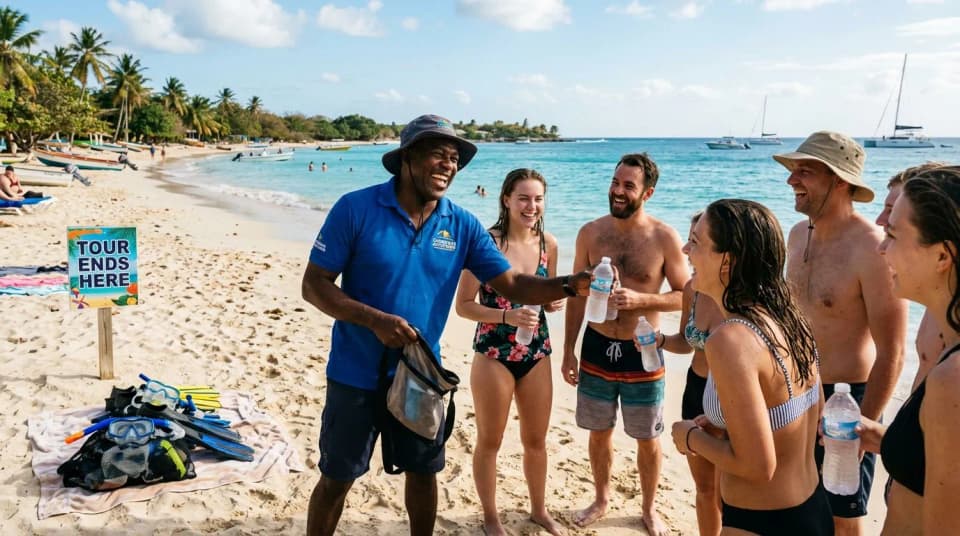
That's the part nobody tells you about starting a tour guide business. Before you're an operator with crew and boats and a logo, you're one human being strangers pay to follow around. Get that right and everything after gets easier.
A tour guide business and a tour operator business are not the same thing
Most "how to start a tour business" advice blurs these two together. A tour guide business is you. Walking eight people through a market, taking six snorkelers out on a reef, leading a kayak group through the mangroves. You are the asset, and income tops out at how many hours you can personally be good in front of guests. A tour operator business is a machine that runs tours whether or not you're on the trip. Other guides. Boats. A schedule. A back office. The system is the asset.
So build the guide business deliberately, so it can either stay a guide business forever or become an operator business later. Both are fine. Staying solo your whole career is a good life. The worst version is the person who gets impatient, hires two people before understanding their own product, and now runs a bad operator business that loses money on every tour but theirs.
The boring legal layer, and what I'd actually do first
The license and insurance part is dull and everyone wants to skip it. Don't. But don't let it delay your first tour by six months either. The order I'd do it in:
- Find out what your activity and location actually require. A walking food tour and a reef snorkel guide are not the same paperwork. Some places want a guide license, some want activity certification, some want a marine park permit. Call the tourism office or harbor authority and ask. Twenty minutes on the phone beats twenty hours of guessing.
- Get the activity certs that matter. First aid, CPR, water-safety where it applies. Cheap relative to what one bad incident costs you.
- Get liability insurance before your first paid guest, not after. The day a guest twists an ankle stepping off your kayak is the day you find out whether you have a business or a lawsuit.
- Pick the simplest structure that is legal and sensible where you operate. In some places, starting as a sole proprietor may be enough to test the idea, but understand the personal-liability tradeoff and ask an accountant, attorney, or local small-business office whether an LLC or another structure fits your risk.
That's the layer. In some places it is a weekend of admin; in others, especially if guides, boats, parks, food, or transport are regulated, it can take longer. Do the local checks, get the required approvals, then go run a tour. The paperwork is not the thing you're paid for.

Your first ten guests are not customers, they are research
You'll want your first guests to be revenue. They're not, really. They're the most valuable research you'll ever get, and you only get it once.
When I was running those early Eagle Tours runs and later working with operators through SXM Deals, the thing that separated the guides who got rebooked from the ones who didn't had almost nothing to do with the script. The good ones read the boat. They clocked which guest was nervous in the water, which kid was about to melt down, which couple wanted to be left alone. Same reef, same fish, different trips depending on who read the people. On your first ten tours, watch:
- Where people light up and where they check out. The story that makes the group lean in. The forty-five minutes where you lost them.
- What they ask afterward. The questions at the end tell you what they actually came for, which is often not what your tour description promised.
- Who rebooks or refers, and why. A guest sending their friends is the only review that pays rent.
Those first fifty tours teach you what kind of operator you would become if you scaled. The guide who lives for the people builds a warm, repeat-driven business. The guide who lives for the logistics builds a tight, high-volume machine. Both work. But you can't know which you are until you've stood in front of enough strangers to find out.
How to price when you are the product
Pricing a guide business is different from pricing a tour, because what you're selling is finite. Only so many mornings in a week, and you're in all of them.
The mistake I see constantly is the new guide who prices off their nervous-beginner feelings instead of off the math. They charge low because they don't feel like an expert yet, fill the calendar, and realize at the end of a brutal month that a full schedule of underpriced tours is just a faster way to burn out broke. So run the real number. Take what you need to make in a month, be honest about how many tours you can run without becoming a worse guide, then add your costs. Whatever's left is your price per seat. If that feels high, good. You're a person people choose to spend their day with, and the guide who's actually good can charge for it. At Junglebee we put our own per-booking fee right on the pricing page, because pricing should live where you can read it.
When to stay a guide and when to become an operator
At some point you'll be turning away bookings. That's the fork. Most advice treats becoming an operator as the obvious win. It isn't, automatically. The moment you hire your first guide, you stop being the product and start being the boss of the product. Your job changes from running great tours to making sure other people run great tours when you're not watching. That's a different skill, and plenty of brilliant guides are bad at it. No shame in being the best snorkel guide on the island and never hiring a soul.
I'd only make the jump when three things are true. You've run enough tours to know exactly what good looks like, so you can teach it and protect it. The demand is real and repeating, not one lucky season. And the back office can handle more volume, because the day you add a second guide you have added capacity, more payments to track, and more weather refunds to manage. If you can't see those three clearly, stay a guide a while longer. It's not a failure. It's a different business than the one in the brochures.
The one thing to take from this
When you're starting out, you're not building a company yet. You are the company. Eight strangers, one of you, a half-day to be worth what they paid. Treat those first tours as research, get the license and insurance done, and price like the person you're becoming. Do that, and you'll get to decide whether to stay a guide or build something bigger, instead of having it decided for you.
Booking page, card payments, one calendar for your website, booking page and desk. 4% per card payment, no monthly fee.