Junglebee
When and How to Ask for Tour Feedback
Only 22% of people who write an online review will do so without being asked. Here's the best way to make the request.
 Michael RouveureFounder, Junglebee · · updated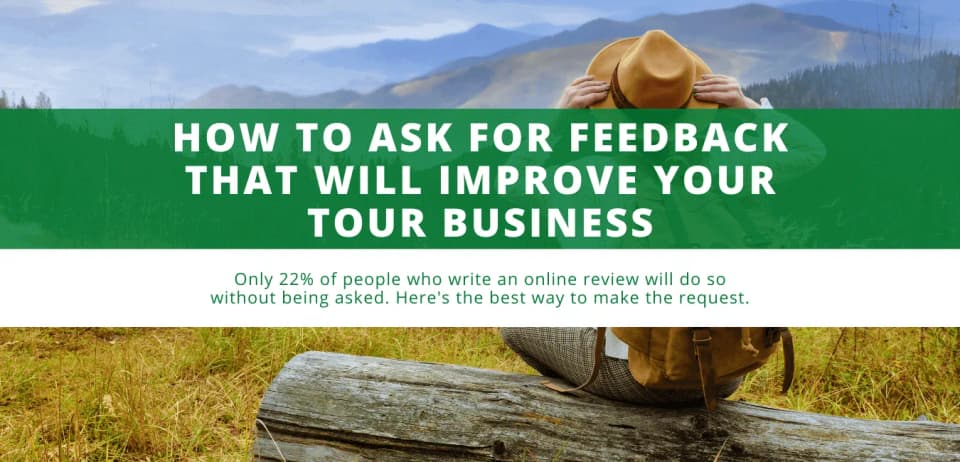
An operator I know in Simpson Bay was getting four TripAdvisor reviews a month. Good trips, happy guests. He had a feedback system - a five-question email survey that went out every Monday to everyone who toured that week. Open rate around eighteen percent. Of those, maybe a third filled it out. Useful feedback from one in fifteen guests. TripAdvisor number: four.
He changed one thing. He stopped the survey. He started texting guests two hours after the boat docked. One question. He was at eighteen TripAdvisor reviews a month inside six weeks. Same guests, same trips, same crew. Different ask.
That gap - four versus eighteen - is entirely about mechanics. When you ask, how you ask, and what you do with the answer. None of it is complicated. Most operators just never think it through.
Never ask at the dock
I have seen operators hand out comment cards at disembark. I have watched captains ask guests at the swim stop whether they were having a good time. Both are well-intentioned and both are useless.
When a guest is still on your boat, standing next to your crew, they are not going to tell you what was wrong. They feel socially cornered. You're asking them to critique you to your face, and they don't want to be the person who ruins the mood at the dock.
So you get "great trip" in person, and then two days later they write on TripAdvisor that the briefing was confusing and the life vests were musty. That's not a vindictive guest. That's a guest who finally has the privacy to be honest.
Give them that privacy first. The ask comes after the boat, after the dock, after they've left your orbit.
The two-hour window and why the channel matters
Two hours puts the guest at the beach bar or back at the hotel, still running on whatever the trip gave them. The details are still sharp - they remember exactly what the captain pointed at, which stop was their favorite, what felt slightly off. That specificity disappears fast. Wait until morning and you get "it was nice." Wait until the end of the week and you get nothing.
And the channel matters. Email open rates on follow-up surveys run around twenty percent. SMS open rates are around ninety-five. A text gets read. An email gets filtered.
A text also feels personal in a way a no-reply email never will. You're already in their phone - you texted a booking confirmation before the trip. The feedback ask fits naturally into that thread. It feels like a person following up, not a form.
Keep the message short. One question. "How was the trip today - anything stand out?" is enough. You are not running a market research study. You are opening a conversation.
What you do with the reply
When someone replies, you have two paths depending on what they said.
If the response is positive - they loved it, they mention a specific moment - follow up with one more message: "So glad to hear that. If you have two minutes, would you be willing to share that on TripAdvisor? Here's the direct link." No pressure. One sentence and a link. A warm guest who just described their favorite part of the trip is the most likely person on earth to leave you a public review. You just have to ask while they're still warm.
That one follow-up is what converts feedback into public reputation. A thoughtful two-message exchange converts around thirty percent of positive responders into TripAdvisor reviews. The standard survey-by-email converts around three percent. The questionnaire is the laziest form of asking, and the numbers say so. A five-star generic survey reply is worth less than one personal text that gets a sixty-word reply.
If the response is negative or mixed, your follow-up is different: "Thank you for telling me that. What would have made it better?" Let them explain. Depending on what they say, offer a small comp - a discount on a future trip, a note from the captain. Something that shows you heard them. That guest almost certainly won't leave you a bad review now.
Ask every guest - not just the ones who looked happy
I know the instinct. A guest seemed quiet during the trip, maybe they didn't connect with the crew. You skip them in the follow-up because you don't want to poke it.
That's backwards.
The reluctant guests, the quiet ones, the ones who didn't high-five anyone at the dock - those are sometimes the most useful feedback you'll receive. They noticed things the enthusiastic guests didn't. And when you ask them thoughtfully, they often leave the best reviews, because nobody else bothered to care how their trip went.
Send the text to every single guest who traveled that day. No selection. You are not cherry-picking for compliments. You are building a real picture of what your operation actually delivers.
Track response rate by crew, not just by trip
When you track feedback response rates by captain or crew, patterns show up fast. One crew consistently gets forty-percent reply rates with warm, detailed responses. Another gets twelve percent, and the replies are flat.
That gap is rarely about the trips themselves. It's almost always about how the crew closes the experience. Did they tell guests to watch for a text? Did they make the guest feel like their opinion matters? The crew who closes well primes the guest to respond. The crew who just ties up and waves goodbye doesn't.
I've seen operators use this data to have direct conversations with captains. Not a policy memo - a conversation. "Look at these numbers, yours versus his, what's different?" Bad crew response rates are an early signal. Better to catch it in the data than in a string of bad reviews three months later.
The ask is the whole thing
The operator in Simpson Bay didn't change his tours. He didn't hire new crew, retrain anyone, or redesign the route. He changed when and how he asked. Two hours, one text, one question, and a direct link for the guests who said they'd had a good time. Four reviews a month became eighteen.
If you're on Junglebee, the guest's phone number is in the booking record the moment they pay. The two-hour window is easy to track against departure times. What you build around that is up to you.
Ask every guest. Ask at the right moment. Follow up based on what they say. Track which crew is making that conversation easy, and which ones need a nudge. That's the system.
Booking page, card payments, one calendar for your website, booking page and desk. 4% per card payment, no monthly fee.