Junglebee
Dynamic Pricing for Tours in 2026
Learn what dynamic pricing really looks like for tour operators in 2026 - and how to start without confusing guests or creating ops chaos.
 Michael RouveureFounder, Junglebee · · updated
Most operators I talk to want to start dynamic pricing. I'd say nine out of ten bring it up inside the first five minutes. And I get it - when you watch a cruise ship dock in Philipsburg and you know every seat on your snorkel run is going to fill by 10am, it feels obvious that you should be charging more than for a slow Tuesday in August.
But I've watched plenty of operators flip on dynamic pricing and regret it almost immediately. Not because the idea is wrong. Because they had no idea what their demand pattern actually looked like before they started moving prices around. They were optimizing something they hadn't measured. That's a good way to confuse guests and create more admin chaos than revenue.
So before we talk about how to do it: I want to make the case for doing it later than you think you should.
You need demand data before you can price dynamically
Dynamic pricing works when you know what's predictable. Cruise ship days. School holiday weekends. The dead weeks after New Year once the charter crowd has flown home. If you can't sketch a rough demand curve by departure date and day of week, you're not ready to price dynamically - you're just guessing with extra steps.
Arival ran the numbers on this: about 70% of tour, activity, and attraction operators still use static pricing, set once per season. Around 20% use variable pricing - different rates by day or time, locked in ahead of the season. Only 7% say they price dynamically, meaning prices shift based on what's actually happening right now.
That 7% is not mostly small operators. It's mostly larger ones with years of booking history behind them. The ones who try it too early tend to drift back to static pricing after a month because the math stopped making sense.
Start with variable pricing. It's the right "first upgrade." You set it once, it holds for a season, and it teaches you which dates actually behave differently.
Cruise ship day versus slow Tuesday - that's your first price band
This is where Caribbean operators have a real advantage over anyone pricing tours in, say, Nashville. You know your cruise schedule weeks out. You know which arrivals are big ships with shore excursion budgets and which ones barely fill the tender. That's a pricing signal any airline revenue manager would kill for.
The Caribbean Tourism Organization reported international stay-over arrivals grew 14.3% in 2023 and forecast 2024 arrivals at 33.8 to 35.4 million - roughly 5% to 10% growth. More visitors. But they don't arrive evenly. They pile up on the same "perfect" days: calm seas, a big ship in port, a Friday or Saturday. That compression is your opportunity, but only if you've already documented when those days are.
So here's what I'd actually tell a small operator to do first. Look at your last full season. Find your 15 highest-volume departure dates. Find your 15 lowest. That gap - whatever it is - is your first price band. Not rocket science. Not airline math. Just your own data telling you what the market already knows.
When you are ready: protect your last seats, not your first
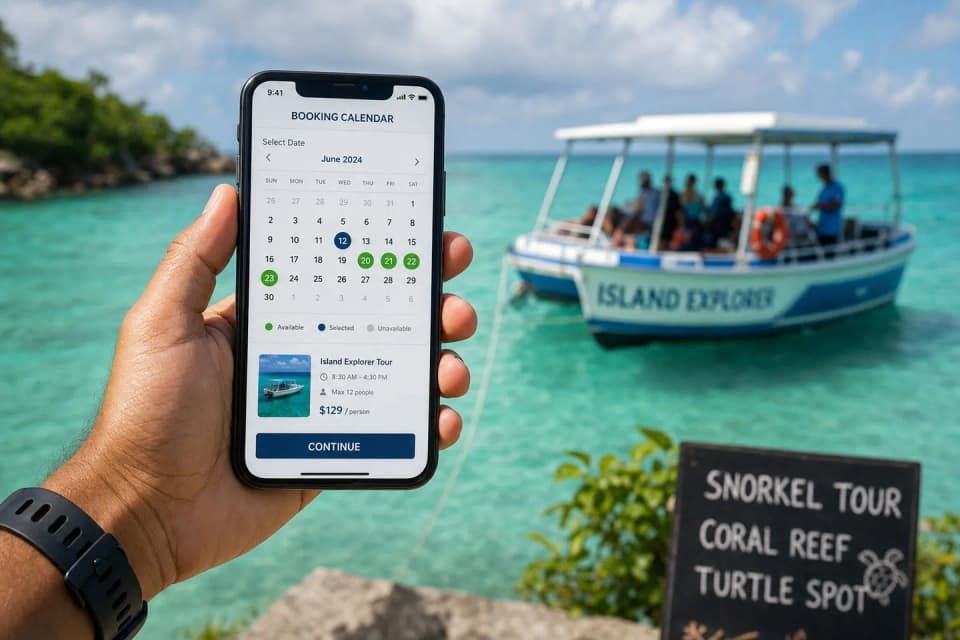
Most pricing mistakes I've seen happen at the back end of a departure, not the front. An operator fills 70% of a snorkel run, then keeps selling the last few seats at the same base rate even though those seats are now the scarcest thing they have. That's backwards.
The seat ladder that actually works is simple:
- Base price: Normal rate when the departure is wide open.
- Step 1: Up 5% once you hit roughly 50% full.
- Step 2: Up another 5% once you hit roughly 80% full.
- Last seats: Hold the highest price for the final 10%. Don't discount unless weather forces a schedule change.
Will some guests pay more than others? Yes. But they already do - based on which channel they booked through, how far out they booked, whether they got a hotel desk rate. Capacity-based steps just make that logic consistent instead of random.
One thing I've noticed: guests don't mind paying more when the departure is clearly almost full. They mind it when the price seems arbitrary. Tie the increase to something visible - "only 4 spots left" - and most people treat it like a hotel booking, which is exactly what it is.
Price fences your guests will actually understand
The fastest way to get complaints about pricing is price changes that look random. The fastest way to avoid complaints is tying every price difference to something guests already recognize as fair.
- Time fence: Early booking rate that closes a set number of days before departure.
- Capacity fence: Seats remaining, as above. Visible. Makes sense.
- Product fence: Same route, different inclusions - open bar, premium gear, a private departure. Guests understand paying more for more.
- Channel fence: Direct booking price beats OTA price, because you're not paying the commission. This one's easy to explain and guests appreciate the honesty.
What doesn't work: changing prices overnight with no explanation, or running a "limited time deal" that appears every other week. That's the thing that turns guests into skeptics.

Keep pricing rules simple enough to forget about
Dynamic pricing fails fast when it turns into something you have to manage every morning. The goal is fewer manual decisions, not more. Three demand signals are enough: seats remaining, days to departure, and whether private charter inquiries are spiking. Set a ceiling - something like 10% above base per week. Don't touch prices inside 24 hours of departure.
Keep a one-line log of every change you make: what changed and why. After a full season that log is worth more than any pricing model - it's your actual demand data, written down by someone who was standing on the dock.
This is also where your booking system either helps or doesn't. If availability, calendar, and payment links live in separate places, maintaining pricing rules across all of them becomes its own job. On Junglebee, inventory and rates are tied together so pricing steps follow capacity without you updating three tools by hand.
And when you're ready to actually roll it out, don't flip a switch across your whole operation. Start with one product, one season window.
- Weeks 1-2: Track only. Document capacity by departure and how far out guests book. Don't touch prices yet.
- Week 3: Add a cruise ship day premium and a midweek value price. Lock them in for the rest of the season.
- Week 4: Add capacity steps on one product - your highest-volume tour. Watch how guests react.
- End of season: Did average revenue per departure go up without a rise in refunds or complaints? If yes, expand next season.
The one rule worth keeping
Cruise ship day versus slow Tuesday. That's the whole thing. You already know which is which. You don't need a pricing algorithm to tell you that a Wednesday in February with a 4,000-passenger ship in port is worth more than a Tuesday in September when half your usual bookers are back at school. Build that band first, hold it for a full season, measure what happens. Then add the next layer.
Don't overthink it. The operators I've watched get this right are the ones who kept it simple and were patient. The ones who tried to build a full demand model in year one are, most of them, back to static pricing and wondering what went wrong. Build your demand picture first. Price against it second. And if you want your direct bookings clean while you're figuring it out, Junglebee pricing is on a public page - no sales call required.
Booking page, card payments, one calendar for your website, booking page and desk. 4% per card payment, no monthly fee.