

June 10, 2026
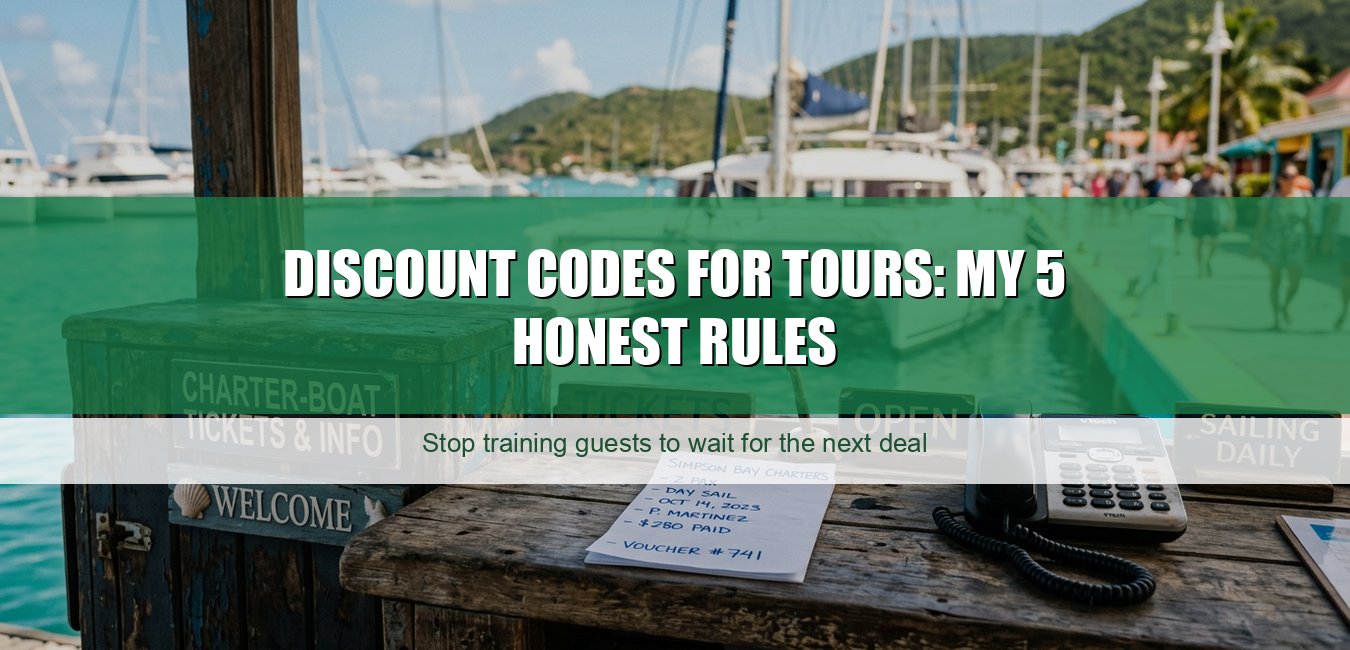
Discounts do not automatically grow your bookings. If you do not know your numbers, they can turn full-price demand into discounted demand, moving bookings you might have won at full price down to whatever number you panicked into.
I know that is not what the early-bird-discount guides tell you. They show you the funnel, the urgency, the little 10% off code, the booking ticks up, everyone nods. But too few operators run the other half of that math. What did the seat cost you. What would that guest have paid anyway. And what did you just teach them to do next time. That is where a discount turns from a tool into a habit you cannot afford in February.
I have watched a lot of operators down here reach for a promo code the second bookings go quiet. And almost every time, it comes back to two numbers they do not know.
The first is their real seat cost. Not the sticker price. What it truly costs to put one guest on the boat for one run after fuel, crew, dock, marine park fees, and card processing. If you do not know that number, you do not know whether a 20% off code is a clever fill or a quiet loss. You are flying blind.
The second is distribution. If too much of your booking flow sits in channels you do not control, your pricing gets harder to control too. The OTA takes its cut, the activity desk wants its rate, and you start discounting on top of all of it just to feel like you are doing something. So you pay twice. Once to the channel, once to a guest who would have booked anyway.
Most over-discounting is just those two blind spots in a marketing costume.
Back when I was running SXM Deals, years before I built any of this, the hotel activity desks were my whole world. That was how bookings came in. And it was a mess in a specific way.
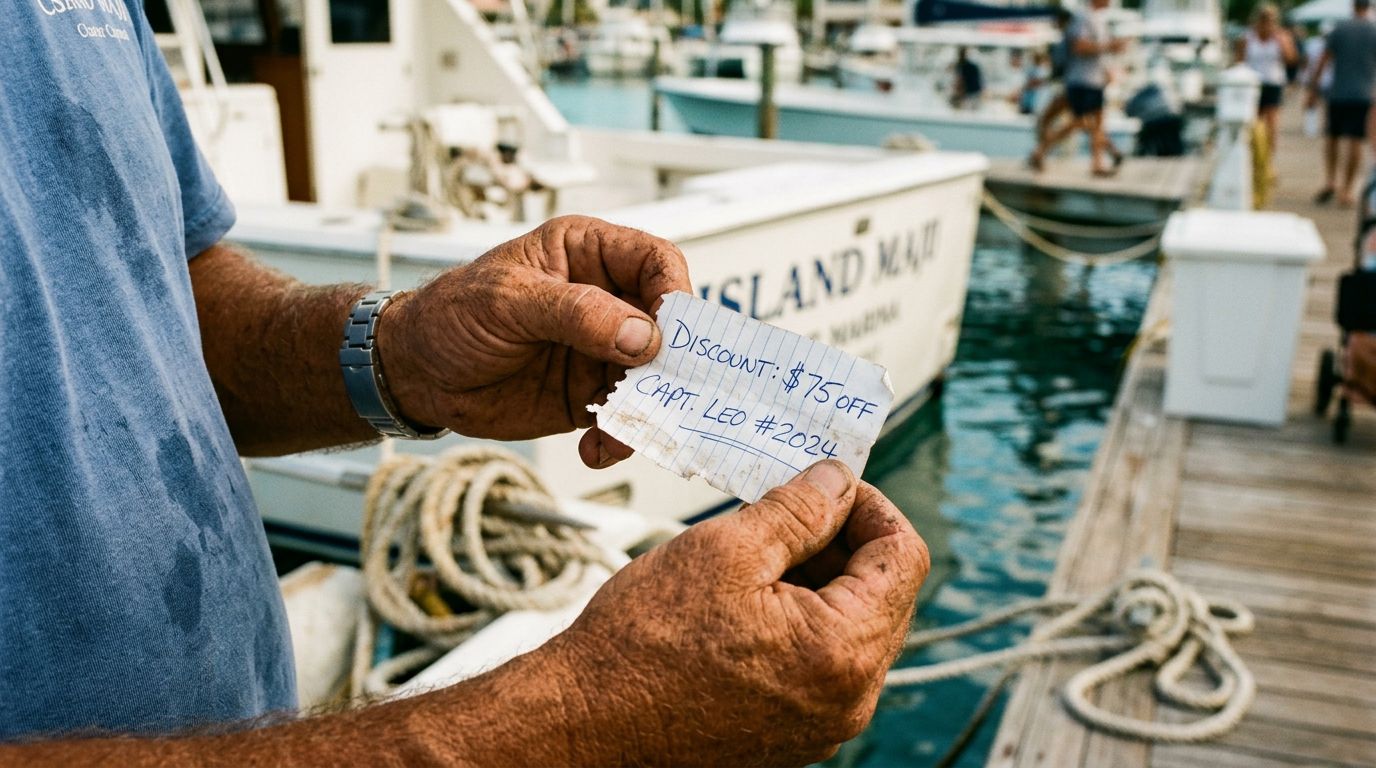
A concierge would send a guest down to the dock, usually to a catamaran operator over on the Dutch side, with a little slip of paper. Some number scribbled on it, sometimes a rate, sometimes a "tell them Marie sent you" kind of deal. The operator had to figure out which hotel it came from, what was promised, and whether the discount was one he had agreed to or one the desk invented to close the sale. Half the time it was a number nobody on our side had ever approved.
Once a couple of hotels started handing out their own paper discounts, the guests learned. They would show up at the dock already asking what the deal was, because the front desk told them there is always a deal. We had trained a whole flow of guests to wait for a slip of paper before committing to a fair price.
Discounts don't just cost you the margin on the trip you discounted. They can reset what the next guest thinks the trip is worth. Paper vouchers were the analog version. A promo code blasted to your whole list can become the digital version, training some guests to wait for the next deal.
So I am not anti-discount. I run them. I just run them like a scalpel, not a fire hose.
Five rules. None complicated. All easy to break the moment a slow week scares you.
A slow season is usually a demand problem, and a discount by itself rarely fixes the deeper reason people are not choosing you. If you are not careful, it sells demand you might already have had for less. If August is quiet, the answer is more reasons to choose you, not a cheaper version of the same trip.
And there is a control issue underneath it. If you do not own enough of your booking flow, running a clean discount gets much harder. A good discount setup should let you apply a code to the right trip, set an expiry, keep it from stacking with agent rates, and stop it being used when inventory is gone. If your setup cannot enforce that, the discount leaks everywhere, exactly like those hotel paper slips did.
That is honestly half of why we built Junglebee the way we did. The goal is simple: a code should stay inside the rules you set, instead of turning into an open-ended price cut or spreading through channels you did not intend.
If I had told myself one thing back in the SXM Deals days, it would be this: know your seat cost before you print a single voucher. Work out, honestly, what one guest on one run costs you to deliver. Fuel, crew, fees, processing, the boat itself.
Once you have that number, almost every discount question answers itself. You will know which code is a smart fill and which one just pays to train guests to wait. Operators who know that number are much less likely to over-discount, because they see the loss before they make it.
In that paper-slip world, the discount was not anchored to seat cost. That is why the discounts ran the business instead of the other way around. Know your number, control your flow, and a discount goes back to being a tool you reach for on purpose, not a habit you cannot break.


