

May 13, 2026

The cruise line is not your friend on excursion pricing. I want to say that clearly, because every operator I talk to has some version of the same confused relationship with cruise ships - grateful for the volume, furious about the margin. Both feelings are correct. The solution is to stop waiting for the ship to send you business and start capturing guests before they ever reach the excursion desk.
I grew up doing cruise ship days at Eagle Tours in St. Maarten. Early mornings at Philipsburg, guests streaming off the gangway, the whole port humming. The ship brought thousands of people to your door. That part is real. But the ship takes 50 to 70 percent commission on every excursion it sells on your behalf. The volume is their gift. The margin is yours to lose.
When a guest books an excursion through the ship, they pay ship prices. The cruise line marks it up, keeps the margin, and sends you a manifest with names on it. You do the trip. You do the safety briefing. You fuel the boat. You pay your crew. The ship takes the bigger cut.
The numbers are not secrets. The global cruise industry was at 34.6 million passengers in 2024, with 37.7 million expected in 2025, and Caribbean, Bahamas, and Bermuda itineraries still accounted for 43% of all cruise passengers in 2024 (CLIA). That is a massive funnel of people arriving at your dock. But a big percentage of that revenue is being skimmed at the top before you see a cent.
The FCCA reported $4.27 billion in direct cruise tourism expenditures across 33 Caribbean and Latin American destinations in the 2023-2024 cruise year, covering 29.4 million passenger onshore visits (FCCA). Average passenger spend was $104.36 per visit. These guests are in spend mode the moment they hit the pier. Your job is to be the operator they already booked.
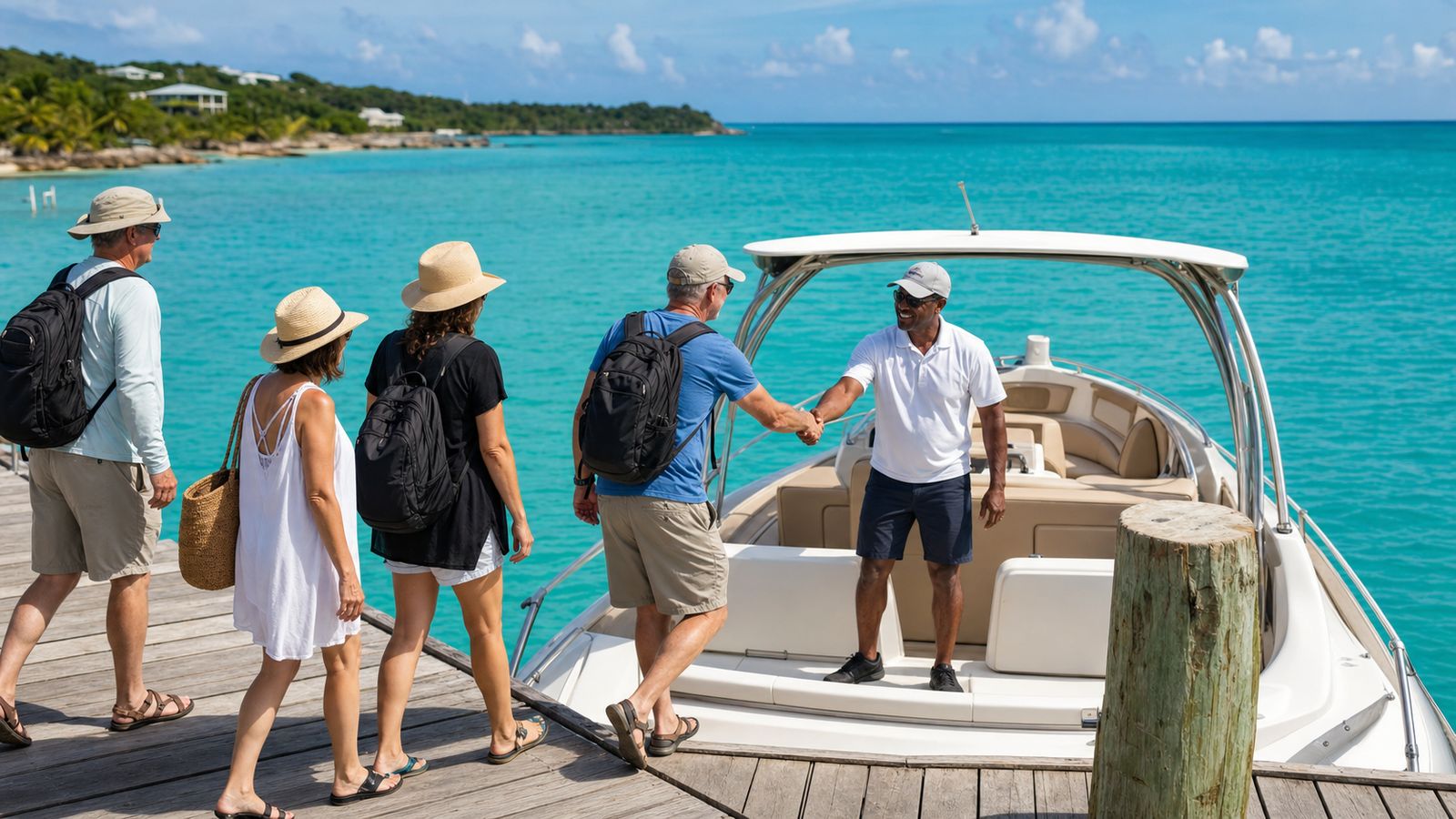
A lot of operators assume cruise guests plan six months out. Some do. But Viator's operator research, citing Expedia Group Traveler Insights, found that the share of travel-planning searches in the 0-21 day window jumped 10% in Q3 2022 (Viator). People are searching for excursions on the ship, in the hotel the night before, or sitting at breakfast on port day.
If you are not findable and bookable in that window, you are invisible. "Findable" means port-day Google searches, not a generic homepage rank. Think about what someone types when their ship docks at Philipsburg in four hours and they want a snorkel trip. That is the search to own.
The cruise ship is your friend on volume. It brings thousands of guests to your island with money and limited time. You cannot replicate that on your own.
The play is not to cut the cruise line out. Capture a slice of that traffic as direct bookings - before guests board, while they are researching, or the moment they hit port - and keep the full margin on those guests. Still take the manifest bookings. Volume is volume.
I'd say 20 to 30 percent of your cruise day revenue as direct bookings is a realistic goal over time. That fraction, at full rate instead of post-commission rate, changes what a cruise ship day is actually worth.
Cruise guests are not confused about what they want. They want something safe, fun, and guaranteed to get them back to the ship on time. The operators who overthink the product - twelve options, variable pricing, three departures - are the ones who lose to the ship's excursion desk, because the ship makes it simple to buy even if the price is worse.

Funny story from the Eagle Tours days: on a big cruise ship day, three groups all thought they were meeting us "at the dock." There were four docks visible from where they stood. We spent 40 minutes just finding our own guests. Missed our window, came back late. The trip was fine. The ops were a disaster.
Excellent product, disastrous ops. It happens constantly on cruise ship days, and the pier does not care. If you have six trips running and 200 guests moving through a dock that also has six other operators' groups, the execution is the whole game.
We built Junglebee partly because of cruise ship days exactly like that one. Automatic confirmations, live manifests, instant payment capture - so you are not manually managing a WhatsApp thread while you are trying to load 40 guests onto two boats.
Ship manifest bookings end when the guest goes back on board. Direct guests remember you. They Google you. They send their friends. Ask every direct-booked guest where they are staying after the cruise - many cruise passengers extend for a few land days, and that is a second booking at full rate with no commission in sight.
Be findable before the ship docks. Make it easy to pay. Make it impossible to miss the meeting point. The cruise line will always have a bigger marketing budget. But they cannot match a local operator who knows Pinel Island and can put guests in the water while the ship's excursion is still loading onto a bus.
That is your edge.


