

May 1, 2026

Aquamania is one of the biggest tour operators on St. Maarten. Before Junglebee, they ran everything on paper. Reservations written by hand. Manifests stapled together in the morning. On a quiet beach day that is fine. On a cruise ship day, with two ships in the harbor and 50 guests expected by 9am - some booked through the hotel activity desk, some through an online agent, some who just walked up at the dock - it was a genuine scramble every time.
They were not doing anything wrong. They were doing what every Caribbean tour operator did. The paper system worked until the volume hit. And on cruise days, the volume always hit.
I spent years at SXM Deals brokering between guests and tour companies, and the pattern was the same everywhere. A tour operator could handle a normal Thursday without any system - a few calls, load the boat, go. Cruise ship days are different. Multiple channels firing at once: cruise agent bookings, online bookings, walk-ups at the pier, and guests the hotel activity desk sent over with a handwritten slip and a room number.
That activity desk situation was its own special chaos. A concierge would hand a guest a piece of paper saying something like "2 guests, Room 412, half-day snorkel." The tour operator got the guest at the dock and had to figure out which hotel sent them, what was agreed on price, and whether anyone took a deposit. Nobody had. The guest assumed it was handled. The operator assumed someone had confirmed. Nobody had confirmed anything.
So when the boat needed to leave at 9:15 to stay on schedule, you had three confirmed guests standing at the gangway, two "hotel guests" whose booking existed only on a paper slip that may or may not have been delivered, and a walk-up couple asking if there was still room. The captain is ready to go. The crew is loading gear. And someone is on the phone trying to sort out which guests belong on which run.
When Aquamania joined Junglebee, the first and biggest shift was getting every booking - every single one, regardless of channel - into one live calendar. Hotel activity desk bookings came in through the agent portal. Online bookings came through the widget on the website. Walk-ups got entered at the dock on the spot. All of it in one place.
That sounds obvious. But before that, they had three or four ways a booking could arrive and only one place - a paper sheet - where the morning manifest got assembled. Which meant the manifest was only as accurate as whoever assembled it had been able to track down by 8am.
One calendar changed the morning. The crew knew the exact headcount. They knew which guests had paid a deposit and which were balance-due at dock. They knew what gear to load. The person doing check-in had a name on a list, not a memory of a phone conversation.
What stuck with me was what their team said afterward: "The cruise days didn't get less busy. They just stopped being stressful." Same volume. No noise. That is the whole game.

The other thing Aquamania tightened up was deposits. No deposit, no confirmed seat. Not even from the hotel desk. This felt like a big deal when we talked through it. Hotel concierges were used to sending guests over without any payment, and the tour operator was used to accepting that because the hotel relationship mattered.
But the soft booking - the "yes" never backed by any money - is what creates dock-side arguments. A guest who paid a deposit has a confirmation. A guest who "booked through the hotel" and paid nothing has a story. And you cannot know which one until someone is already annoyed.
Deposits also gave Aquamania real data. 12 paid deposits for the 9am snorkel means you load 12 sets of gear. Not 8. Not 16. Twelve. That matters on a volume day when every slow moment costs you.
This is the part most operators skip because it feels small. The automated confirmation email. Most operators either do not send one, or they send something generic - "Thanks for booking, see you soon."
That message is doing real work for you if you write it right. Aquamania rewrote theirs to include five specific things:
Caribbean Tourism Organization numbers put cruise arrivals growth at up to 7% in 2026. More ships means more coordination problems, not fewer. The operators who fix this now have a system that scales. The ones running on WhatsApp and paper are just adding surface area for things to break.
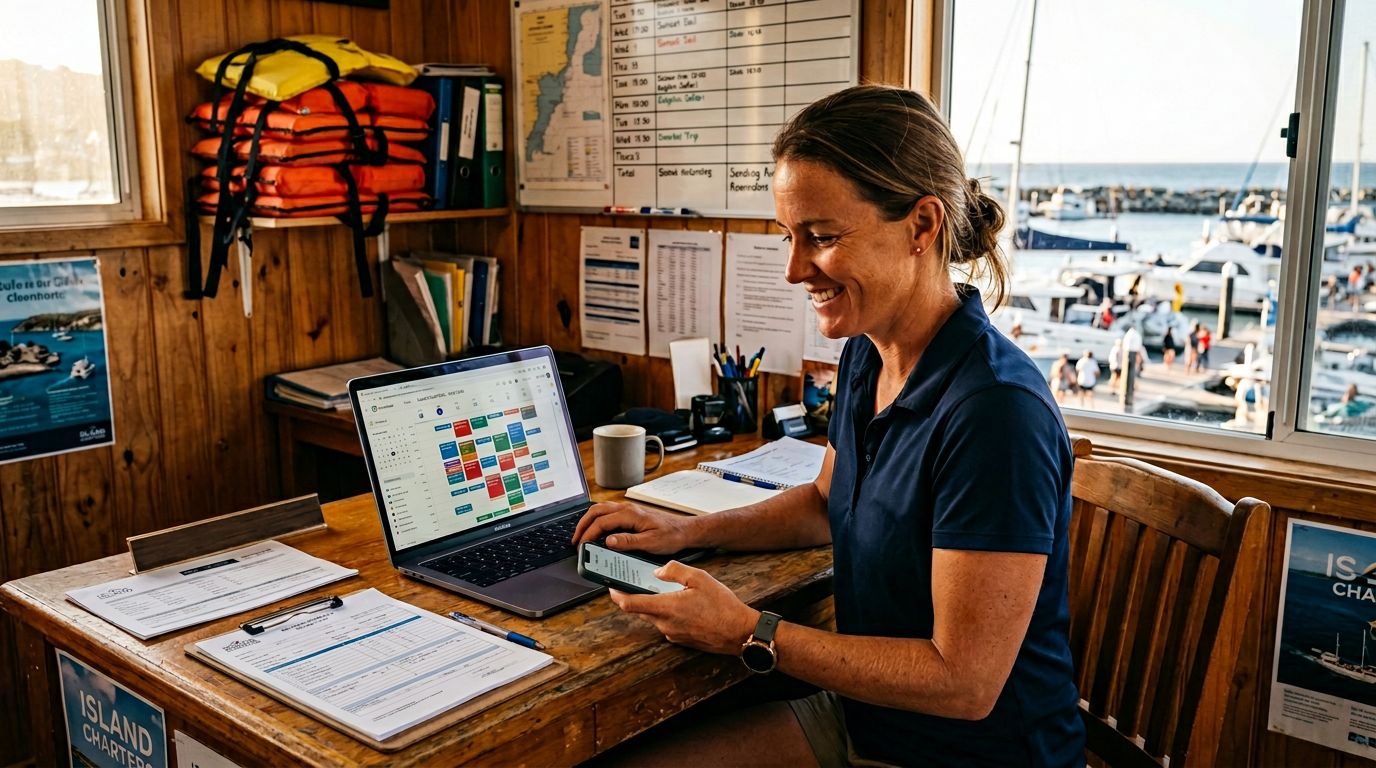
You can build this manually with spreadsheets. But the first time you have a sick crew member, an overbooked boat, or three channels firing at once, the manual version breaks. A system built on human memory and paper has limits.
What you actually need is three things working together:
We built Junglebee to handle exactly this - single source of truth, agent portal for hotel desks, deposits built in, automatic reminders. Pricing is per booking, no monthly fee.
Aquamania's cruise days did not get quieter. Two ships in still means two ships in. But the operator is not losing a booking because the paper manifests did not match. The crew is not guessing headcount. The captain is not standing at the dock trying to figure out if the couple from Room 412 is on this run or the next one. The system knows. The team runs the boats.
If you are still assembling your cruise-day manifest by hand the morning of - this is the problem worth fixing first. Not your marketing. Not your pricing. The manifest.


