Junglebee
Checkfront vs Fareharbor for tour operators
One is a booking system. The other is a distribution machine that happens to include a booking system. An operators honest take on both.
 Michael RouveureFounder, Junglebee ·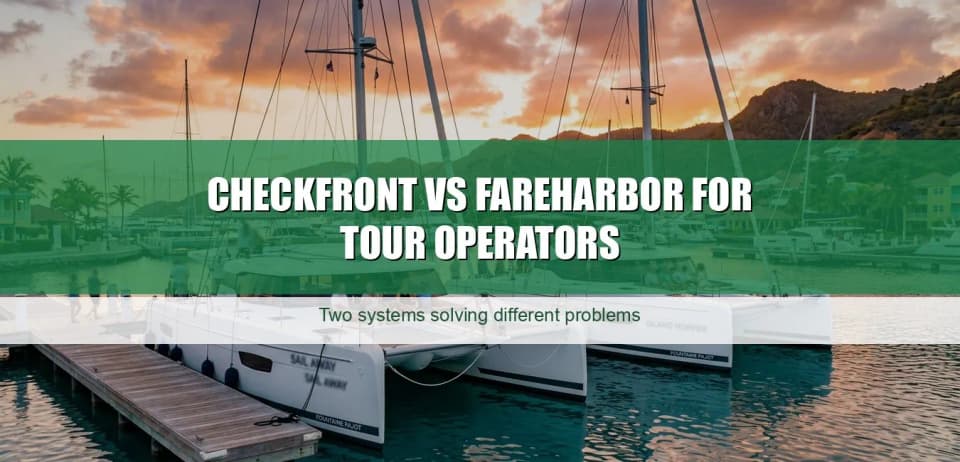
Every comparison article treats Checkfront and Fareharbor like two flavors of the same thing. Two booking platforms, pick the one with the nicer buttons. They are not even solving the same problem, and pretending they are is how operators end up picking the wrong one for the wrong reasons.
I've watched this choice play out with operators around St. Maarten and further down the islands for years now. The mistake is always the same. They compare the software. They should be comparing what each company actually wants from the relationship. Because one of these is a booking system, and the other is a distribution machine that happens to include a booking system.
Where Fareharbor genuinely pulls ahead
Let me give Fareharbor its due, because it earns it. They got bought by Booking Holdings back in 2018, and that connection is not decoration. FareHarbor sits inside a large distribution network, plugged into OTAs, affiliates, and travel partners, and for the right operator that is a real leg up.
Here's the part people miss. On the surface, FareHarbor is attractive because it avoids the usual monthly software bill. Its own materials describe a booking-fee model where the fee is generally pushed to the guest at checkout, and its network bookings involve affiliate or channel commissions. So if you're a new operator with no audience, the pitch can be genuinely attractive: lower fixed software cost, plus a distribution network that may help you find guests.
And the network is not just a brochure line. FareHarbor has dedicated channel and affiliate support around those relationships, though how much help you get will depend on your market and setup. If you're a cruise-port operator on day one with zero direct traffic and no email list and no Instagram following, that network can be the difference between empty boats and full ones. That's not marketing spin. I've seen it work.
Where Checkfront pulls ahead
Checkfront comes at it from the opposite direction. It's closer to a classic SaaS model: a monthly subscription, plus a published online booking fee. That fixed monthly part matters more than it sounds. In a slow August, at least part of your cost is known before August arrives. For a seasonal business, that predictability is worth a lot.
The bigger thing, to me, is control. Checkfront gives you cleaner command of your own website booking flow and your own branding. The booking widget feels like your business, not like a booking company borrowing your homepage. And if you're the kind of operator who wants to build your own stack, the API and integrations are more your friend. Last time I checked they play nicely with Zapier and have a proper API, so you can wire things together yourself.
So the split is roughly this:
- Predictable cost. A monthly subscription with a published online booking fee, rather than a distribution-first model where more of the economics sit in guest booking fees and channel commissions.
- Your booking flow, your brand. More say over how guests actually book on your own site.
- Build-your-own friendly. An API and integrations that don't fight you if you want to connect your own tools.

The thing about Fareharbor nobody says out loud
Now the part I'd want a friend to tell me before I signed anything. Once you're in the Fareharbor network, you are a channel partner. That's the whole model. And channel partners are in rev-share deals.
That's fine while the network is filling your boats. The friction shows up later, when you've built your own direct traffic and you'd like to keep more of it. Moving away from those arrangements can feel different from simply changing booking software. Even if the contract terms are manageable, the practical issue is that you may have built part of your demand on someone else's distribution, and distribution habits are sticky. They take a real cut on those channel bookings, and that cut is the price of the guests they brought you.
Checkfront's honest weakness is the mirror image. They don't own distribution, so they also don't build it for you. Nobody at Checkfront is going to fill your calendar. That's on you. If you have no way to reach guests, a clean booking flow is just a beautifully organized empty boat.
The moment an operator realizes what he's actually choosing
I sat with a catamaran operator a couple of seasons back who was agonizing over this exact decision. Spreadsheet open, feature columns lined up, checkmarks everywhere. He kept asking me which one had better reporting, better waivers, better mobile checkout.
And I finally said, none of that is your question. Your question is where your guests come from next year. If you're going to stand at the cruise pier and take whoever walks off the ship, one answer. If you're going to build an email list and run your own ads and own your guests, a completely different answer.
You could watch it land. He wasn't choosing booking software. He was choosing a distribution strategy, and the software was just the shape that choice took. That's the whole thing with these two. The buttons are a distraction. The real decision is who owns the pipe your guests come through.

Which one for who
So here's how I actually split it when an operator asks me straight.
If you're a cruise-port operator with no direct traffic on day one, FareHarbor's network can be a real advantage. You need guest flow more than you need control, and they can put you closer to partners and channels that already have demand. Take the leg up. Just go in knowing you're renting distribution, not owning it, and that the rent gets less comfortable as you grow.
If you're an operator driving your own bookings, or you want to be, Checkfront usually wins over the long run. Predictable cost, your own booking flow, your own guest relationships. You do the harder work up front of finding guests, and you keep more of what you build. For most small operators down here who care about their direct channel, that's the trade I'd make.
And if you're specifically a Caribbean charter or tour operator, the tradeoff shifts again, because now payment processing enters the picture and most of these systems weren't built for our banks. That's the wall we hit ourselves, and it's why we built Junglebee the way we did. But that's a longer story for another Monday.
Pick the software second. Pick your distribution strategy first. The operator who does it in that order almost never regrets the choice.
Booking page, card payments, one calendar for your website, booking page and desk. 4% per card payment, no monthly fee.