Junglebee
Cancellation policy: the one you write for yourself
Most cancellation policy advice is for the guest side. Here is the one operators rarely write: what to do when the weather, engine, or your captain makes the call.
 Michael RouveureFounder, Junglebee ·
The hardest call I ever made started at 5:40 in the morning, coffee in hand, the palms outside bent sideways.
This was Eagle Tours, years back. A full boat booked for a run out to Tintamarre, sixteen guests, half of them off a cruise ship with a sailing time they could not move. The Christmas Winds had come in overnight the way they do in January, thirty knots and climbing, swell wrapping the point so the anchorage would have been a washing machine. So before anyone left their hotel, I called it. We are not going today.
Most of the advice I see is about the guest side: what they get back when they cancel. Far less is written about the other policy, the one you write for yourself, for the morning the weather or the engine or your captain's fever makes the call for you.
The call window is earlier than you think it is
The mistake I see operators make most often is waiting. They watch the forecast all night, tell themselves it might lay down by ten, and push the decision up against departure. Then they are cancelling on guests who already paid for a taxi and are standing on the dock in swimsuits. I run three windows, and I pick the earliest one I can defend.
- The night before, by about 7pm. If the forecast is ugly and not changing - a real swell event, a named system, Christmas Winds locked in for days - call it the night before. People can still rebook their day, and they will thank you for the warning.
- At dawn, before anyone travels. This is the Tintamarre call, the marginal mornings where you need to actually see the sea state. Make it before guests leave their hotel, not after.
- The hour before, only for genuine surprises. A squall that came in off nowhere, a mechanical that showed up on the pre-trip check. In my experience, this window should be rare. If you are living in it every weather day, you are probably deciding too late.
The cancellation is not the disaster. Putting sixteen people on a boat in conditions you knew about at 5:40am is the disaster. The downside of calling it early is a refund. The downside of calling it late can be someone hurt.
The message you send does the real work
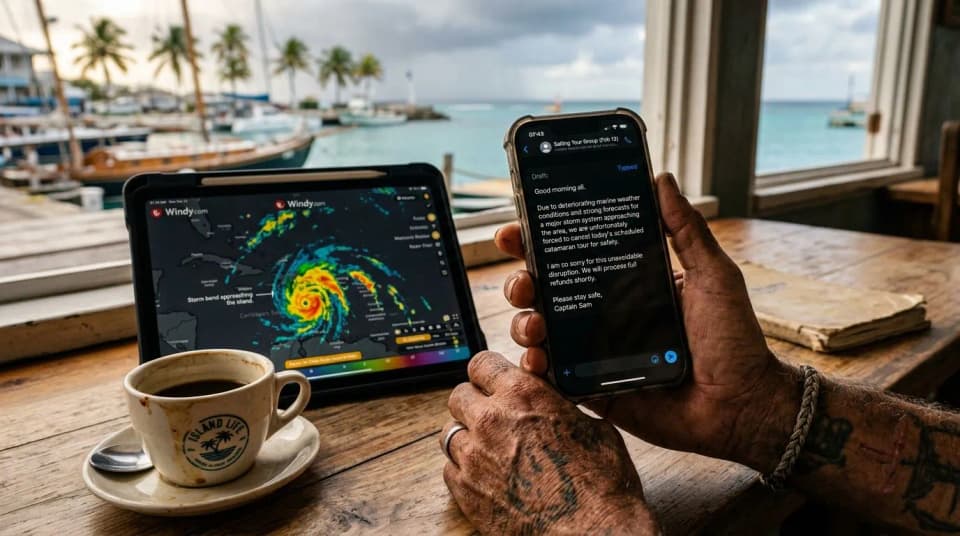
The trip is gone the moment you decide. What is still partly in your hands is how the guest feels about you afterward, and a lot of that lives in the message. I keep three things out of it: weather jargon, excuses, and any hint that I am defending myself. They do not need a marine forecast. They need to know you have it handled. The shape I try to use every time:
- Lead with the call, plainly. "We have to cancel this morning's trip for weather. The swell out at the island is too big to give you a good, safe day." That is the whole apology and the whole reason in two lines.
- Hand them the choice immediately. Do not make them ask what happens to their money. Tell them in the same breath: reschedule, credit, or a full refund, their pick.
- Make the reschedule the easy yes. Offer a specific better slot and sweeten it a little. We do not just want them off the phone, we want them back on the boat.
What I never do is write three paragraphs about wind direction to prove the call was justified. The longer you explain, the more it reads like you are covering yourself. In my experience, a confident operator can cancel in two sentences.
What I offer instead of just handing the money back
When we are the ones who cancel, I treat the refund as the floor, not the ceiling. It is the minimum I want the guest to feel secure about, not what builds anything. So I lead with something better and make the refund the fallback they actively choose, in this order:
- Reschedule with a small sweetener. Same trip, a day that works, plus something that costs me almost nothing and feels like a lot - a free round of drinks on board, a bumped-up spot on the boat, an extra hour. In my experience, many guests take this when you offer it warmly.
- A future-trip credit that does not expire fast. For the cruise guest sailing away tonight, a credit they can use next visit or hand to a friend. Some people come back to St. Maarten, and some have friends they can hand it to.
- The full refund, no friction, no face. If they want their money, they get it cleanly, the same day, with zero attitude. A grudging refund is worse than no refund, because now they remember the grudge.
The calm refund day is one of the best loyalty events you get
Nobody told me this at twenty-two, white-knuckling that first weather call. The day you cancel can become one of the strongest loyalty moments you get. Sometimes stronger than a perfect trip. Anyone can be gracious when the sun is out and the turtles show up. The guest finds out who you really are on the bad morning. Call early and make their money easy to get back, and you have shown them something a flawless snorkel run never could.
Some of that Tintamarre group rebooked for later in the week, and I heard from a couple of them again later. Not because the cancelled trip was good. Because the cancellation was. The story they carried was simple: those guys called it off rather than risk it, and sorted us out cleanly. You can only earn that on the morning you would rather not have.

Log it so your books and your software stay clean
A lot of good operators quietly bleed here and never figure out why. An operator-side cancellation should not be logged like a guest no-show, because if it is, your numbers lie to you all season. A weather refund is not lost revenue you should have caught. A reschedule should not look like a brand new booking. A future credit is a liability on your books until it is redeemed, and you need to see it sitting there. If your system cannot tell "guest bailed" from "we cancelled for weather," your cancellation rate can look like a performance problem when it was just January.
So tag the reason every time. Weather. Mechanical. Captain out. And when you reschedule, move the booking rather than refunding and rebuilding it, so the guest history stays intact and the money does not double-count. That is the mess we try to prevent with Junglebee, because I lived the manual version for years, reconciling weather days on a Sunday night. Keep the booking history together and record why the change happened, and your books get easier to trust.
Write the policy for yourself before the weather writes it for you. Decide your call windows, draft the message, and pick what you will offer before a guest ever sees you sweat. The morning the wind comes up, you do not want to be inventing your kindness on the spot. You want to already know how good you are going to be.
Booking page, card payments, one calendar for your website, booking page and desk. 4% per card payment, no monthly fee.