

June 2, 2026
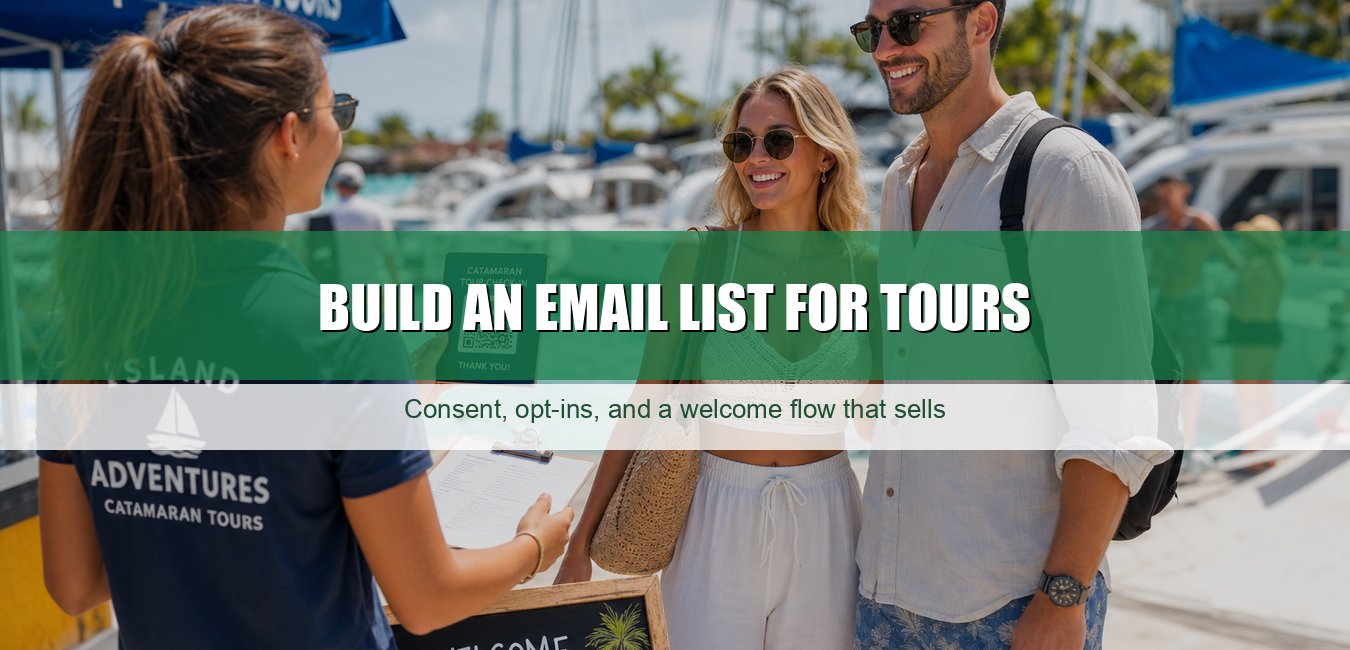
Most operators I know pour their whole marketing budget into social media and ignore the one channel they actually own. Think about it. Your Instagram followers belong to Instagram. The algorithm decides who sees your sunset cruise post, and one quiet policy change can wipe out the reach you spent three years building. An email list is the only audience nobody can take away from you.
And the funny part is the list is sitting right there in front of you. Every guest who steps off your boat grinning is a person who would happily hear from you again. You just have to ask the right way, so you build something you can use for years instead of a pile of addresses that get you reported for spam.
Back when I was crewing the Eagle Tours afternoon snorkel run, we'd pull back into the dock and there was always one couple who didn't want the day to end. Sunburned, half a rum punch in, asking the captain where to book the next trip. "Send me the link," they'd say. And we had nothing to send. No list, no email, no plan. We'd smile and point them at a business card that ended up soggy in a beach bag.
That couple just told you they want to give you money again. That is the warmest lead you will ever get, and most operators let it walk down the dock and disappear. The whole point of an email list is to catch that moment so it turns into a booking next season instead of a maybe.
An email address is personal data, and the rules around marketing email all come down to one idea: people decide what lands in their inbox, not you. If you are emailing guests in the US, the CAN-SPAM Act sets the requirements for commercial email and gives every recipient the right to opt out. If your guests are in the UK or Europe, the consent rules are typically stricter, so you cannot just assume a yes.
So your one operating rule is simple. Only email people who gave you a clear yes, or who count as existing customers under a soft opt-in style exception, and make leaving your list painless.
Most tour companies ask for an email exactly once, at booking, and stop there. That is a fine start, but you can collect a lot more opt-ins without being pushy if you catch guests in natural moments.
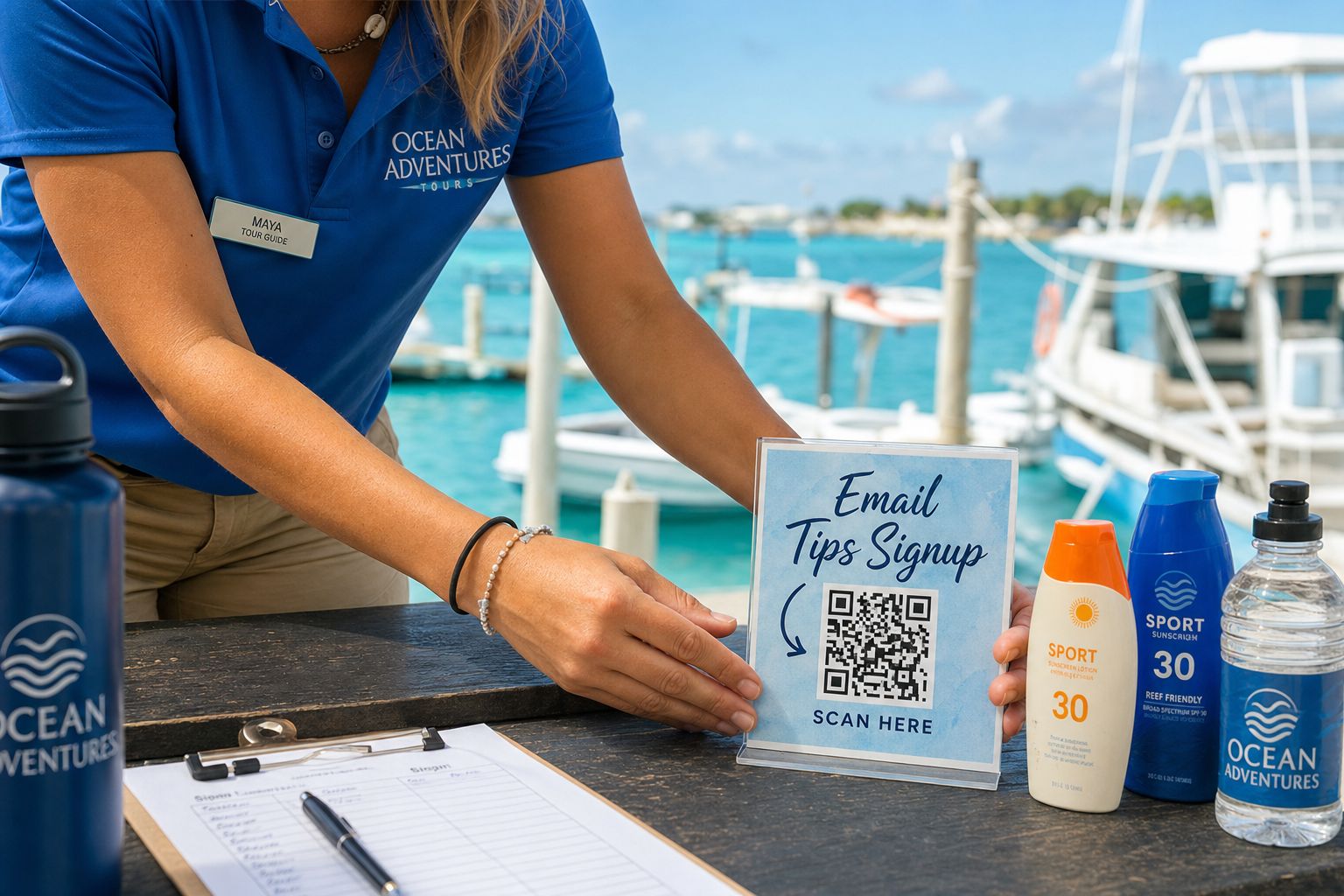
Your goal here is not a big number. It's intent. A smaller list of people who actually want to hear from you will beat a giant list of strangers every single time. Which is also why I'd never buy a list. Even where it's legal, it's a deliverability disaster, and it's dodgy, I'll be honest. A permission list grows slower and then it compounds.
Double opt-in means a guest signs up, then confirms through a follow-up email before they're on the list. It adds one small step. For an operator dealing with international guests all season, it does three things worth a lot more than that step costs you.
Most operators send one "thanks" email and then vanish until they want something. That is a waste. The welcome flow is where an email list stops being a contact list and starts being money. Keep it short, useful, and human.
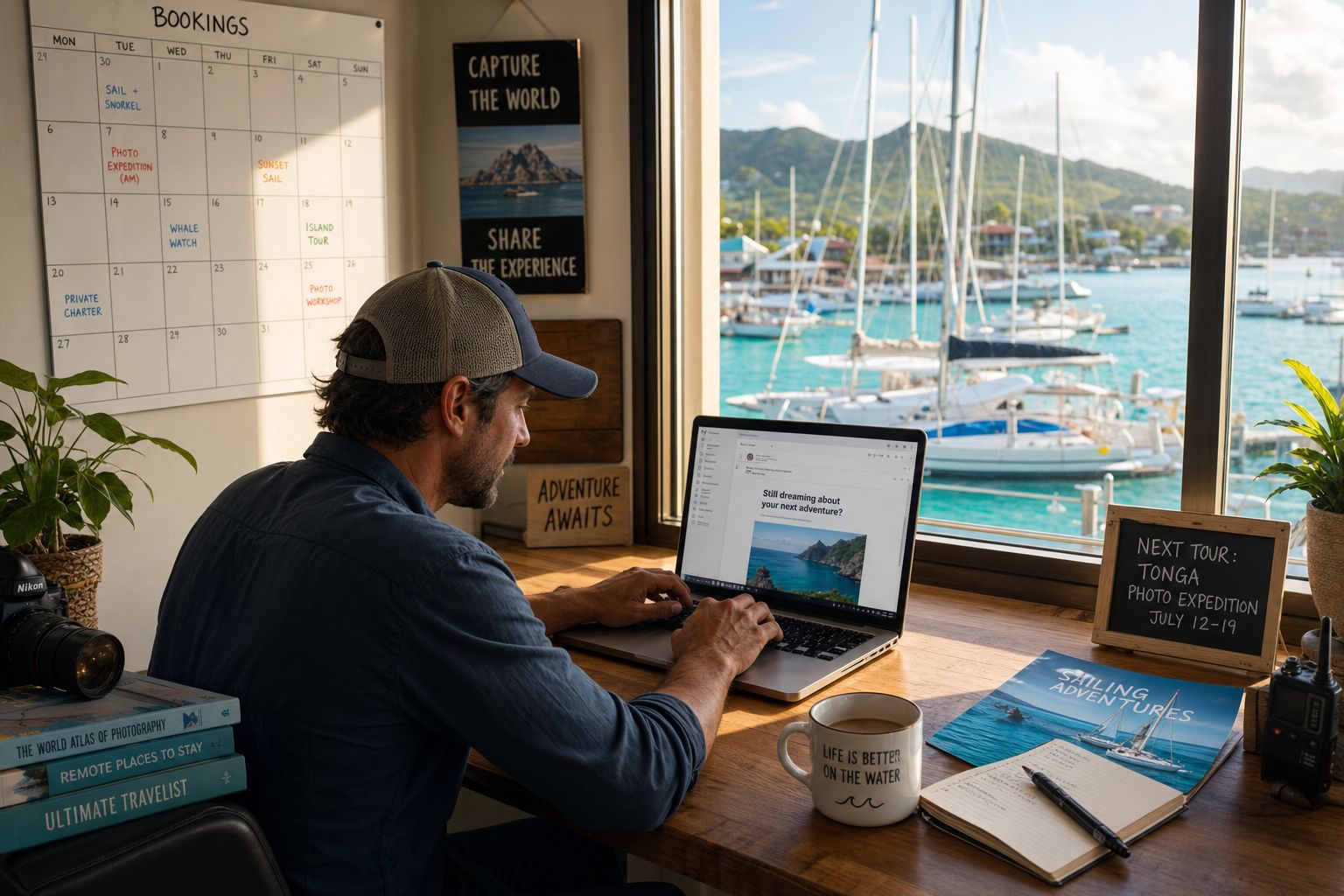
This is where a booking system earns its keep. During a busy cruise ship week you are not going to remember to manually send four emails to every guest. If your tools fire these off automatically based on booking status, booked, checked in, completed, the whole thing runs without you. We built Junglebee to handle that automated guest messaging for charters and tours, so the emails go out while you're out on the water.
Compliance sounds scary but in practice it's just the stuff guests already want from you: honesty and control. Here's the short list that keeps you out of trouble and protects your sender reputation.
Add one opt-in box to your booking flow and put one QR code sign at check-in. Then set up that four-email welcome flow to run on its own. Give it two weeks and you'll feel it: fewer last-minute questions, more reviews, and a warmer crowd ready for your next promotion.
And remember why this matters more than another social post. The next time a couple climbs off your boat and says "send me the link," you'll actually have something to send, and a way to bring them back. When you're ready to tie your bookings to your emails, you can look at Junglebee pricing and map the whole flow to real booking events.


