

May 20, 2026
Back when I was running SXM Deals, I had a guest group ready to book a private charter out of Simpson Bay. Significant money. I wasn't going to charge their card without a confirmation from the operator first, so I sent him a message. Reasonable. And then I waited. Two days. Not two minutes. Two days. By the time he replied, the guests had already gone somewhere else. That was 2012, and I still think about it.
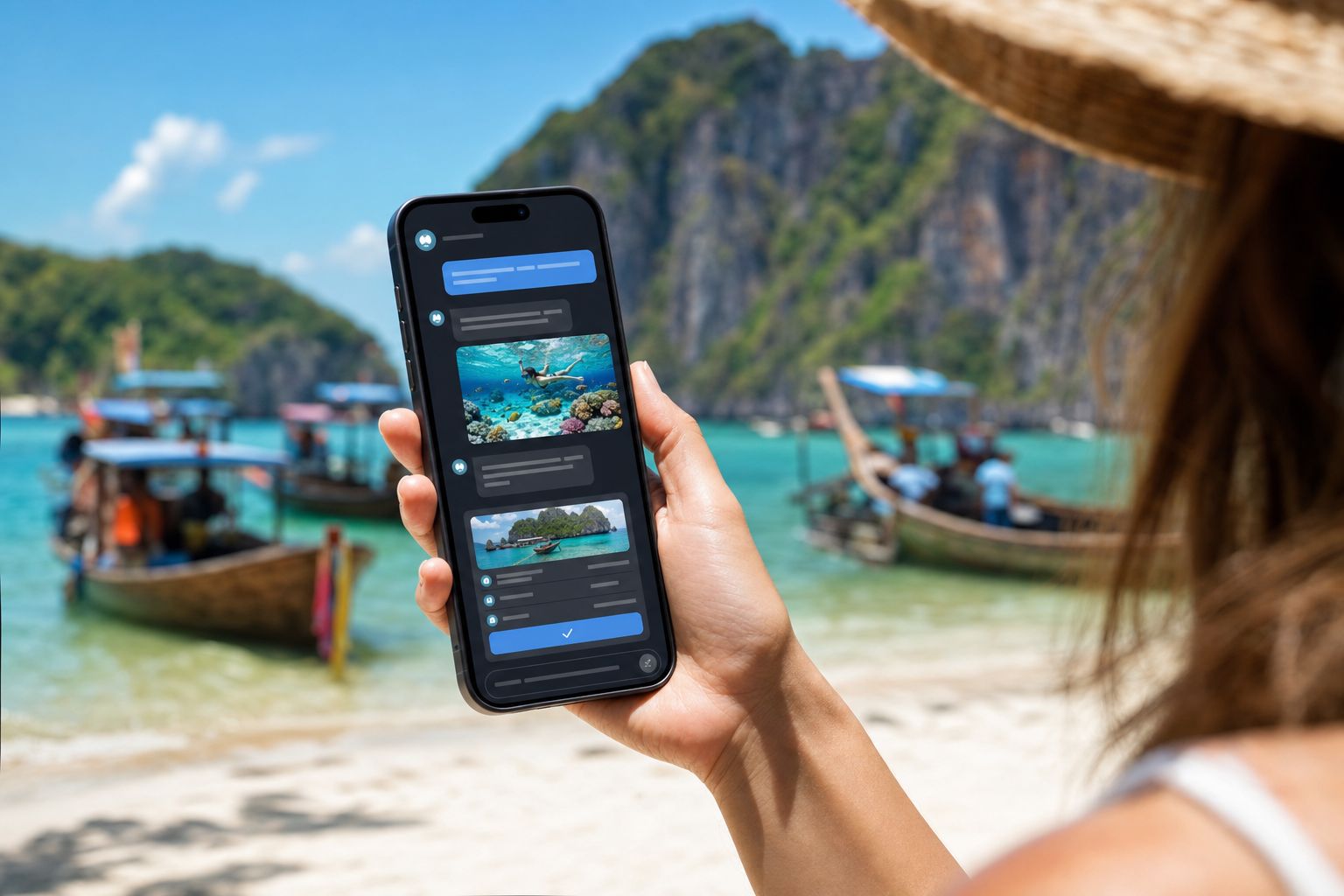
Now imagine a ChatGPT session doing the same thing your guests used to do by email. Except ChatGPT doesn't wait two days. It doesn't wait two minutes. It surfaces what it can immediately confirm and skips everything it can't. If your tour isn't structured and bookable in real time, the AI doesn't say "let me check" - it just recommends the next operator on the list. One in three trip-planning sessions now start with AI, but only 17% of travelers say they've used AI to actually book activities. That gap closes fast as the tools get better. The question is whether you're on the right side of it when it does.
ChatGPT, Perplexity, Google's AI Overviews - they all do a version of the same thing. They read what's publicly structured about your business and produce a summary. That summary either includes you or it doesn't.
They're not reading your "About Us" prose. They're pulling structured information: name, category, price, duration, availability, reviews. If those things are clear, you get included. If they're missing or buried, you don't. It's not an algorithm you need to trick. It's a readability problem you need to fix.
GetYourGuide's research with Arival: 69% of travelers have used AI to plan or book a trip, but only 17% have used it to book activities. AI is handling the shortlist. Your booking page is still closing the deal. So your job is to show up on that shortlist - and then make it easy to commit.
This is the part I feel strongly about, and I'd say most operators don't want to hear it.
AI booking agents - the next generation, the ones that will actually complete the transaction, not just suggest - only book what's structured and bookable. Open API. Clean availability. Real-time pricing. If your inventory isn't set up that way, the agent doesn't argue with your website. It routes the guest to FareHarbor or Viator, because those platforms have the plumbing the agent needs.
I've watched Caribbean operators spend years building great reputations and loyal guest lists - and still lose bookings to OTAs because their own site can't confirm in real time. That was the exact problem I ran into at SXM Deals. The operator couldn't confirm fast enough, I was the intermediary, and the guests walked. Now the intermediary is an AI. It's even less patient.
The fix isn't marketing. It's infrastructure. Real-time availability that talks to the outside world. A booking flow that works on a phone. Confirmations that fire the second someone pays. If your system can't do that, the booking goes to someone else's platform, and you're a supplier on their terms.

AI tools build their summaries from text they can read clearly. A poetic tour description with missing specifics forces the machine and the guest to guess. Guessing kills bookings. Rewrite your core tour page so these things are impossible to miss:
Add a short "quick facts" block near the top. Humans skim it. AI tools read it first. It doesn't need to be fancy. It needs to be there.
Watch your booking window too. Criteo puts average booking windows at 9.5 days for flights and 11.5 days for hotels. Tours often book even closer to arrival. "Message us for availability" is a deal-breaker when someone is deciding in the taxi from the airport.
GetYourGuide rolled out AI-generated review summaries with keyword search, so travelers can look for "kids" or "safety" without reading 200 comments. That means your generic five-star reviews are worth less than they used to be. The AI summary is only as strong as the raw material it's working from.
If you operate in the Caribbean, this matters more than usual. Caribbean demand growth has cooled to about 1% year-over-year (Apr 2025 to Mar 2026). You win by converting better, not by waiting for the market to carry you.
And watch the new source markets. Latin American bookings to the Caribbean are up 24% year-over-year, with premium South American travel up 117%. If you don't have a Spanish FAQ or a bilingual confirmation email, that growth is going to someone else.
You don't need five integrations and an AI chatbot on your homepage. You need three things working cleanly:
If you run charters or tours with variable schedules, Junglebee is built for this - real-time availability, local payment processing, and deposit handling that actually works in the Caribbean. I built it because I was the guy losing bookings to a two-day confirmation delay.
The AI doesn't wait. Criteo says 42% of travelers enjoy extended browsing, which means they're comparing you against someone else right now. What wins isn't the most creative tour. What wins is the clearest offer, the fastest confirmation, and the booking that goes through on the first try.
AI is accelerating a filter that already existed: operators with clean, real-time, bookable inventory get the guest. Everyone else loses to the next listing.
I learned that at SXM Deals, long before ChatGPT existed. The medium changed. The rule didn't.


